
Aripiprazole once-monthly LAI,
does it really help with Prevention of psychotic relapse and exacerbation in stabilized adults with schizophrenia?
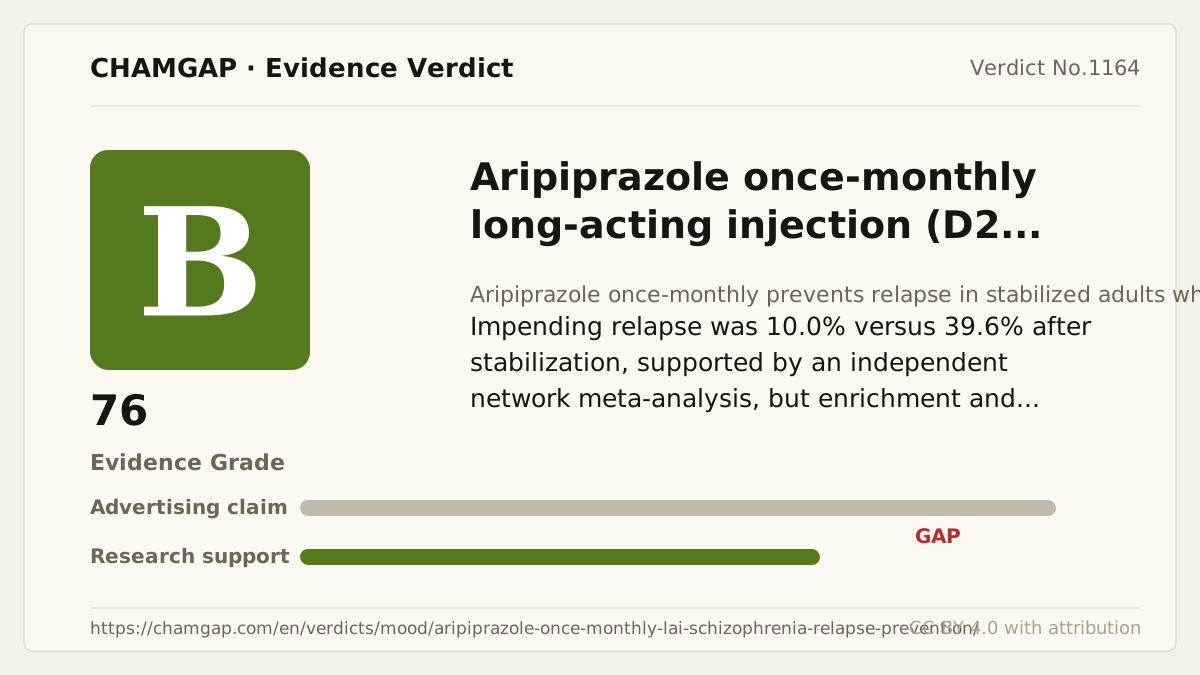
research showsAripiprazole once-monthly long-acting injection is rated B because it prevents psychotic relapse and exacerbation in adults with schizophrenia who have been stabilized on aripiprazole. In Kane's 2012 maintenance study, 403 participants were randomized and impending relapse occurred in 10.0% continuing the injection versus 39.6% switched to placebo; the placebo group's relapse hazard was 5.03 times higher. An independent network meta-analysis of 92 randomized trials and 22,645 participants rated aripiprazole LAI relapse prevention versus placebo with high confidence. The pivotal study was nevertheless an enriched randomized-withdrawal design that included responders after stabilization and was conducted by the manufacturer; a monthly formulation is not proven universally superior to oral treatment. Akathisia, insomnia, tremor, metabolic change, and injection-site reactions are separate safety issues.
ads claimPromotion can imply that one injection a month removes relapse risk or guarantees perfect adherence. The evidence concerns maintenance in patients who respond to and tolerate aripiprazole after stabilization; scheduled visits, psychosocial care, monitoring, and timely injections remain necessary.
Useful facts when choosing a product
- Aripiprazole once-monthly is an intramuscular maintenance formulation of a dopamine D2 partial-agonist atypical antipsychotic.
- The pivotal trial administered 400 mg every four weeks, allowed one reduction to 300 mg, and continued oral aripiprazole for the first two weeks after the initial injection.
- Oral response and tolerability should be established before stabilization and maintenance injection; this formulation is not an immediate rescue injection for acute agitation.
- Akathisia, insomnia, tremor, headache, weight and glucose or lipid changes, and injection-site pain require follow-up, along with rare impulse-control problems and serious adverse effects shared by antipsychotics.
Chamgap Semantic Classification Code
Candidate index · review held
M.aripiprazole-once-long-acting-injection.UNK.psychotic-relapse-and-exacerbation-in-stabilized-adults-with-schizophrenia.prevent.placeboMedicinal interventions > Aripiprazole once- long-acting injection > Unknown > psychotic relapse and exacerbation in stabilized adults with schizophrenia > Occurrence-prevention claim > Placebo
An automated migration candidate, not an issued permanent code; exact claim scope remains under review. This machine-generated migration candidate helps retrieval but is not a permanent assignment. The original verdict ID and URL remain authoritative.
What the research actually shows
Kane and colleagues first stabilized participants for four weeks on oral aripiprazole 10 to 30 mg and then for 12 weeks on the monthly 400-mg injection before randomization. The trial stopped early after a prespecified interim analysis demonstrated efficacy; final impending relapse was 10.0% versus 39.6%, with a placebo-to-injection HR of 5.03 (95% CI 3.15 to 8.02). This design sensitively tests maintenance but excludes patients who are initially unstable, do not respond to aripiprazole, or cannot tolerate it. Ostuzzi and colleagues' 2022 network meta-analysis of 92 randomized trials and 22,645 participants rated the placebo comparison for aripiprazole LAI relapse prevention with high confidence, supporting the direction beyond a single trial.
Why this is classified as B (76)
In the 403-person randomized-withdrawal trial, impending relapse was 10.0% versus 39.6%, with placebo-to-injection HR 5.03, and a 92-trial network meta-analysis gave high confidence to aripiprazole LAI relapse prevention versus placebo. Responder enrichment, withdrawal design, early stopping, manufacturer concentration, and no established universal superiority over oral therapy yield B with 76 points. Metabolic, movement, and injection harms remain separate from efficacy.
Counterpoint. Scheduled injection can make missed treatment more visible for people who often forget oral medication, but coercive administration can damage the therapeutic alliance. Patient preference, prior response, adverse effects, and access to appointments should guide shared choice among oral medicines and other LAIs.
Rejudgment record. New verdict — Accepted the direct impending-relapse result of 10.0% versus 39.6% in 403 stabilized participants and the high-confidence placebo comparison in a 92-trial network meta-analysis, but assigned B in line with paliperidone LAI because of responder enrichment, randomized withdrawal, early stopping, manufacturer concentration, and limitations in hospitalization, function, and superiority over oral therapy
Sub-claim grades by effect
This ingredient is marketed for several effects. A single overall grade blends strong and weak claims together, so each effect is graded separately here. The overall grade reflects the strongest disconfirming or core claim.
| Effect (sub-claim) | Grade | Basis |
|---|---|---|
| Prevention of psychotic relapse in stabilized adults with schizophrenia | B | Impending relapse was 10.0% versus 39.6% in the withdrawal trial, and an independent network meta-analysis supported benefit versus placebo. |
| Delay in time to psychotic symptom exacerbation | B | The placebo-to-injection HR was 5.03 with significant delay to impending relapse, but only among stabilized responders. |
| Reduction in schizophrenia-related hospitalization | C | Hospitalization contributed to impending-relapse criteria, but a separate hospitalization effect was not adequately isolated and tested in the pivotal trial. |
Cross-check — AI research and Codex final gate
Evidence Table
| Study | Design | Sample | Funding | Endpoint | Result | Weight |
|---|---|---|---|---|---|---|
| Kane and colleagues. 2012 | Fifty-two-week multicenter randomized double-blind placebo-controlled stabilization and withdrawal trial | 403 participants randomized after stabilization on oral and injectable aripiprazole | Manufacturer-conducted trial by Otsuka Pharmaceutical Development & Commercialization | Time to psychotic exacerbation or impending relapse | Impending relapse was 10.0% versus 39.6%; placebo-to-injection HR 5.03 (95% CI 3.15 to 8.02), P<0.0001. | Pivotal direct relapse trial with enriched randomized withdrawal |
| Ostuzzi and colleagues. 2022 | Systematic review and network meta-analysis of maintenance trials of oral and long-acting antipsychotics | 92 randomized trials, 22,645 participants, and 31 treatments | Academic network meta-analysis with author conflicts disclosed | Relapse and discontinuation due to adverse events in schizophrenia-spectrum disorders | Aripiprazole LAI was among the treatments with high-confidence evidence for relapse prevention versus placebo. | Large independent synthesis supporting the pivotal result |
Receipt — 2 References
All 2 cited sources were verified for existence at the original page (as of 2026-07-22).
Final verification and publication gate: Codex · Evidence date: 2026-07-22 · Corrections: none
Cite this verdict
[Chamgap] Aripiprazole once-monthly LAI x prevention of relapse and exacerbation in stabilized schizophrenia — Evidence Grade B·76. 2 cited sources checked. Source: https://chamgap.com/en/verdicts/mood/aripiprazole-once-monthly-lai-schizophrenia-relapse-prevention/ · CC BY 4.0CC BY 4.0 — free to use with attribution; do not distort grades, numbers, or verdict meaning.
What this document does and does not do
Chamgap is an information source. It reports what research has and has not confirmed; it does not tell readers what to take or buy. That decision belongs to readers and, when needed, medical or legal professionals. This verdict reflects literature available up to the search date and may change as new research appears. Nothing here is medical advice.