
Alprazolam,
does it really help with Short-term reduction of panic-attack frequency and anticipatory anxiety in adults with panic disorder?
research showsAlprazolam is rated B because direct randomized evidence shows rapid reductions in panic attacks and anxiety over four to eight weeks in adults with panic disorder. In a 526-participant multicenter placebo-controlled trial, 82% versus 43% were at least moderately improved at week four and 50% versus 28% were panic free. In a separate 123-participant Scandinavian trial, 68% versus 34% were panic free at eight weeks and anticipatory anxiety also improved more than with placebo. Evidence is concentrated in older short-term trials, while relapse, rebound, and withdrawal during discontinuation are clear and durable long-term benefit is not established. Dependence and withdrawal do not negate short-term efficacy but are managed separately under safety, yielding 64 points in the lower B range and parity with the panic-disorder corpus.
ads claimRapid short-term sedation and antipanic action can be expanded into causal treatment, dependence-free long-term use, or complete remission that persists after discontinuation. The evidence instead supports a time-limited symptomatic role that requires a prescriber-led plan alongside psychotherapy and appropriate maintenance options.
Useful facts when choosing a product
- Alprazolam is a controlled prescription benzodiazepine that enhances GABA-A receptor signaling and can reduce anxiety and panic rapidly; the lowest effective individualized dose and a short treatment duration are preferred.
- Drowsiness, dizziness, ataxia, memory impairment, and slowed reaction time can occur, so driving and hazardous work should be avoided and alcohol or other sedatives should not be combined with it.
- Repeated use can produce tolerance and physical dependence, while abrupt discontinuation can cause rebound anxiety or panic, insomnia, tremor, and rarely seizures; tapering should follow the prescriber's plan.
- Combining alprazolam with opioids increases the risk of profound sedation, respiratory depression, coma, and death, and older adults also face greater risks of falls and cognitive impairment.
Chamgap Semantic Classification Code
Candidate index · review held
M.alprazolam.UNK.short-term-reduction-of-panic-attack-frequency-and-anticipatory-anxiety-with-panic-disorder.reduce.placeboMedicinal interventions > Alprazolam > Unknown > Short-term reduction of panic-attack frequency and anticipatory anxiety with panic disorder > Reduction claim > Placebo
An automated migration candidate, not an issued permanent code; exact claim scope remains under review. This machine-generated migration candidate helps retrieval but is not a permanent assignment. The original verdict ID and URL remain authoritative.
What the research actually shows
Ballenger and colleagues randomized 526 patients with panic disorder or agoraphobia with panic attacks to flexible-dose alprazolam or placebo for eight weeks. At week four, 82% versus 43% were at least moderately improved and 50% versus 28% were panic free, with separation beginning in week one. The Scandinavian multicenter trial by Andersch and colleagues assigned 41 patients each to alprazolam, imipramine, or placebo and reported eight-week panic-free rates of 68%, 61%, and 34%; alprazolam was also superior to placebo for anticipatory anxiety and phobic symptoms. A discontinuation study from the same development program found rebound panic attacks during taper in 27% and a transient withdrawal syndrome in 35% of alprazolam recipients, confirming the hazard of abrupt or rapid discontinuation.
Why this is classified as B (64)
A 526-participant multicenter placebo-controlled trial and a separate 123-participant trial repeatedly confirmed direct four-to-eight-week improvements in panic attacks, panic-free status, and anticipatory anxiety. However, the evidence base is dominated by older short-term studies and durable remission after discontinuation is poorly established. Dependence and withdrawal are separate safety limitations rather than evidence against short-term efficacy, so the result remains B at a lower 64 points.
Counterpoint. There can be a role for rapid relief during severely distressing acute panic, but long-term recovery should include cognitive behavioral therapy and appropriate maintenance treatment, with benzodiazepine tapering supervised by the prescriber.
Rejudgment record. New verdict — Credited repeated direct four-to-eight-week improvement in panic attacks, panic-free status, and anticipatory anxiety in a 526-participant multicenter placebo-controlled trial and a separate 123-participant trial, but placed the verdict in the lower B range because evidence is concentrated in older short-term studies and durability after discontinuation is unproven, while treating dependence and withdrawal separately under safety
Sub-claim grades by effect
This ingredient is marketed for several effects. A single overall grade blends strong and weak claims together, so each effect is graded separately here. The overall grade reflects the strongest disconfirming or core claim.
| Effect (sub-claim) | Grade | Basis |
|---|---|---|
| Short-term reduction of panic-attack frequency in adults with panic disorder | B | Multiple placebo-controlled trials significantly improved direct panic-attack and panic-free outcomes over four to eight weeks. |
| Short-term reduction of anticipatory anxiety in adults with panic disorder | B | In the Scandinavian randomized trial, alprazolam reduced anticipatory anxiety and phobic symptoms more than placebo. |
| Short-term panic-free status and functional improvement in adult panic disorder | B | Week-four panic-free rates were 50% versus 28%, with improvements in avoidance, anxiety, and secondary disability, but durable remission after discontinuation is unproven. |
Cross-check — AI research and Codex final gate
Evidence Table
| Study | Design | Sample | Funding | Endpoint | Result | Weight |
|---|---|---|---|---|---|---|
| Ballenger JC et al. 1988 | Eight-week multicenter randomized placebo-controlled flexible-dose trial | 526 patients with panic disorder or agoraphobia with panic attacks | Specific funding was not stated in the PubMed abstract | Panic attacks, panic-free status, phobic fear, avoidance, anxiety, and disability | At week four, 82% versus 43% were at least moderately improved and 50% versus 28% were panic free, with separation across several symptom domains from week one. | Pivotal large short-term direct randomized trial |
| Andersch S et al. 1991 Scandinavian multicenter trial | Eight-week randomized double-blind placebo- and imipramine-controlled trial | 123 participants; 41 each assigned to alprazolam, imipramine, or placebo | Specific funding was not stated in the PubMed abstract | Panic-free status, anticipatory anxiety, phobic symptoms, and global remission | Eight-week panic-free rates were 68%, 61%, and 34%; alprazolam was superior to imipramine and placebo for anticipatory anxiety and phobic symptoms. | Direct randomized replication for the anticipatory-anxiety subclaim |
| Pecknold JC et al. 1988 | Randomized comparison with four-week taper and two-week postdiscontinuation observation after eight weeks of treatment | 63 assigned to alprazolam and 63 to placebo; 60 and 49 entered taper | Specific funding was not stated in the PubMed abstract | Relapse, rebound panic or anxiety, and withdrawal syndrome during taper | Among alprazolam recipients, rebound panic occurred in 27%, rebound anxiety in 13%, and a transient mild-to-moderate withdrawal syndrome in 35%. | Evidence limiting postdiscontinuation durability and defining safety |
Receipt — 3 References
All 3 cited sources were verified for existence at the original page (as of 2026-07-22).
Final verification and publication gate: Codex · Evidence date: 2026-07-22 · Corrections: none
Cite this verdict
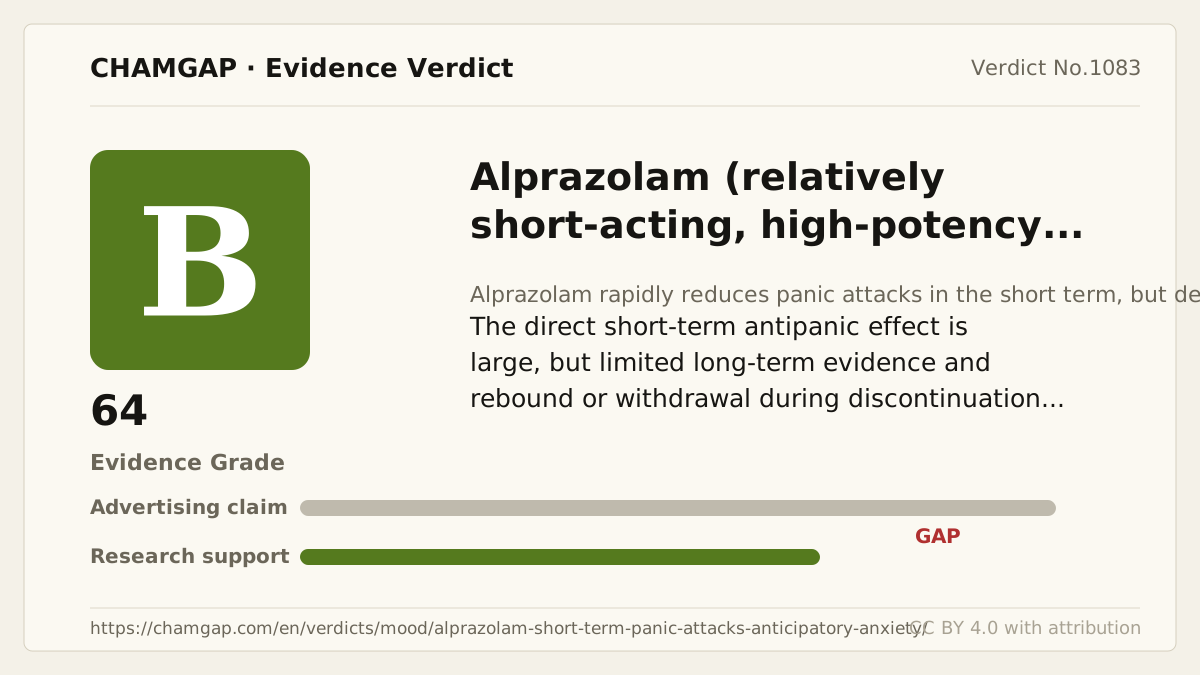
[Chamgap] Alprazolam x short-term reduction of panic attacks and anticipatory anxiety in adult panic disorder — Evidence Grade B·64. 3 cited sources checked. Source: https://chamgap.com/en/verdicts/mood/alprazolam-short-term-panic-attacks-anticipatory-anxiety/ · CC BY 4.0CC BY 4.0 — free to use with attribution; do not distort grades, numbers, or verdict meaning.
What this document does and does not do
Chamgap is an information source. It reports what research has and has not confirmed; it does not tell readers what to take or buy. That decision belongs to readers and, when needed, medical or legal professionals. This verdict reflects literature available up to the search date and may change as new research appears. Nothing here is medical advice.