
Acamprosate calcium,
does it really help with Supported continuous abstinence and prevented return to drinking after detoxification in alcohol use disorder?
research showsAcamprosate calcium is rated B for supporting continuous abstinence and reducing return to drinking after detoxification in alcohol use disorder. A 2010 Cochrane review of 24 double-blind randomized trials and 6,915 participants found a lower risk of any drinking, relative risk 0.86 (95% CI 0.81 to 0.91), with a number needed to treat of about 9, and cumulative abstinence duration increased by 10.94 percentage points. Estimates were similar in commercial and nonprofit trials, so the signal was not confined to manufacturer-funded studies. The publicly funded 1,383-person United States COMBINE trial, however, found no significant acamprosate effect on percentage of abstinent days, return to heavy drinking, or good clinical outcome, showing heterogeneity by treatment setting, prior abstinence, or other context. Abstinence is the treatment goal itself and the aggregate effect across trials is positive, supporting B with 71 points; the moderate effect and a null independent large trial prevent A. Diarrhea, pill burden, and accumulation with kidney impairment remain separate safety issues.
ads claimPromotion can portray acamprosate as eliminating craving or ensuring that a person never drinks again. The average effect is a moderate reduction in return to drinking, and relapse can still occur while taking it. It does not treat acute withdrawal or create an aversive reaction to alcohol; it is an adjunct after detoxification, used with counseling, recovery support, and sustained adherence.
Useful facts when choosing a product
- Acamprosate calcium is a prescription medicine that supports maintenance of abstinence after detoxification in alcohol use disorder and does not treat acute alcohol withdrawal.
- A common adult prescription is two 333-mg delayed-release tablets three times daily, but kidney function and country-specific labeling can require adjustment, so the product label and prescription take priority.
- The medicine is cleared mainly by the kidneys, requiring dose reduction in moderate kidney impairment and avoidance in severe kidney impairment, with kidney function checked before treatment.
- Diarrhea is the most consistently increased adverse effect, and frequent dosing can reduce adherence. Severe diarrhea, worsening mood, or self-harm thoughts should be reported promptly to a clinician.
Chamgap Semantic Classification Code
Candidate index · review held
M.acamprosate-calcium.UNK.supported-continuous-abstinence-and-prevented-return-to-drinking-after-detoxification-in-alcohol-use-disorder.prevent.MULTIMedicinal interventions > Acamprosate calcium > Unknown > Supported continuous abstinence and prevented return to drinking after detoxification in alcohol use disorder > Occurrence-prevention claim > Multiple: primary unresolved
An automated migration candidate, not an issued permanent code; exact claim scope remains under review. This machine-generated migration candidate helps retrieval but is not a permanent assignment. The original verdict ID and URL remain authoritative.
What the research actually shows
Cochrane included double-blind randomized trials against placebo or active control; 23 trials enrolled patients after detoxification and continuous abstinence. Any return to drinking declined and cumulative abstinence duration increased, while secondary heavy-drinking and gamma-glutamyltransferase outcomes were nonsignificant. Diarrhea was 11 percentage points more frequent than with placebo. COMBINE assigned 1,383 participants to nine medication and behavioral-treatment combinations; some benefit occurred with naltrexone and behavioral treatment in the context of medical management, but acamprosate had no main effect. COMBINE used brief prior abstinence and largely outpatient detoxification, unlike the longer inpatient abstinence in many positive European trials, but this difference is a post hoc explanation rather than a proven effect modifier.
Why this is classified as B (71)
The Cochrane synthesis of 24 double-blind trials and 6,915 participants was positive for any drinking, RR 0.86 with an NNT near 9, and cumulative abstinence duration increased by 10.94 percentage points; benefit remained in nonprofit trials. Abstinence and return to drinking are treatment goals rather than surrogates, so the C ceiling does not apply. The moderate effect and lack of significant acamprosate benefit in the publicly funded 1,383-person COMBINE trial give B with 71 points. Diarrhea, pill burden, and renal clearance are separate safety considerations.
Counterpoint. Evidence fits best for people who completed detoxification, already started abstinence, and can continue medicine with psychosocial support. Ongoing drinking or acute withdrawal requires a safe assessment and detoxification plan first, and a single return to drinking does not mean the entire treatment has failed.
Rejudgment record. New verdict — Applied B for a patient-important abstinence goal because 24 double-blind randomized trials with 6,915 participants yielded a relative risk of any drinking of 0.86, an NNT near 9, and longer cumulative abstinence with similar effects in nonprofit trials, while reflecting the absence of an acamprosate main effect in the publicly funded 1,383-person COMBINE trial and the moderate effect size in the score
Sub-claim grades by effect
This ingredient is marketed for several effects. A single overall grade blends strong and weak claims together, so each effect is graded separately here. The overall grade reflects the strongest disconfirming or core claim.
| Effect (sub-claim) | Grade | Basis |
|---|---|---|
| Reduced risk of any return to drinking after detoxification | B | Across 24 Cochrane trials, RR was 0.86 with an NNT near 9, but the null COMBINE trial shows heterogeneity. |
| Increased cumulative abstinence duration | B | Cumulative abstinence duration increased by 10.94 percentage points versus placebo, and abstinence is the treatment goal itself. |
| Reduced return to heavy drinking | D | Neither the Cochrane secondary analysis nor COMBINE established a significant acamprosate effect on heavy-drinking outcomes. |
Cross-check — AI research and Codex final gate
Evidence Table
| Study | Design | Sample | Funding | Endpoint | Result | Weight |
|---|---|---|---|---|---|---|
| Rösner S et al. 2010 Cochrane review | Systematic review and meta-analysis of double-blind randomized trials with individual-data verification | 24 randomized trials and 6,915 participants | Individual trials had mixed commercial and nonprofit funding; reviewers requested unpublished data from manufacturers and researchers and reported funding-stratified analyses | Any return to drinking, cumulative abstinence duration, heavy drinking, gamma-glutamyltransferase, and diarrhea | Return to drinking had RR 0.86 (95% CI 0.81 to 0.91), NNT 9.09; cumulative abstinence increased by 10.94 percentage points, while heavy drinking and GGT were nonsignificant. Diarrhea increased by 11 percentage points. | Pivotal positive multi-trial synthesis with a moderate effect |
| Anton RF et al.; COMBINE Study Research Group. 2006 | Multicenter randomized double-blind medication and behavioral-intervention factorial trial | 1,383 adults with alcohol dependence across nine treatment groups | Large publicly supported program led by the United States NIAAA | Percentage of days abstinent, return to heavy drinking, and good clinical outcome | Acamprosate did not significantly improve any key drinking outcome, either alone or combined with naltrexone. | Independent large null trial demonstrating heterogeneity |
Receipt — 2 References
All 2 cited sources were verified for existence at the original page (as of 2026-07-23).
Final verification and publication gate: Codex · Evidence date: 2026-07-23 · Corrections: none
Cite this verdict
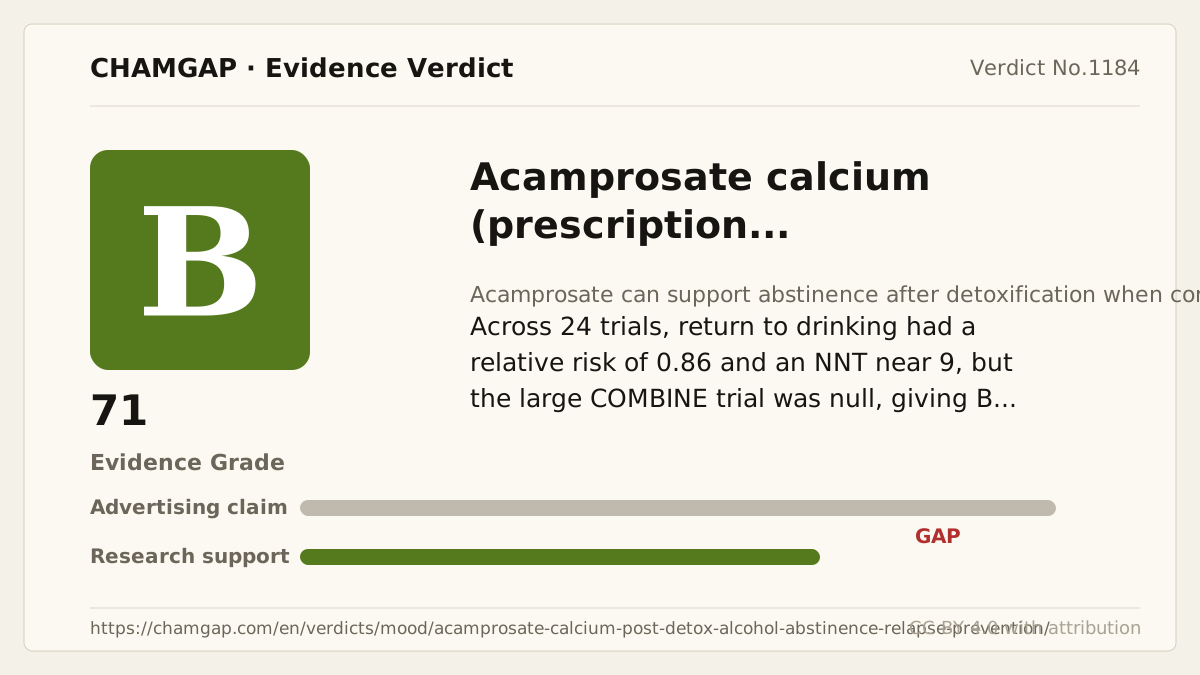
[Chamgap] Acamprosate calcium x continuous abstinence and prevention of return to drinking after detoxification in alcohol use disorder — Evidence Grade B·71. 2 cited sources checked. Source: https://chamgap.com/en/verdicts/mood/acamprosate-calcium-post-detox-alcohol-abstinence-relapse-prevention/ · CC BY 4.0CC BY 4.0 — free to use with attribution; do not distort grades, numbers, or verdict meaning.
What this document does and does not do
Chamgap is an information source. It reports what research has and has not confirmed; it does not tell readers what to take or buy. That decision belongs to readers and, when needed, medical or legal professionals. This verdict reflects literature available up to the search date and may change as new research appears. Nothing here is medical advice.