
ZMA complex,
does it really help with Increased testosterone, muscle mass, and vitality in healthy men?
research showsThe ZMA booster claim in zinc-sufficient healthy men is rated F. An eight-week double-blind trial in 42 resistance-trained men found no benefit for total or free testosterone, IGF-1, growth hormone, body composition, strength, endurance, or anaerobic performance. A separate placebo-controlled study in 14 zinc-sufficient men also found no increase in total or free testosterone. The early positive 27-person trial involved a ZMA developer and product interests and failed independent replication, giving F with 8 points.
ads claimMarketing converts possible normalization during deficiency into supranormal testosterone and muscle boosting in nutrient-replete men.
Useful facts when choosing a product
- A representative ZMA serving commonly supplies 30 mg zinc, 450 mg magnesium, and 10.5 mg vitamin B6 before bedtime.
- ZMA is a trademarked combination, while similarly named products vary in salt forms, doses, and added ingredients and are not necessarily equivalent.
- Diagnosing and correcting zinc or magnesium deficiency is a different clinical question from boosting testosterone in nutrient-replete healthy men.
- Supplemental magnesium can cause diarrhea, prolonged high zinc can cause copper deficiency, and excessive long-term vitamin B6 can cause peripheral neuropathy.
Chamgap Semantic Classification Code
Candidate index · review held
S.zma-complex.UNK.testosterone-muscle-mass-and-vitality.increase.placeboSupplements and nutraceuticals > ZMA complex > Unknown > testosterone, muscle mass, and vitality > Increase claim > Placebo
An automated migration candidate, not an issued permanent code; exact claim scope remains under review. This machine-generated migration candidate helps retrieval but is not a permanent assignment. The original verdict ID and URL remain authoritative.
What the research actually shows
Wilborn randomized 42 resistance-trained men to ZMA or dextrose placebo during eight weeks of training and found no added benefit in hormones, DXA, one-repetition maximum, muscular endurance, or Wingate testing. Koehler studied 14 men with adequate zinc intake; zinc status rose but total and free testosterone did not. Treating diagnosed zinc deficiency is a separate population and claim.
Why this is classified as F (8)
A 42-person training trial and a 14-person zinc-sufficient trial independently refuted hormonal, muscle, and performance claims, and the conflicted early positive result was not replicated, supporting F. The small samples and multi-ingredient formulation justify 8 rather than 4 points within F.
Counterpoint. Persistent fatigue, low libido, or muscle loss warrants assessment of sleep, energy intake, medicines, anemia, thyroid disease, and gonadal function.
Rejudgment record. New verdict — Applied repeated null hormone and training-adaptation findings in two placebo-controlled studies of healthy zinc-sufficient men and failed replication of an early conflicted positive study
Sub-claim grades by effect
This ingredient is marketed for several effects. A single overall grade blends strong and weak claims together, so each effect is graded separately here. The overall grade reflects the strongest disconfirming or core claim.
| Effect (sub-claim) | Grade | Basis |
|---|---|---|
| Increased testosterone in healthy men | F | Two placebo-controlled studies were repeatedly null. |
| Increased muscle mass, strength, and vitality | F | DXA, strength, and performance outcomes showed no added benefit. |
| Correction of zinc deficiency | ? | Treating deficiency is a different population and claim from boosting replete men. |
Cross-check — AI research and Codex final gate
Evidence Table
| Study | Design | Sample | Funding | Endpoint | Result | Weight |
|---|---|---|---|---|---|---|
| Wilborn CD et al. 2004 | Randomized double-blind placebo-controlled eight-week training trial | 42 resistance-trained men | Commercial-supplement evaluation with external interests reported | Hormones, DXA body composition, strength, and performance | No added effect was found for testosterone, IGF-1, body composition, or performance. | Key independent refutation |
| Koehler K et al. 2009 | Placebo-controlled eight-week supplementation trial | 14 exercising zinc-sufficient men | Academic German Sport University research | Total and free testosterone and urinary metabolites | Zinc increased, but testosterone did not change. | Repeated direct hormonal refutation |
Receipt — 3 References
All 3 cited sources were verified for existence at the original page (as of 2026-07-19).
Final verification and publication gate: Codex · Evidence date: 2026-07-19 · Corrections: none
Cite this verdict
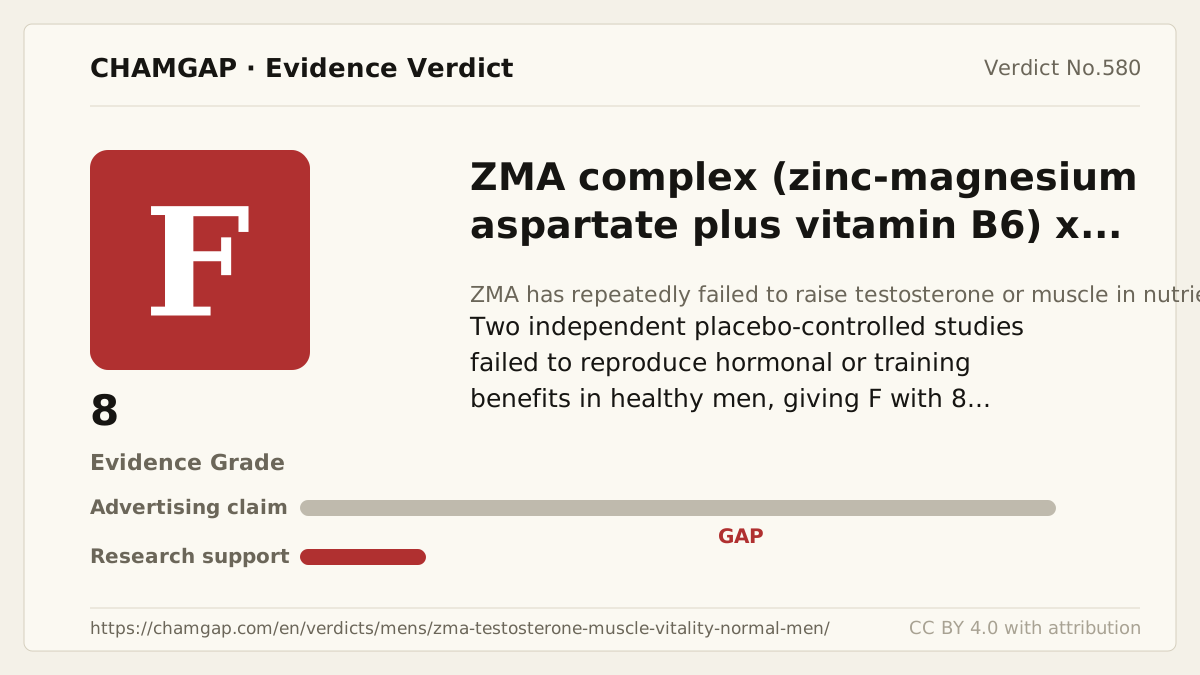
[Chamgap] ZMA complex x increased testosterone, muscle mass, and vitality in healthy men — Evidence Grade F·8. 3 cited sources checked. Source: https://chamgap.com/en/verdicts/mens/zma-testosterone-muscle-vitality-normal-men/ · CC BY 4.0CC BY 4.0 — free to use with attribution; do not distort grades, numbers, or verdict meaning.
What this document does and does not do
Chamgap is an information source. It reports what research has and has not confirmed; it does not tell readers what to take or buy. That decision belongs to readers and, when needed, medical or legal professionals. This verdict reflects literature available up to the search date and may change as new research appears. Nothing here is medical advice.