
Suma root,
does it really help with Increased testosterone, male libido, and vitality?
research showsSuma root is rated ? because no oral human efficacy trial was identified for testosterone, libido or erectile function, or vitality and fatigue. The directly relevant literature consists of pharmacognostic accounts of traditional tonic and aphrodisiac use and an experiment on copulatory behavior in male rats. These are traditional and animal findings, not clinical evidence of hormonal or sexual effects in people. Suma is an Amaranthaceae plant distinct from tongkat ali, shilajit, and Panax ginseng, and human trials of those other ingredients were not borrowed for this verdict.
ads claimMarketing turns the names Brazilian ginseng, natural testosterone, and male power, together with animal sexual-behavior findings, into claims about human hormones, erections, and fatigue. None of those three human claims is currently established.
Useful facts when choosing a product
- Suma is the root of an Amaranthaceae plant called Hebanthe paniculata or by the synonym Pfaffia paniculata. It is distinct from Panax ginseng, tongkat ali, and shilajit.
- Powders, capsules, and extracts can differ in extraction ratio and standardized constituents. No human effective dose has been established, and animal doses should not be converted into self-treatment doses.
- Oral human efficacy and long-term safety for male hormones, sexual function, and fatigue have not been established. Safety during pregnancy and lactation is also unestablished, and people with hormone-sensitive conditions or medication use should seek professional advice.
- The common name Brazilian ginseng does not mean that the plant is Panax ginseng. The scientific name and plant part on the product label should be checked.
Chamgap Semantic Classification Code
Candidate index · review held
UNK.suma-root.UNK.testosterone-male-libido-and-vitality.increase.UNKUnknown > Suma root > Unknown > testosterone, male libido, and vitality > Increase claim > Unknown
An automated migration candidate, not an issued permanent code; exact claim scope remains under review. This machine-generated migration candidate helps retrieval but is not a permanent assignment. The original verdict ID and URL remain authoritative.
What the research actually shows
Arletti and colleagues orally administered Pfaffia paniculata extracts to sexually potent and sexually sluggish or impotent male rats. The extract had no effect in potent rats and improved several copulatory measures in sluggish rats, but this was not a human trial and did not test clinical testosterone outcomes. Oliveira's pharmacognostic review described traditional use, botany, and chemistry and emphasized the difference between Brazilian ginseng and imported ginsengs. No oral human efficacy study matching the target claims was identified in PubMed and web literature through July 18, 2026.
Why this is classified as ?
Because there are zero target oral human efficacy trials, this is ? for missing literature rather than D for demonstrated lack of effect. Traditional-use literature and the male-rat experiment are retained in citations but explicitly flagged as not human efficacy. Missing long-term human safety data and regulatory concerns are recorded separately as Caution.
Counterpoint. Low libido, erectile problems, and persistent fatigue can reflect sleep problems, depression or anxiety, medicines, or cardiometabolic disease rather than low testosterone alone. Repeated morning testosterone testing and assessment of causes should precede supplement use.
Rejudgment record. New verdict — Applied ? because no oral human efficacy trial assessed testosterone, libido, erectile function, or vitality; traditional and animal evidence was excluded from human efficacy
Sub-claim grades by effect
This ingredient is marketed for several effects. A single overall grade blends strong and weak claims together, so each effect is graded separately here. The overall grade reflects the strongest disconfirming or core claim.
| Effect (sub-claim) | Grade | Basis |
|---|---|---|
| Increased testosterone | ? | No oral human efficacy trial was identified. |
| Improved libido or erectile function | ? | Only traditional use and male-rat sexual-behavior data were found, with no human trial. |
| Improved vitality or fatigue | ? | No target oral human efficacy trial was identified. |
Cross-check — AI research and Codex final gate
Evidence Table
| Study | Design | Sample | Funding | Endpoint | Result | Weight |
|---|---|---|---|---|---|---|
| Arletti R et al. 1999 | Oral sexual-behavior experiment in male rats | Exact group sizes were not reported in the abstract; zero humans | Not reported in the abstract | Mount, intromission, and ejaculation latencies and ejaculation proportion | Some measures improved in sexually sluggish male rats, while potent rats showed no effect. | Not human efficacy; hypothesis-generating |
| Oliveira F. 1986 pharmacognostic review | Narrative pharmacognostic review of botany, chemistry, and folk use | Zero human efficacy trials | Not reported | Traditional tonic and aphrodisiac use and botanical identity | Described traditional use and the botanical distinction from imported ginsengs. | Traditional evidence; not human efficacy |
Receipt — 3 References
All 3 cited sources were verified for existence at the original page (as of 2026-07-18).
Final verification and publication gate: Codex · Evidence date: 2026-07-18 · Corrections: none
Cite this verdict
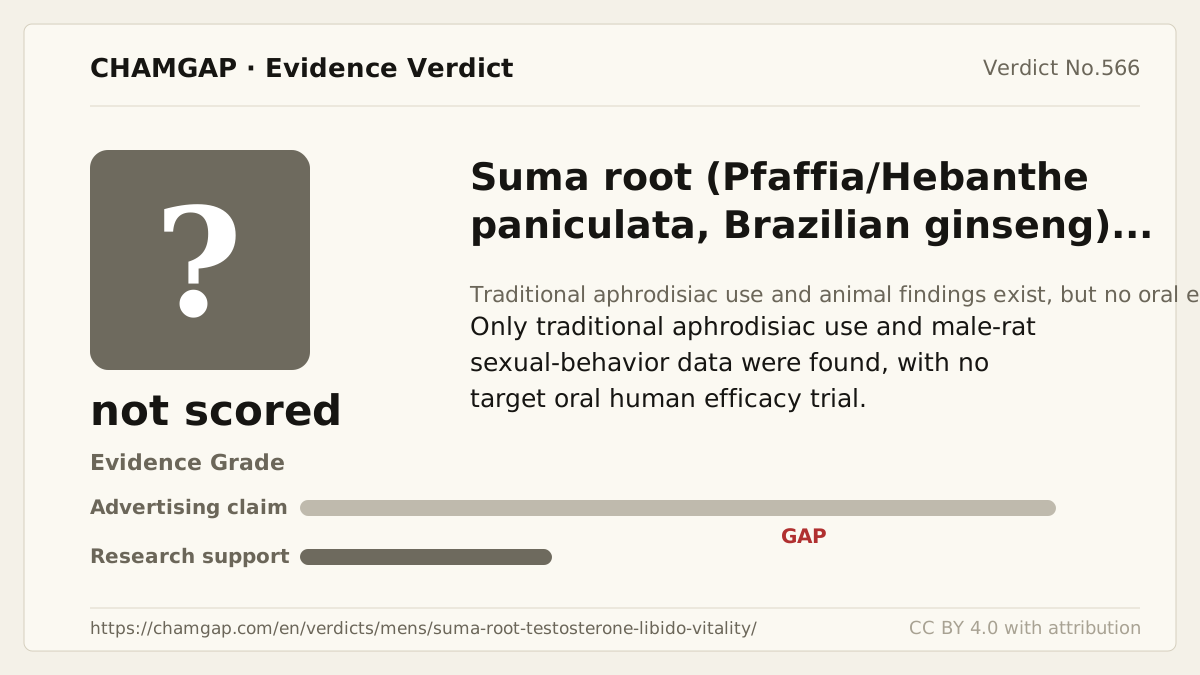
[Chamgap] Suma root x increased testosterone, male libido, and vitality — Evidence Grade ?. 3 cited sources checked. Source: https://chamgap.com/en/verdicts/mens/suma-root-testosterone-libido-vitality/ · CC BY 4.0CC BY 4.0 — free to use with attribution; do not distort grades, numbers, or verdict meaning.
What this document does and does not do
Chamgap is an information source. It reports what research has and has not confirmed; it does not tell readers what to take or buy. That decision belongs to readers and, when needed, medical or legal professionals. This verdict reflects literature available up to the search date and may change as new research appears. Nothing here is medical advice.