
Coenzyme Q10,
does it really help with Improved sperm concentration and motility and greater pregnancy potential in infertile men?
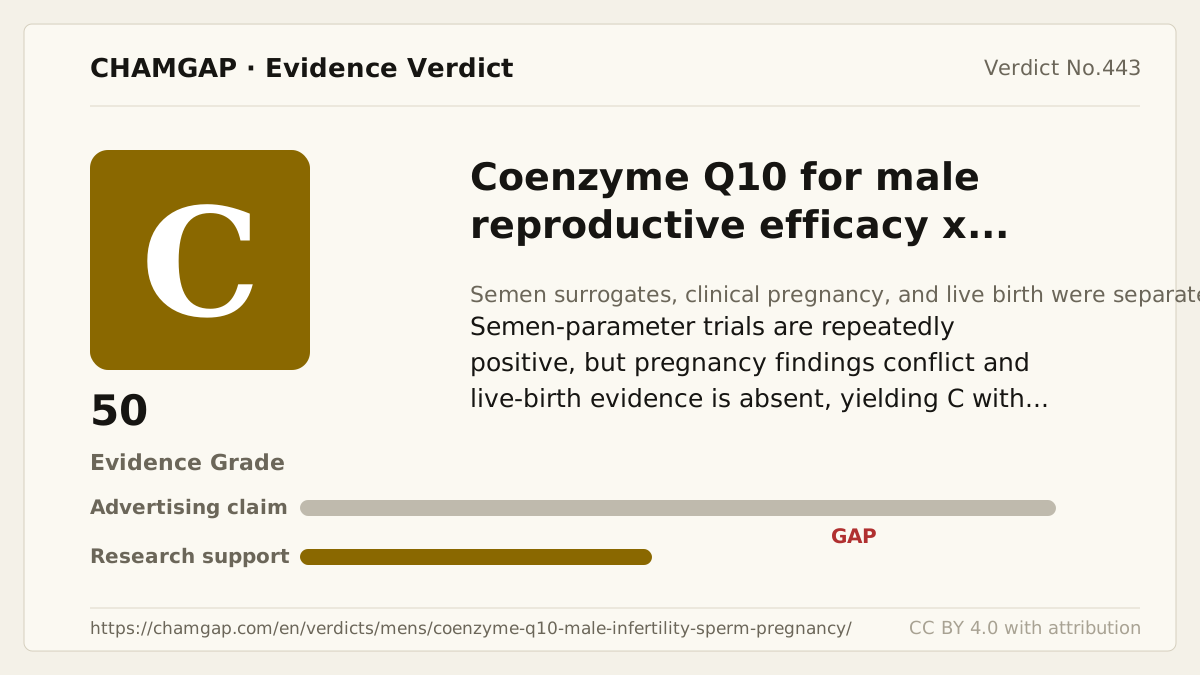
research showsTrials and meta-analyses of CoQ10 alone or CoQ10-containing interventions in infertile men repeatedly report improved sperm concentration or motility. These are semen surrogates with substantial heterogeneity. A 2013 meta-analysis found no pregnancy increase and no live-birth data, whereas a 2025 meta-analysis of nine trials reported more clinical pregnancies but mixed standalone and combination formulations and different controls. Pregnancy and birth are not established, so the grade is upper C.
ads claimClaims that raising sperm counts increases pregnancy success, guarantees in vitro fertilization success, or produces a healthy birth skip evidence levels. This verdict evaluates male infertility only, not CoQ10 research in cardiac energy or statin-associated muscle symptoms.
Useful facts when choosing a product
- CoQ10 products sold in Korea and through import channels include standalone products and combinations with zinc, selenium, carnitine, and other antioxidants.
- Male-infertility trials commonly used 200-300 mg/day for three to six months, with ubiquinone and ubiquinol formulations varying.
- Results from antioxidant combinations do not establish the standalone contribution of CoQ10.
- Potential interaction with warfarin and blood-pressure or glucose-lowering drugs warrants review with the fertility clinician.
Chamgap Semantic Classification Code
Candidate index · review held
S.coenzyme-q10.UNK.sperm-concentration-and-motility-and-greater-pregnancy-potential-in-infertile-men.improve.MULTISupplements and nutraceuticals > Coenzyme Q10 > Unknown > sperm concentration and motility and greater pregnancy potential in infertile men > Improvement claim > Multiple: primary unresolved
An automated migration candidate, not an issued permanent code; exact claim scope remains under review. This machine-generated migration candidate helps retrieval but is not a permanent assignment. The original verdict ID and URL remain authoritative.
What the research actually shows
The Safarinejad 2009 trial assigned 212 men with idiopathic oligoasthenoteratospermia to CoQ10 300 mg/day or placebo for 26 weeks and reported improved semen measures, including concentration and motility. The Balercia 2009 double-blind trial enrolled 60 men, with 55 completing, and reported motility and seminal CoQ10 signals after 200 mg/day for six months. The Lafuente 2013 meta-analysis of three trials and 296 men found improved concentration and motility but no increased pregnancy rate and no live-birth data. The Bakri 2025 meta-analysis of nine trials and 781 participants reported improved concentration, total motility, and clinical pregnancy, but mixed standalone and combination products, placebo and active controls, and showed high motility heterogeneity. Combination-antioxidant findings were not attributed solely to CoQ10.
Why this is classified as C (50)
Sperm concentration and motility have signals across trials and meta-analyses but remain heterogeneous surrogates, so they are C. Clinical pregnancy is lower C because early null and recent positive results conflict and combination products are mixed; live birth is unknown. The overall verdict is C with 50 points.
Counterpoint. The semen signal should not be dismissed, but a large standalone CoQ10 trial controlling female-partner and assisted-reproduction factors and prespecifying clinical pregnancy, ongoing pregnancy, and live birth is needed.
Rejudgment record. New verdict — Separated repeated semen-surrogate trial signals from conflicting pregnancy meta-analysis findings and did not assign standalone credit from antioxidant combinations or infer live birth
Sub-claim grades by effect
This ingredient is marketed for several effects. A single overall grade blends strong and weak claims together, so each effect is graded separately here. The overall grade reflects the strongest disconfirming or core claim.
| Effect (sub-claim) | Grade | Basis |
|---|---|---|
| Sperm concentration and motility | C | Positive across multiple trials and meta-analyses, but surrogate outcomes with high heterogeneity |
| Clinical pregnancy potential | D | Both the 2013 and 2025 comprehensive meta-analyses were null for pregnancy; the analysis that turned positive mixed monotherapy and combination controls |
| Live birth | ? | Adequate live-birth results from standalone CoQ10 trials were not identified |
Cross-check — AI research and Codex final gate
Evidence Table
| Study | Design | Sample | Funding | Endpoint | Result | Weight |
|---|---|---|---|---|---|---|
| Safarinejad (2009) | Twenty-six-week randomized double-blind placebo-controlled trial | 212 | Unknown; used Kaneka CoQ10 | Sperm concentration, motility, morphology, and hormones | Improved semen surrogate measures | Key |
| Balercia et al. (2009) | Six-month double-blind randomized placebo-controlled trial | 55 | Unknown | Sperm motility, seminal CoQ10, and pregnancy | Motility and seminal CoQ10 signals; pregnancy sample was insufficient | Key |
| Lafuente et al. (2013) | Systematic review and meta-analysis | 296 | Unknown | Semen parameters, pregnancy, and live birth | Positive concentration and motility; null pregnancy; no live-birth data | Key |
| Bakri et al. (2025) | Systematic review and meta-analysis of randomized trials | 781 | Reported no external funding | Concentration, semen volume, motility, and clinical pregnancy | Positive semen and pregnancy findings, but mixed formulations and controls and motility heterogeneity of 89% | Key |
Receipt — 4 References
All 4 cited sources were verified for existence at the original page (as of 2026-07-17).
Final verification and publication gate: Codex · Evidence date: 2026-07-17 · Corrections: none
Cite this verdict
[Chamgap] Coenzyme Q10 x semen parameters and pregnancy potential in male infertility — Evidence Grade C·50. 4 cited sources checked. Source: https://chamgap.com/en/verdicts/mens/coenzyme-q10-male-infertility-sperm-pregnancy/ · CC BY 4.0CC BY 4.0 — free to use with attribution; do not distort grades, numbers, or verdict meaning.
What this document does and does not do
Chamgap is an information source. It reports what research has and has not confirmed; it does not tell readers what to take or buy. That decision belongs to readers and, when needed, medical or legal professionals. This verdict reflects literature available up to the search date and may change as new research appears. Nothing here is medical advice.