
Wheatgrass,
does it really help with Liver detoxification and improvement of liver enzymes and liver fat in MASLD?
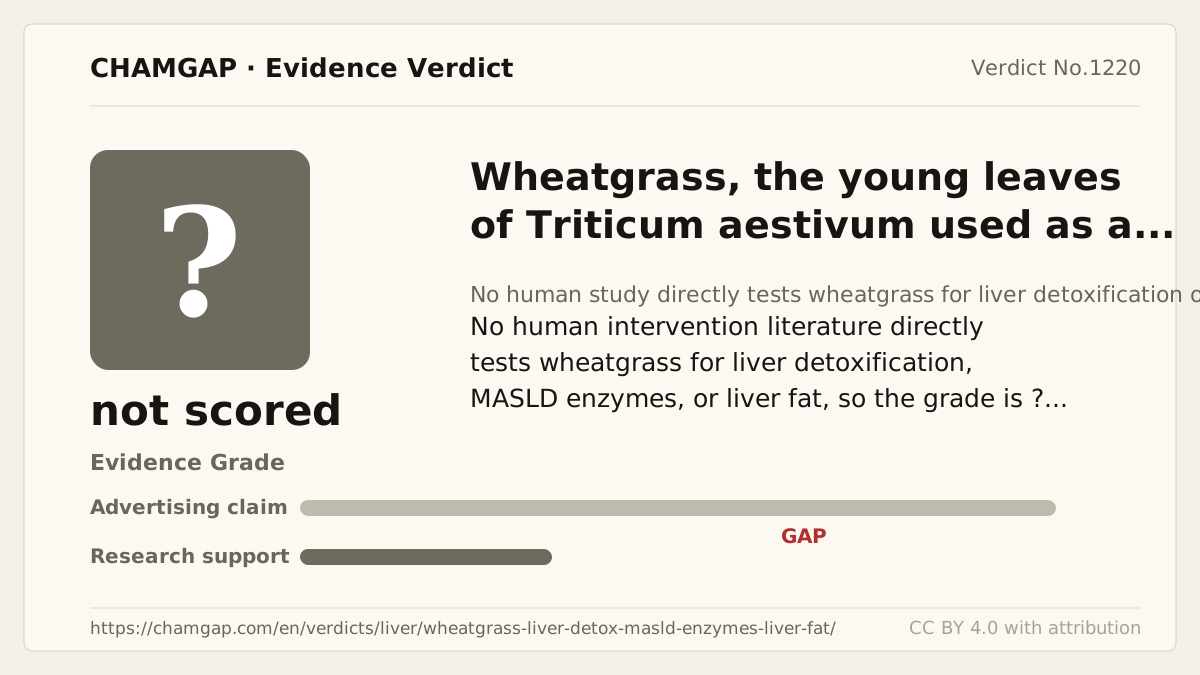
research showsWheatgrass is rated ? for liver detoxification and MASLD improvement. A 2015 medical review of human wheatgrass research found small trials in ulcerative colitis, adjunctive cancer care, hematologic disorders, and metabolic outcomes, but no intervention trial measuring detoxification, ALT or AST in MASLD, or imaging-based liver fat. Memorial Sloan Kettering also states that scientific evidence does not support the wheatgrass detox claim. Fatty-liver trials retrieved by searching involved wheat germ, whole wheat, other herbs, or animals rather than young Triticum aestivum leaves. Because claim-specific human efficacy literature is absent, the grade is ? and the score is null.
ads claimMarketing connects green color, chlorophyll, antioxidants, and cleanse imagery with hepatic toxin removal and fatty-liver recovery. Detoxification requires a defined substance, concentration, elimination pathway, and clinical outcome, none of which has been tested in a wheatgrass human trial. Wheat-germ, whole-wheat, and animal findings should not be relabeled as wheatgrass efficacy.
Useful facts when choosing a product
- Wheatgrass is usually harvested as young sprouted-wheat leaves and consumed as fresh juice, freeze-dried powder, tablets, or capsules. Wheat germ and whole wheat are different food materials.
- Growing time, drying method, microbial control, and co-ingredients vary among products, so chlorophyll, nutrient content, and quality cannot be generalized as one uniform wheatgrass preparation.
- Food-level use is generally tolerated, but nausea, difficulty swallowing the grassy-tasting juice, or abdominal symptoms can occur. People with wheat allergy should avoid it.
- Fresh wheatgrass and sprout products can carry mold or bacteria. People with celiac disease or a need to avoid gluten should verify testing and certification for contamination from wheat kernels or processing.
Chamgap Semantic Classification Code
Candidate index · review held
S.wheatgrass.UNK.liver-detoxification-and-improvement-of-liver-enzymes-and-liver-fat-in-masld.improve.noneSupplements and nutraceuticals > Wheatgrass > Unknown > Liver detoxification and improvement of liver enzymes and liver fat in MASLD > Improvement claim > No intervention
An automated migration candidate, not an issued permanent code; exact claim scope remains under review. This machine-generated migration candidate helps retrieval but is not a permanent assignment. The original verdict ID and URL remain authoritative.
What the research actually shows
The 2015 review by Bar-Sela and colleagues synthesized cell, animal, and human wheatgrass evidence and judged all clinical trials small and methodologically limited. Listed human fields included chemotherapy adverse effects, rheumatoid arthritis, ulcerative colitis, hematologic disease, diabetes, obesity, and oxidative stress, but no intervention trial of MASLD enzymes or liver fat. The Memorial Sloan Kettering clinical summary states that scientific evidence does not support raw wheatgrass detoxification and limits human findings to ulcerative colitis, hematologic disorders, and adjunctive cancer care. The 2018 trial by Mutha and colleagues in 69 children with thalassemia excluded active liver disease and reported increased liver enzymes in the wheatgrass group compared with control; it was not a MASLD efficacy trial. A retrieved fatty-liver trial of wheat germ studied the embryo fraction of the grain, not young wheatgrass leaves.
Why this is classified as ?
The grade is ? and the score is null because zero human intervention trials directly evaluated wheatgrass for liver detoxification, MASLD enzymes, or imaging-based liver fat. Trials in other conditions, animal hepatoprotection, and fatty-liver trials of wheat germ or whole wheat involve different interventions or claims and were not repurposed as evidence. Absence was kept distinct from null efficacy rather than forcing a D or F grade.
Counterpoint. Enjoying wheatgrass as an ordinary food is different from treating fatty liver with it. Suspected MASLD warrants assessment of weight, alcohol, diabetes, lipids, medicines, and fibrosis risk, with established lifestyle and medical care prioritized.
Rejudgment record. New verdict — Applied ? for absence of human efficacy literature because no intervention trial directly tested young-leaf Triticum aestivum wheatgrass for liver detoxification, ALT or AST in MASLD, or imaging-based liver fat; trials in other conditions, animal studies, and wheat-germ or whole-wheat studies were excluded
Sub-claim grades by effect
This ingredient is marketed for several effects. A single overall grade blends strong and weak claims together, so each effect is graded separately here. The overall grade reflects the strongest disconfirming or core claim.
| Effect (sub-claim) | Grade | Basis |
|---|---|---|
| Enhanced liver detoxification in humans | ? | No human efficacy trial directly defined and measured a toxin, its elimination, and a clinical outcome. |
| Improvement of ALT and AST in MASLD | ? | No human intervention trial administering wheatgrass to patients with MASLD and measuring liver enzymes was identified. |
| Improvement of imaging or histologic liver fat in MASLD | ? | No human intervention trial of young-leaf wheatgrass measuring imaging or histologic liver fat was identified. |
Cross-check — AI research and Codex final gate
Evidence Table
| Study | Design | Sample | Funding | Endpoint | Result | Weight |
|---|---|---|---|---|---|---|
| Bar-Sela G et al. 2015 | Medical review of basic and clinical wheatgrass evidence | Multiple small human trials; zero direct trials of liver detoxification or MASLD | Israeli academic medical investigators; detailed funding not stated in the PubMed record | Adjunctive cancer care, inflammatory and hematologic conditions, metabolism, and oxidative stress | Human trials were small and methodologically limited, and no trial of detoxification, MASLD enzymes, or liver fat was presented. | Synthesis documenting the claim-specific human-literature gap |
| Memorial Sloan Kettering wheatgrass clinical summary | Evidence-based institutional clinical information review | Clinical and preclinical wheatgrass literature; zero direct detoxification or MASLD trials | Memorial Sloan Kettering Cancer Center | Purported uses, human evidence, and adverse effects | It states that scientific evidence does not support raw-wheatgrass detoxification and that human data are limited to other indications. | Institutional review documenting absence of support for detoxification |
| Mutha AS et al. 2018 | Randomized prospective trial in children with thalassemia | 69 enrolled and 54 completed | Detailed funding not stated; authors declared no conflicts of interest | Transfusion need, quality of life, hematology, liver and spleen measures, and laboratory findings | This was not a MASLD trial, excluded active liver disease, and reported higher liver enzymes in the wheatgrass group than in control. | Human-exposure context not applicable to the claimed efficacy |
Receipt — 3 References
All 3 cited sources were verified for existence at the original page (as of 2026-07-23).
Final verification and publication gate: Codex · Evidence date: 2026-07-23 · Corrections: none
Cite this verdict
[Chamgap] Wheatgrass x liver detoxification and improved liver enzymes and fat in MASLD — Evidence Grade ?. 3 cited sources checked. Source: https://chamgap.com/en/verdicts/liver/wheatgrass-liver-detox-masld-enzymes-liver-fat/ · CC BY 4.0CC BY 4.0 — free to use with attribution; do not distort grades, numbers, or verdict meaning.
What this document does and does not do
Chamgap is an information source. It reports what research has and has not confirmed; it does not tell readers what to take or buy. That decision belongs to readers and, when needed, medical or legal professionals. This verdict reflects literature available up to the search date and may change as new research appears. Nothing here is medical advice.