
Semaglutide 2.4 mg,
does it really help with Resolution of steatohepatitis and improvement of liver fibrosis by at least one stage in F2-F3 MASH?
research showsSemaglutide 2.4 mg is rated C because a large phase 3 randomized trial improved both biopsy-defined steatohepatitis resolution and fibrosis in F2-F3 MASH. In the 72-week ESSENCE interim analysis, MASH resolution occurred in 62.9% versus 34.3%, and improvement of fibrosis by at least one stage occurred in 36.8% versus 22.4%. These are surrogate biopsy findings from the first 800 participants in an ongoing 240-week trial, however, and reduced cirrhosis progression, liver transplantation, or liver-related death has not yet been established. This is a MASH-specific claim, distinct from diabetes or weight-loss efficacy. Gastrointestinal adverse effects, gallbladder disease, rare pancreatitis, and possible lean-mass loss during weight reduction remain separate safety issues.
ads claimMarketing may turn improvement on liver biopsy into a recovered liver or proven prevention of cirrhosis and liver death. Direct evidence currently covers 72-week histologic response in noncirrhotic F2-F3 MASH; the ongoing 240-week study is needed for long-term clinical events.
Useful facts when choosing a product
- Wegovy is a prescription semaglutide GLP-1 receptor agonist. For noncirrhotic F2-F3 MASH, the recommended maintenance regimen is a 2.4-mg subcutaneous injection once weekly after gradual dose escalation.
- The United States MASH indication received accelerated approval in 2025 on the basis of histologic improvement in MASH and fibrosis. Continued approval may depend on confirmation of clinical benefit such as fewer deaths or liver transplants.
- Common adverse effects include nausea, diarrhea, vomiting, constipation, and abdominal pain. Gallbladder disease, dehydration-related kidney problems, and rare acute pancreatitis also require attention.
- A personal or family history of medullary thyroid carcinoma or multiple endocrine neoplasia type 2 is a contraindication, and the long half-life matters before a planned pregnancy. Substantial weight loss can include lean-mass loss, so nutrition and resistance activity deserve attention.
Chamgap Semantic Classification Code
Candidate index · review held
M.semaglutide.UNK.resolution-of-steatohepatitis-and-improvement-of-liver-fibrosis-by-at-least-one-stage-in-f2-f3-mash.improve.placeboMedicinal interventions > Semaglutide > Unknown > Resolution of steatohepatitis and improvement of liver fibrosis by at least one stage in F2-F3 MASH > Improvement claim > Placebo
An automated migration candidate, not an issued permanent code; exact claim scope remains under review. This machine-generated migration candidate helps retrieval but is not a permanent assignment. The original verdict ID and URL remain authoritative.
What the research actually shows
ESSENCE assigned 1,197 patients with biopsy-confirmed F2-F3 MASH in a 2-to-1 ratio to weekly semaglutide 2.4 mg or placebo for 240 weeks. Part 1 is the planned 72-week interim analysis of the first 800 participants, and both histologic primary endpoints were significant. A 2021 phase 2 trial in 320 participants found that daily 0.4-mg semaglutide increased MASH resolution to 59% versus 17%, but fibrosis improvement was 43% versus 33% and nonsignificant at P=0.48. A 2023 trial in 71 patients with compensated NASH cirrhosis found no improvement in fibrosis or NASH resolution with weekly 2.4 mg. Differences in stage and regimen mean these results limit extrapolation rather than directly negate ESSENCE.
Why this is classified as C (58)
ESSENCE is a large randomized phase 3 trial with sizable, significant effects on both MASH resolution and one-stage fibrosis improvement, making the evidence stronger than D. Limitations are manufacturer funding, a 72-week interim analysis of the first part of a 240-week trial, biopsy surrogates, and no confirmed reduction in cirrhosis, transplantation, or liver-related death. Applying surrogate-endpoint rule ① gives C with 58 points; accelerated approval was not used as an independent upgrade.
Counterpoint. For an adult with noncirrhotic F2-F3 MASH confirmed by biopsy or appropriate specialist evaluation, semaglutide can be a genuine treatment option. It still requires prescribing, titration, and monitoring for gallbladder and pancreatic symptoms and should not be treated like a supplement or used solely by extrapolating from weight-loss or diabetes evidence.
Rejudgment record. New verdict — Gave substantial weight to both significant histologic primary endpoints in the large ESSENCE phase 3 trial, but applied the rule ① ceiling of C because they are biopsy surrogates from a 72-week planned interim analysis, the trial was manufacturer-funded, and effects on cirrhosis, transplantation, and liver-related death remain unconfirmed
Sub-claim grades by effect
This ingredient is marketed for several effects. A single overall grade blends strong and weak claims together, so each effect is graded separately here. The overall grade reflects the strongest disconfirming or core claim.
| Effect (sub-claim) | Grade | Basis |
|---|---|---|
| Resolution of steatohepatitis in F2-F3 MASH | C | ESSENCE showed a large positive result of 62.9% versus 34.3%, but this was a histologic biopsy surrogate. |
| Improvement of liver fibrosis by at least one stage in F2-F3 MASH | C | ESSENCE was significant at 36.8% versus 22.4%, but the finding comes from a manufacturer-funded interim analysis. |
| Reduction of cirrhosis, liver transplantation, or liver-related death | ? | The 240-week clinical-event results are not yet available, so efficacy on these hard outcomes is unestablished. |
Cross-check — AI research and Codex final gate
Evidence Table
| Study | Design | Sample | Funding | Endpoint | Result | Weight |
|---|---|---|---|---|---|---|
| Sanyal AJ et al.; ESSENCE Study Group. 2025 | Planned interim analysis of an ongoing multicenter randomized double-blind placebo-controlled phase 3 trial | 1,197 overall; first 800 in part 1, including 534 assigned to semaglutide and 266 to placebo | Funded by Novo Nordisk; several authors were company employees | MASH resolution without fibrosis worsening and at least one-stage fibrosis improvement without MASH worsening at week 72 | MASH resolution was 62.9% versus 34.3%, and fibrosis improvement was 36.8% versus 22.4%; both P values were below 0.001. | Pivotal large direct randomized evidence, but based on histologic surrogates and an interim analysis |
| Newsome PN et al.; NN9931-4296 Investigators. 2021 | Multicenter randomized double-blind placebo-controlled phase 2 trial | 320 participants with biopsy-confirmed F1-F3 NASH; 230 with F2-F3 in the primary analysis | Funded by Novo Nordisk | NASH resolution and one-stage fibrosis improvement at 72 weeks | Daily 0.4 mg significantly increased NASH resolution to 59% versus 17%, but fibrosis improvement was null at 43% versus 33%, P=0.48. | Consistency for MASH resolution with earlier uncertainty for fibrosis |
| Loomba R et al.; NN9931-4492 investigators. 2023 | Randomized double-blind placebo-controlled phase 2 trial | 71 participants with biopsy-confirmed NASH-related compensated cirrhosis | Funded by Novo Nordisk | At least one-stage fibrosis improvement and NASH resolution at week 48 | Fibrosis improvement was 11% versus 29%, P=0.087, and NASH resolution was also nonsignificant. | Limits extrapolation to cirrhosis, a different disease stage |
Receipt — 3 References
All 3 cited sources were verified for existence at the original page (as of 2026-07-22).
Final verification and publication gate: Codex · Evidence date: 2026-07-22 · Corrections: none
Cite this verdict
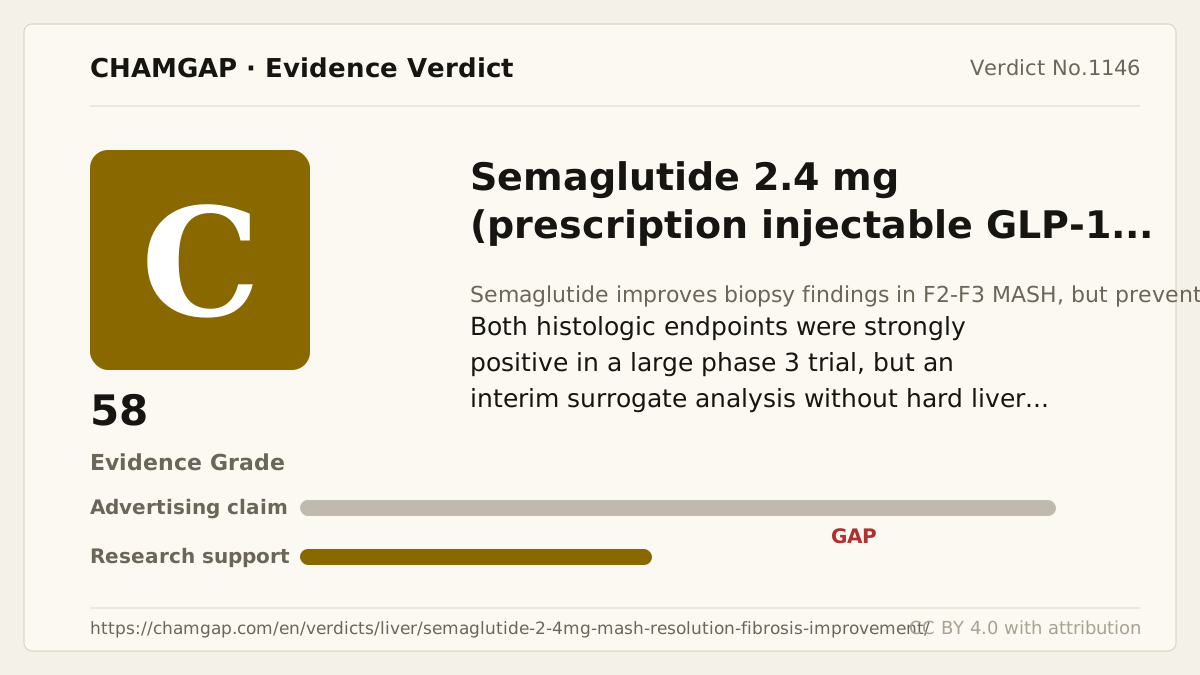
[Chamgap] Semaglutide 2.4 mg x histologic improvement in F2-F3 MASH — Evidence Grade C·58. 3 cited sources checked. Source: https://chamgap.com/en/verdicts/liver/semaglutide-2-4mg-mash-resolution-fibrosis-improvement/ · CC BY 4.0CC BY 4.0 — free to use with attribution; do not distort grades, numbers, or verdict meaning.
What this document does and does not do
Chamgap is an information source. It reports what research has and has not confirmed; it does not tell readers what to take or buy. That decision belongs to readers and, when needed, medical or legal professionals. This verdict reflects literature available up to the search date and may change as new research appears. Nothing here is medical advice.