
Propranolol,
does it really help with Prevention of a first variceal bleed in cirrhosis with large esophageal varices?
research showsPropranolol is rated A because strong evidence shows that it prevents a first variceal bleed in patients with cirrhosis and large esophageal varices who have not yet bled. A 230-participant multicenter trial found two-year freedom from bleeding of 74% versus 39%, and an independent 102-participant double-blind trial found variceal bleeding in 4% versus 22%. A meta-analysis of nine randomized trials likewise found that nonselective beta blockers reduced first bleeding by about half, with a pooled odds ratio of 0.54. Independent replication, a direct hard clinical endpoint, and decades of standard use support A with 84 points. The mortality benefit is less consistent. Bradycardia, hypotension, fatigue, and circulatory or renal risk in advanced ascites must be managed separately from efficacy with dose-reduction and stopping rules.
ads claimSimplified claims can turn prevention of first bleeding into a guarantee against both bleeding and death or imply that every patient should take the same dose. The strongest evidence applies to primary prophylaxis of high-risk varices. Mortality effects are less certain, and dosing must be individualized to pulse, blood pressure, ascites, kidney function, and tolerability.
Useful facts when choosing a product
- Propranolol is a nonselective beta blocker that reduces portal inflow by lowering heart rate and cardiac output and by blocking beta-2 receptors in the splanchnic circulation.
- For primary prophylaxis of large esophageal varices, a specialist starts at a low dose and adjusts treatment according to pulse, blood pressure, dizziness, kidney function, ascites, and tolerance. A fixed dose should not be copied without medical supervision.
- Bradycardia, hypotension, fatigue, dizziness, bronchospasm, and masking of hypoglycemia warning symptoms can occur. Asthma, marked bradycardia, and advanced atrioventricular block are contraindications or require special caution.
- Ascites is not an automatic contraindication, but dose reduction or temporary discontinuation should be considered when systolic or mean arterial pressure becomes very low or acute kidney injury develops. Patients should not abruptly stop or restart it on their own.
Chamgap Semantic Classification Code
Candidate index · review held
M.propranolol.intravenous.a-first-variceal-bleed-in-cirrhosis-with-large-esophageal-varices.prevent.placeboMedicinal interventions > Propranolol > Intravenous > a first variceal bleed in cirrhosis with large esophageal varices > Occurrence-prevention claim > Placebo
An automated migration candidate, not an issued permanent code; exact claim scope remains under review. This machine-generated migration candidate helps retrieval but is not a permanent assignment. The original verdict ID and URL remain authoritative.
What the research actually shows
Pascal and Cales 1987 randomized 230 patients with cirrhosis, large varices, and no previous bleeding to propranolol or placebo. Freedom from bleeding at two years was 74% versus 39%, and adverse effects caused treatment withdrawal in 11%. The three-center double-blind trial by Conn and colleagues in 1991 found variceal bleeding in 4% versus 22% among 102 participants, but no significant survival difference. Pagliaro and colleagues pooled nine randomized beta-blocker trials and confirmed a first-bleeding odds ratio of 0.54 while mortality showed only a trend. A 2019 network meta-analysis of 32 trials and 3,362 adults with large varices found that nonselective beta blockers may reduce both first bleeding and mortality, and Baveno VII retains nonselective beta blockers as a standard portal-hypertension option.
Why this is classified as A (84)
A direct hard endpoint, first bleeding from large esophageal varices, was repeatedly positive in independent multicenter trials of 230 and 102 participants, and the nine-trial meta-analysis confirmed a pooled odds ratio of 0.54. Decades of independent evidence and standard use support A with 84 points, above the corpus rating of B 76 for carvedilol in prevention of decompensation. Less consistent mortality benefit and variation in hemodynamic response and tolerance reduce the score but safety does not lower the efficacy grade.
Counterpoint. Endoscopic variceal ligation can be considered when propranolol is contraindicated or not tolerated. Secondary prevention after a bleed, small varices, and the therapeutic window in refractory ascites are separate questions from this verdict.
Rejudgment record. Cross-check reflected — Applied A because the direct hard endpoint of first bleeding from large esophageal varices was repeated in independent multicenter randomized trials and was consistent in a nine-trial meta-analysis with a pooled odds ratio of 0.54, while reflecting limited all-cause mortality benefit and variation in hemodynamic response and tolerance in the score
Sub-claim grades by effect
This ingredient is marketed for several effects. A single overall grade blends strong and weak claims together, so each effect is graded separately here. The overall grade reflects the strongest disconfirming or core claim.
| Effect (sub-claim) | Grade | Basis |
|---|---|---|
| Prevention of a first variceal bleed from large esophageal varices | A | Independent multicenter trials and a nine-trial meta-analysis consistently reduced the direct bleeding endpoint. |
| Reduction of all-cause mortality in patients with high-risk varices | B | Some large trials and a later network analysis were positive, but the early pooled analysis showed only a trend. |
| Prevention of first bleeding in patients with a confirmed HVPG response | B | Hemodynamic response increases the likelihood of benefit, but invasive measurement and responder selection limit generalizability. |
Cross-check — AI research and Codex final gate
Evidence Table
| Study | Design | Sample | Funding | Endpoint | Result | Weight |
|---|---|---|---|---|---|---|
| Pascal JP and Cales P. 1987 | Multicenter prospective randomized single-blind placebo-controlled trial | 230 patients with cirrhosis, large esophageal varices, and no previous bleed | Not clearly reported in the abstract record | First upper gastrointestinal bleeding and death | Two-year freedom from bleeding was 74% with propranolol versus 39% with placebo, and two-year survival was 72% versus 51%. | Key large randomized trial with direct hard endpoints |
| Conn HO et al. 1991 | Three-center randomized double-blind placebo-controlled trial | 102 patients with cirrhosis, esophageal varices, and HVPG above 12 mmHg | Not clearly reported in the abstract record | First variceal bleeding and survival | Variceal bleeding occurred in 4% with propranolol and 22% with placebo; mortality was 16% versus 22% without a significant difference. | Independent direct replication trial |
| Pagliaro L et al. 1992 | Meta-analysis of randomized trials | Nine randomized beta-blocker trials | Not clearly reported in the abstract record | First bleeding and all-cause mortality | First bleeding was reduced with pooled OR 0.54 (95% CI 0.39 to 0.74), while mortality showed only a trend toward reduction. | Key synthesis establishing consistency |
Receipt — 5 References
Of 5 cited sources, 1 had limited original-page access (blocked or summary-only) and were verified via index/summary, marked partial; the rest were verified at the original page. As of 2026-07-21.
Final verification and publication gate: Codex · Evidence date: 2026-07-21 · Corrections: none
Cite this verdict
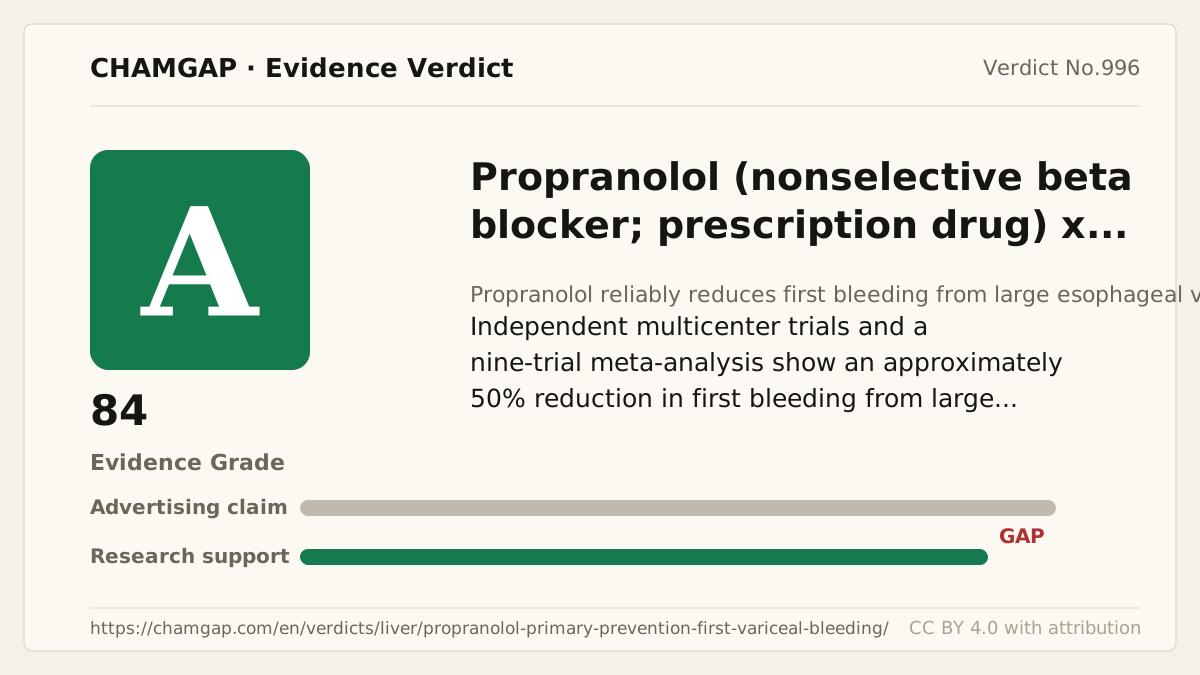
[Chamgap] Propranolol x prevention of a first bleed from large esophageal varices in cirrhosis — Evidence Grade A·84. 5 cited sources checked. Source: https://chamgap.com/en/verdicts/liver/propranolol-primary-prevention-first-variceal-bleeding/ · CC BY 4.0CC BY 4.0 — free to use with attribution; do not distort grades, numbers, or verdict meaning.
What this document does and does not do
Chamgap is an information source. It reports what research has and has not confirmed; it does not tell readers what to take or buy. That decision belongs to readers and, when needed, medical or legal professionals. This verdict reflects literature available up to the search date and may change as new research appears. Nothing here is medical advice.