
Omega-3 EPA and DHA,
does it really help with Improvement of liver fat, liver enzymes, and histology in MASLD or NAFLD?
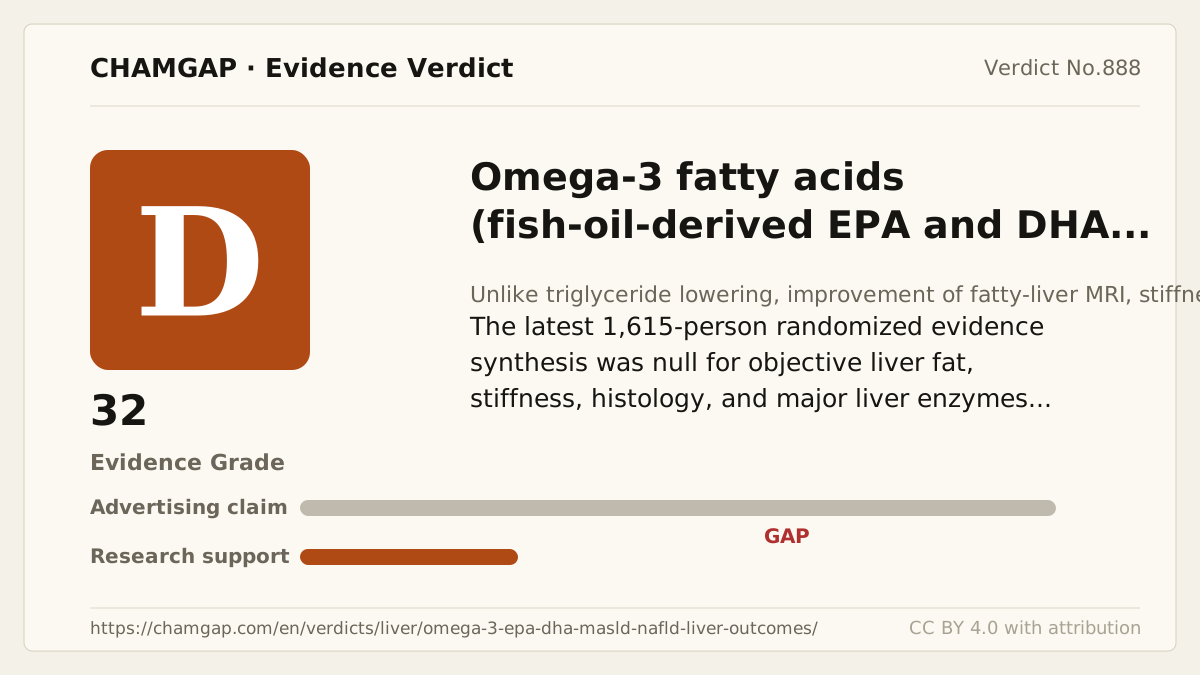
research showsOmega-3 EPA and DHA are rated D for meaningful liver improvement in MASLD or NAFLD. In the latest meta-analysis of 20 randomized trials and 1,615 participants, pooled effects for key objective outcomes such as MRI or MRS liver fat, liver stiffness, and histology, as well as AST and ALT, were not significant. Limited signals favored GGT by -5.38 IU/L and ultrasound steatosis with an odds ratio of 3.83, but the ultrasound result showed publication bias. The Sanyal histology trial tested an ethyl-EPA formulation rather than conventional EPA plus DHA, so the products are not treated as identical. Triglyceride lowering and cardiovascular indications remain separate efficacy domains.
ads claimMarketing expands triglyceride lowering or anti-inflammatory mechanisms into treatment of fatty liver, normalization of liver tests, and reversal of fibrosis. Blood triglyceride efficacy is not the same outcome as liver-histology improvement, and an ultrasound signal cannot substitute for null MRI and biopsy results.
Useful facts when choosing a product
- This verdict concerns the MASLD or NAFLD liver claim for fish-oil EPA and DHA supplements and is separate from prior omega-3 verdicts on cardiovascular, dry-eye, depression, and cognition outcomes.
- Trials used EPA alone, EPA plus DHA, ethyl esters, and other formulations at varying doses of roughly 1 to 4 g/day, so equivalence across marketed products cannot be assumed.
- Common adverse effects include fishy taste, belching, and gastrointestinal discomfort; high doses warrant consideration of bleeding tendency and atrial-fibrillation risk in some high-risk populations.
- Weight loss, exercise, and metabolic-risk management remain the foundation of MASLD care, and prescription omega-3 for hypertriglyceridemia should be distinguished from a fatty-liver supplement claim.
Chamgap Semantic Classification Code
Candidate index · review held
S.omega-3-fatty-acids.UNK.liver-fat-liver-enzymes-and-histology-in-masld-or-nafld.improve.placeboSupplements and nutraceuticals > Omega-3 fatty acids > Unknown > liver fat, liver enzymes, and histology in MASLD or NAFLD > Improvement claim > Placebo
An automated migration candidate, not an issued permanent code; exact claim scope remains under review. This machine-generated migration candidate helps retrieval but is not a permanent assignment. The original verdict ID and URL remain authoritative.
What the research actually shows
Kim and colleagues in 2025 synthesized 20 adult NAFLD or MASLD randomized trials with 1,615 participants. GGT favored omega-3 by -5.38 IU/L and ultrasound steatosis had an odds ratio of 3.83, but ultrasound showed publication bias. Pooled effects for AST, ALT, MRI or MRS liver fat, liver stiffness, and histology were null. A one-year fish-oil trial by Argo failed its primary NASH activity score endpoint. The multicenter Sanyal phase 2b trial tested ethyl-EPA rather than conventional EPA plus DHA and also failed to improve histology, so its formulation is distinguished while retaining its direct histology context.
Why this is classified as D (32)
The latest 20-trial, 1,615-participant synthesis found GGT and ultrasound signals but no benefit for AST, ALT, MRI or MRS liver fat, liver stiffness, or histology. Ultrasound showed publication bias, only 25% of trials were low risk, and histology trials failed their primary outcomes. Priority to the large objective and histological null evidence gives D with 32 points. Tolerability, bleeding, and atrial-fibrillation risks remain separate safety issues.
Counterpoint. Prescription omega-3 can be useful for separate indications such as severe hypertriglyceridemia. That benefit should not be translated into MRI or biopsy improvement in fatty liver, and MASLD care should prioritize weight and metabolic-risk management.
Rejudgment record. New verdict — Accepted GGT and ultrasound signals in the 20-trial, 1,615-participant meta-analysis but applied rule ② because AST, ALT, MRI or MRS liver fat, liver stiffness, and histology were null and ultrasound publication bias and trial-quality concerns were substantial
Sub-claim grades by effect
This ingredient is marketed for several effects. A single overall grade blends strong and weak claims together, so each effect is graded separately here. The overall grade reflects the strongest disconfirming or core claim.
| Effect (sub-claim) | Grade | Basis |
|---|---|---|
| Reduced objective liver fat in MASLD or NAFLD | D | The ultrasound steatosis signal had an odds ratio of 3.83 but showed publication bias, while pooled MRS and MRI-PDFF effects were not significant. |
| Improved AST and ALT in MASLD or NAFLD | D | AST and ALT were null; a limited GGT signal of -5.38 IU/L does not establish broad liver-enzyme improvement. |
| Improved liver stiffness and histology in MASLD or NASH | D | Key histological outcomes were null in the meta-analysis and direct biopsy trials. The Sanyal trial tested ethyl-EPA rather than conventional EPA plus DHA. |
Cross-check — AI research and Codex final gate
Evidence Table
| Study | Design | Sample | Funding | Endpoint | Result | Weight |
|---|---|---|---|---|---|---|
| Kim SJ et al. 2025 | Systematic review and meta-analysis of adult NAFLD randomized trials | 20 randomized trials and 1,615 participants | No specific funding and no conflicts of interest reported | Liver enzymes, ultrasound and MRI or MRS liver fat, liver stiffness, histology, and adverse events | GGT favored omega-3 by -5.38 IU/L and ultrasound steatosis had an odds ratio of 3.83, but ultrasound showed publication bias and AST, ALT, MRI or MRS liver fat, liver stiffness, and histology were not significant. | Key current large evidence synthesis |
| Argo CK et al. 2015 | Double-blind randomized placebo-controlled one-year trial | 41 participants with noncirrhotic NASH enrolled and 34 completed | United States NIH-related research support and academic institutions | Primary endpoint of at least a two-point NAS reduction without fibrosis progression and MRI liver fat | The primary histology endpoint was 23.5% with omega-3 and 17.6% with placebo with no difference; selected liver-fat analyses were positive. | Direct null histological primary endpoint |
| Sanyal AJ et al. 2014 | Phase 2b multicenter double-blind randomized placebo-controlled trial at 37 sites | 243 adults with NASH randomized | Industry-supported multicenter trial | Liver-biopsy-based histological improvement in NASH | Ethyl-EPA did not significantly improve NASH histology versus placebo. | Large direct null histology trial |
Receipt — 3 References
All 3 cited sources were verified for existence at the original page (as of 2026-07-20).
Final verification and publication gate: Codex · Evidence date: 2026-07-20 · Corrections: none
Cite this verdict
[Chamgap] Omega-3 EPA and DHA x improved liver fat, enzymes, and histology in MASLD or NAFLD — Evidence Grade D·32. 3 cited sources checked. Source: https://chamgap.com/en/verdicts/liver/omega-3-epa-dha-masld-nafld-liver-outcomes/ · CC BY 4.0CC BY 4.0 — free to use with attribution; do not distort grades, numbers, or verdict meaning.
What this document does and does not do
Chamgap is an information source. It reports what research has and has not confirmed; it does not tell readers what to take or buy. That decision belongs to readers and, when needed, medical or legal professionals. This verdict reflects literature available up to the search date and may change as new research appears. Nothing here is medical advice.