
Obeticholic acid,
does it really help with Prevention of clinical progression, including death, transplantation, and hepatic decompensation, in primary biliary cholangitis with inadequate response to UDCA?
research showsObeticholic acid is rated D because it improved liver-test surrogate outcomes in primary biliary cholangitis but did not confirm prevention of patient-important clinical progression. The peer-reviewed POISE original report succeeded on its ALP-and-bilirubin primary surrogate endpoint in the actual ITT population of 216. The peer-reviewed confirmatory COBALT trial then failed its composite primary clinical-event endpoint in the actual randomized ITT analysis of 334 participants: HR 1.01 (95% CI 0.68 to 1.51). In plain terms, liver tests improved, but patient outcomes did not. European Union authorization was revoked, and the FDA warns about serious liver injury.
ads claimMarketing can convert reductions in ALP and bilirubin directly into prevention of decompensation, transplantation, and death. The evidence instead shows that liver tests improved while patient outcomes did not, and the randomized clinical-event confirmatory primary endpoint failed.
Useful facts when choosing a product
- Obeticholic acid is an FXR agonist and has commonly been started at 5 mg orally once daily in PBC, with adjustment according to response and tolerability.
- POISE established a biochemical surrogate response involving ALP and bilirubin, not reductions in death, liver transplantation, or hepatic decompensation.
- The conditional European Union marketing authorization was revoked in 2024 because clinical benefit remained unconfirmed; current national authorization and availability require separate checking.
- Liver function requires close monitoring, and the medicine is contraindicated in advanced cirrhosis, current or previous hepatic decompensation, or evidence of portal hypertension.
Chamgap Semantic Classification Code
Candidate index · review held
S.obeticholic-acid.oral.clinical-progression-including-death-transplantation-and-hepatic-decompensation-in-primary-biliary-cholangitis-with-inadequate-response-to-udca.prevent.placeboSupplements and nutraceuticals > Obeticholic acid > Oral > clinical progression, including death, transplantation, and hepatic decompensation, in primary biliary cholangitis with inadequate response to UDCA > Occurrence-prevention claim > Placebo
An automated migration candidate, not an issued permanent code; exact claim scope remains under review. This machine-generated migration candidate helps retrieval but is not a permanent assignment. The original verdict ID and URL remain authoritative.
What the research actually shows
POISE was a peer-reviewed 12-month phase 3 randomized double-blind placebo-controlled original report; its actual 216-participant ITT analysis met the biochemical primary endpoint. COBALT was the peer-reviewed postmarketing clinical-event confirmatory trial; its actual randomized 334-participant ITT primary analysis failed, with event rates of 28.6% and 28.9% and HR 1.01. The trial ended early amid crossover, and the external-control analysis remains vulnerable to observational bias. EMA revoked the conditional European Union authorization in 2024 for unconfirmed clinical benefit, while the FDA warned in 2024 of serious liver injury even in patients without cirrhosis.
Why this is classified as D (25)
POISE met a surrogate primary endpoint, whereas the COBALT clinical-event composite primary endpoint failed in the actual 334-participant randomized ITT analysis with HR 1.01. Surrogate-based accelerated or conditional approval followed by confirmatory failure gives D with 25 points. Elafibranor in verdict 1605, which is C with 50 points, is in the same indication but still lacks a clinical-event confirmatory trial; obeticholic acid differs because its confirmatory trial was conducted and failed.
Counterpoint. The biochemical response is real and clinical value may remain possible for some patients. Serious liver risk and authorization status make this a specialist decision rather than a self-treatment option.
Rejudgment record. New verdict — Accepted POISE surrogate-primary success but prioritized failure of the clinical-event composite primary endpoint in the 334-participant randomized ITT COBALT analysis under rule ①-ⓐ and the confirmatory-failure criterion
Sub-claim grades by effect
This ingredient is marketed for several effects. A single overall grade blends strong and weak claims together, so each effect is graded separately here. The overall grade reflects the strongest disconfirming or core claim.
| Effect (sub-claim) | Grade | Basis |
|---|---|---|
| Prevention of PBC clinical progression including death, transplantation, and hepatic decompensation | D | The COBALT clinical-event composite primary endpoint failed in 334 randomized ITT participants with HR 1.01. |
| Improvement in biochemical ALP and bilirubin response | C | POISE succeeded in 216 participants, but this is a surrogate for clinical benefit. |
| Prevention of hospitalization for hepatic decompensation | D | The prespecified COBALT primary composite containing this event was null. |
Cross-check — AI research and Codex final gate
Evidence Table
| Study | Design | Sample | Funding | Endpoint | Result | Weight |
|---|---|---|---|---|---|---|
| Nevens F et al.; POISE Study Group. 2016 | Peer-reviewed phase 3 randomized double-blind placebo-controlled original report | Actual ITT population of 216 | Intercept Pharmaceuticals | Biochemical composite primary endpoint of ALP and bilirubin | The primary endpoint succeeded; approximately 46% to 47% in active groups versus 10% with placebo. It was a surrogate, not a clinical event. | Pivotal surrogate-efficacy trial |
| Kowdley KV et al. COBALT. 2025 | Peer-reviewed randomized placebo-controlled confirmatory original report | Actual randomized ITT population of 334 (168 obeticholic acid and 166 placebo) | Intercept Pharmaceuticals | Primary composite of death, liver transplantation, MELD at least 15, uncontrolled ascites, or hospitalization for hepatic decompensation | The primary endpoint failed: 28.6% versus 28.9%, ITT HR 1.01 (95% CI 0.68 to 1.51). | Decisive clinical confirmatory trial |
| EMA Ocaliva Article 20 procedure. 2024 | Regulatory review and final European Commission decision | Not a clinical-trial sample | European Medicines Agency | Verification of clinical benefit required for conditional authorization | European Union marketing authorization was revoked after confirmatory failure and insufficient supportive evidence. | Regulatory context, not a substitute for trial results |
Receipt — 4 References
All 4 cited sources were verified for existence at the original page (as of 2026-07-24).
Final verification and publication gate: Codex · Evidence date: 2026-07-24 · Corrections: none
Cite this verdict
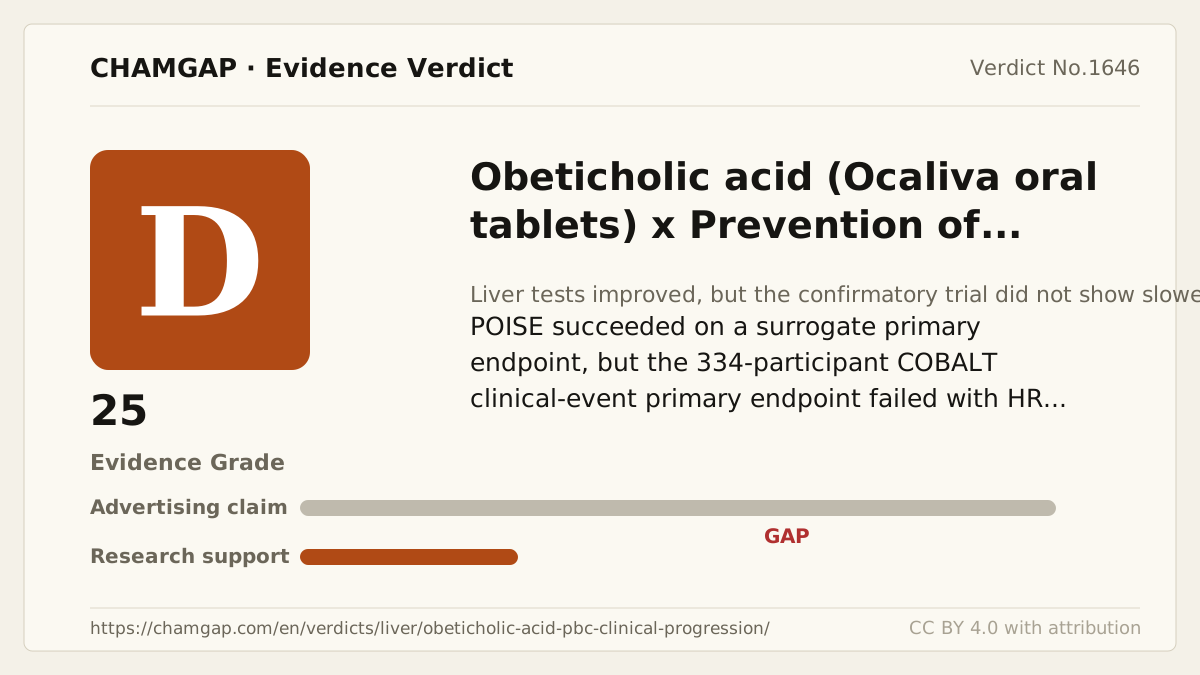
[Chamgap] Obeticholic acid x prevention of clinical progression in PBC — Evidence Grade D·25. 4 cited sources checked. Source: https://chamgap.com/en/verdicts/liver/obeticholic-acid-pbc-clinical-progression/ · CC BY 4.0CC BY 4.0 — free to use with attribution; do not distort grades, numbers, or verdict meaning.
What this document does and does not do
Chamgap is an information source. It reports what research has and has not confirmed; it does not tell readers what to take or buy. That decision belongs to readers and, when needed, medical or legal professionals. This verdict reflects literature available up to the search date and may change as new research appears. Nothing here is medical advice.