
Nivolumab plus ipilimumab,
does it really help with Longer overall survival than lenvatinib or sorafenib as first-line therapy for unresectable or metastatic hepatocellular carcinoma?
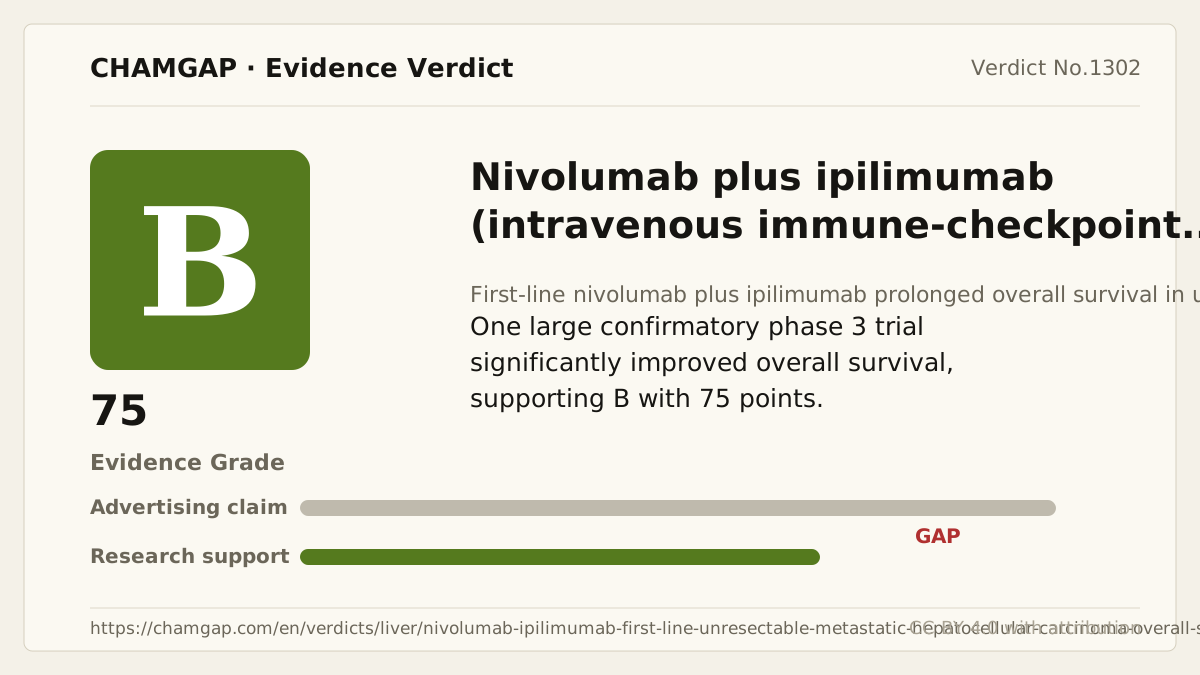
research showsNivolumab plus ipilimumab is rated B because it prolonged overall survival compared with lenvatinib or sorafenib in previously untreated unresectable hepatocellular carcinoma. In CheckMate 9DW, 668 participants were randomized and 657 were treated; median overall survival was 23.7 versus 20.6 months, with a hazard ratio for death of 0.79 (95% CI 0.65 to 0.96). Overall survival is a strong hard endpoint, but this remains one sponsor-funded, open-label, confirmatory phase 3 trial, supporting B rather than A. Severe immune-mediated toxicity and treatment-related death make selection and monitoring by an experienced oncologist essential.
ads claimPromotion can turn a 3.1-month difference in medians into a promise that every patient will live longer. The actual finding is a 21% relative reduction in the population-level hazard of death, to be weighed against liver function, performance status, autoimmune disease, transplantation, and other first-line immunotherapy combinations.
Useful facts when choosing a product
- Nivolumab blocks PD-1 and ipilimumab blocks CTLA-4. The hepatocellular carcinoma regimen tested in CheckMate 9DW used intravenous combination induction followed by nivolumab maintenance.
- The direct evidence applies to previously untreated patients with unresectable hepatocellular carcinoma, Child-Pugh class A liver function, and an ECOG performance status of 0 or 1. The same benefit cannot automatically be assumed with worse liver function or an organ transplant.
- Immune-mediated hepatitis, colitis, pneumonitis, endocrinopathy, skin reactions, and renal or neurologic inflammation can occur and may require high-dose corticosteroids or permanent discontinuation.
- Grade 3 or 4 treatment-related adverse events occurred in 41% with the combination and 42% with control in CheckMate 9DW; 12 and 3 deaths, respectively, were attributed to treatment.
Chamgap Semantic Classification Code
Candidate index · review held
M.nivolumab-plus-ipilimumab.intravenous.longer-overall-survival-than-lenvatinib-or-sorafenib-as-first-line-therapy-for-unresectable-or-metastatic-hepatocellular-carcinoma.assess.MULTIMedicinal interventions > Nivolumab plus ipilimumab > Intravenous > Longer overall survival than lenvatinib or sorafenib as first-line therapy for unresectable or metastatic hepatocellular carcinoma > Association or change assessment > Multiple: primary unresolved
An automated migration candidate, not an issued permanent code; exact claim scope remains under review. This machine-generated migration candidate helps retrieval but is not a permanent assignment. The original verdict ID and URL remain authoritative.
What the research actually shows
Yau and the CheckMate 9DW investigators randomized patients with previously untreated unresectable hepatocellular carcinoma to nivolumab plus ipilimumab or investigator-selected lenvatinib or sorafenib. At 35.2 months of median follow-up, the prespecified interim analysis met its primary overall-survival endpoint, with a hazard ratio of 0.79 and medians of 23.7 and 20.6 months. Objective response was 36% versus 13%, but tumor response is a lower-level endpoint than survival. CheckMate 040 in patients previously treated with sorafenib supported durable activity and dose-specific safety of the combination, but its noncomparative phase 2 setting does not independently confirm first-line survival benefit.
Why this is classified as B (75)
The single CheckMate 9DW phase 3 trial showed an overall-survival hazard ratio of 0.79 (95% CI 0.65 to 0.96), with medians of 23.7 and 20.6 months versus lenvatinib or sorafenib. A positive hard endpoint in one sponsor-funded active-controlled confirmatory trial supports B with 75 points.
Counterpoint. A survival benefit does not guarantee that an individual will live longer, and immune toxicity can be fatal. Tumor burden, portal-vein involvement, bleeding risk, liver function, and other approved first-line combinations require comparison with an oncologist.
Rejudgment record. New verdict — Applied grade B because CheckMate 9DW significantly improved the regimen-specific hard endpoint of overall survival versus active control, but it is one sponsor-funded open-label phase 3 confirmatory trial without replication in an independent large survival trial
Sub-claim grades by effect
This ingredient is marketed for several effects. A single overall grade blends strong and weak claims together, so each effect is graded separately here. The overall grade reflects the strongest disconfirming or core claim.
| Effect (sub-claim) | Grade | Basis |
|---|---|---|
| Longer overall survival in first-line unresectable hepatocellular carcinoma | B | One confirmatory phase 3 trial showed medians of 23.7 versus 20.6 months and a hazard ratio of 0.79. |
| Improved objective tumor response in first-line unresectable hepatocellular carcinoma | C | Objective response was 36% versus 13%, but tumor response is a surrogate below overall survival. |
| Improved 24-month survival after first-line treatment | B | Survival at 24 months was 49% versus 39%, consistent with overall survival but derived from the same single trial. |
Cross-check — AI research and Codex final gate
Evidence Table
| Study | Design | Sample | Funding | Endpoint | Result | Weight |
|---|---|---|---|---|---|---|
| Yau T et al.; CheckMate 9DW investigators. 2025 | International multicenter open-label randomized phase 3 active-controlled trial | 668 randomized; 332 treated with the combination and 325 with control | Bristol Myers Squibb | Primary endpoint of overall survival | Median overall survival was 23.7 versus 20.6 months, HR 0.79 (95% CI 0.65 to 0.96; P=0.018). | Key single phase 3 hard-endpoint confirmation |
| Yau T et al. CheckMate 040. 2020 | Open-label randomized phase 2 dose-regimen trial after sorafenib | 148 patients with advanced hepatocellular carcinoma | Bristol Myers Squibb | Objective response, response duration, overall survival, and safety | Durable responses were observed after prior therapy, but the absence of an untreated comparator means this does not independently confirm first-line survival benefit. | Supportive combination-activity and safety evidence |
Receipt — 2 References
All 2 cited sources were verified for existence at the original page (as of 2026-07-24).
Final verification and publication gate: Codex · Evidence date: 2026-07-24 · Corrections: none
Cite this verdict
[Chamgap] Nivolumab plus ipilimumab x longer overall survival in first-line unresectable or metastatic hepatocellular carcinoma — Evidence Grade B·75. 2 cited sources checked. Source: https://chamgap.com/en/verdicts/liver/nivolumab-ipilimumab-first-line-unresectable-metastatic-hepatocellular-carcinoma-overall-survival/ · CC BY 4.0CC BY 4.0 — free to use with attribution; do not distort grades, numbers, or verdict meaning.
What this document does and does not do
Chamgap is an information source. It reports what research has and has not confirmed; it does not tell readers what to take or buy. That decision belongs to readers and, when needed, medical or legal professionals. This verdict reflects literature available up to the search date and may change as new research appears. Nothing here is medical advice.