
Lamivudine,
does it really help with Reduced clinical progression of liver disease in chronic hepatitis B with advanced fibrosis or cirrhosis?
research showsLamivudine is rated B because a randomized trial reduced clinical liver-disease progression in chronic hepatitis B with advanced fibrosis or cirrhosis. Liaw 2004 randomized 651 patients to lamivudine 100 mg or placebo and, at a median of 32.4 months, reduced a composite of hepatic decompensation, hepatocellular carcinoma, spontaneous bacterial peritonitis, variceal bleeding, or liver-related death from 17.7% to 7.8% (HR 0.45, P=0.001). The evidence is nevertheless concentrated in one GlaxoSmithKline-supported trial stopped early, the primary endpoint was composite, and YMDD resistance developed in 49%, preventing an A rating. Hepatocellular carcinoma alone occurred in 7.4% versus 3.9%, HR 0.49, with a borderline nominal P value of 0.047 and should not be overstated as a definitive independent effect.
ads claimClaims that lamivudine prevents cirrhosis progression and liver cancer can merge a composite endpoint and a borderline individual cancer result into definitive permanent prevention. Benefit depends on maintained viral suppression, while resistance and post-discontinuation reactivation require specialist monitoring and a rescue strategy.
Useful facts when choosing a product
- Lamivudine is an oral prescription inhibitor of hepatitis B virus reverse transcriptase. Hepatitis B formulations and HIV combination-treatment formulations differ in dosing and indication and must not be confused.
- Patients with advanced fibrosis or cirrhosis should not stop treatment on their own and require regular monitoring of HBV DNA, ALT, liver function, and resistance. Severe hepatitis exacerbation can follow discontinuation.
- Long-term monotherapy commonly selects YMDD resistance and viral breakthrough, reducing effectiveness; agents with higher resistance barriers such as tenofovir or entecavir are now generally preferred.
- Headache, fatigue, and nausea can occur, and rare lactic acidosis and severe hepatomegaly have been reported. Deterioration or resistance in cirrhosis requires prompt specialist assessment.
Chamgap Semantic Classification Code
Candidate index · review held
M.lamivudine.UNK.clinical-progression-of-liver-disease-in-chronic-hepatitis-b-with-advanced-fibrosis-or-cirrhosis.reduce.placeboMedicinal interventions > Lamivudine > Unknown > clinical progression of liver disease in chronic hepatitis B with advanced fibrosis or cirrhosis > Reduction claim > Placebo
An automated migration candidate, not an issued permanent code; exact claim scope remains under review. This machine-generated migration candidate helps retrieval but is not a permanent assignment. The original verdict ID and URL remain authoritative.
What the research actually shows
The CALM trial by Liaw and colleagues randomized 651 patients with histologically confirmed advanced fibrosis or cirrhosis due to chronic hepatitis B, 98% Asian and 85% male, in a 2:1 ratio to lamivudine 100 mg in 436 patients or placebo in 215. The composite primary endpoint was time to hepatic decompensation, hepatocellular carcinoma, spontaneous bacterial peritonitis, bleeding gastroesophageal varices, or liver-related death. At a median of 32.4 months, events occurred in 7.8% versus 17.7%, HR 0.45. Child-Pugh worsening occurred in 3.4% versus 8.8%, HR 0.45, while hepatocellular carcinoma occurred in 3.9% versus 7.4%, HR 0.49, P=0.047. YMDD mutations developed in 49%, and Child-Pugh worsening was more common with resistance, 7% versus less than 1% without it. A separate 139-person trial by Chan and colleagues found a 24-month virologic and ALT response but 31% resistance, reinforcing the durability limitation. AASLD guidance prefers drugs with higher barriers to resistance and emphasizes monitoring for hepatitis flares after discontinuation.
Why this is classified as B (68)
One double-blind randomized trial of 651 patients reduced a composite containing direct clinical events from 17.7% to 7.8%, HR 0.45. However, it was a single GSK-supported and early-stopped trial, the individual hepatocellular carcinoma component was borderline at P=0.047, and 49% YMDD resistance limits durability. The clinical benefit is accepted, but endpoint composition, trial concentration, and resistance give B with 68 points.
Counterpoint. Patients already taking lamivudine or with prior exposure should not stop abruptly; resistance testing and whether to switch to or add a higher-barrier agent should be decided with a specialist. Hepatocellular carcinoma surveillance continues during antiviral therapy.
Rejudgment record. New verdict — Accepted the large reduction in the composite of hepatic decompensation, hepatocellular carcinoma, peritonitis, variceal bleeding, and liver-related death in the 651-person Liaw 2004 randomized trial as direct clinical efficacy, while assigning B for a single GSK-centered early-stopped trial, endpoint composition, a borderline individual hepatocellular carcinoma P value, and 49% YMDD resistance
Sub-claim grades by effect
This ingredient is marketed for several effects. A single overall grade blends strong and weak claims together, so each effect is graded separately here. The overall grade reflects the strongest disconfirming or core claim.
| Effect (sub-claim) | Grade | Basis |
|---|---|---|
| Reduced composite clinical progression of liver disease | B | The composite of hepatic decompensation, HCC, spontaneous bacterial peritonitis, variceal bleeding, or liver-related death fell from 17.7% to 7.8%. Benefit was attenuated when YMDD resistance emerged. |
| Reduced worsening of the Child-Pugh score | B | A single randomized trial found a reduction from 8.8% to 3.4%, HR 0.45, but worsening was more frequent after resistance mutations emerged. |
| Reduced incidence of hepatocellular carcinoma as an individual outcome | C | The result was 3.9% versus 7.4%, HR 0.49, but this was a borderline individual component at P=0.047 in one early-stopped trial and is not treated as a definitive independent effect. |
Cross-check — AI research and Codex final gate
Evidence Table
| Study | Design | Sample | Funding | Endpoint | Result | Weight |
|---|---|---|---|---|---|---|
| Liaw YF et al. 2004 CALM trial | Multicenter randomized double-blind placebo-controlled trial | 651 patients with chronic hepatitis B and advanced fibrosis or cirrhosis; 436 lamivudine and 215 placebo | Supported by GlaxoSmithKline, which participated in design and analysis and had employee authors | Composite progression of hepatic decompensation, hepatocellular carcinoma, spontaneous bacterial peritonitis, variceal bleeding, or liver-related death | The composite occurred in 7.8% versus 17.7%, HR 0.45 (P=0.001); Child-Pugh worsening was 3.4% versus 8.8%; YMDD resistance occurred in 49%. | Core direct clinical-endpoint trial with single-trial concentration |
| Chan HLY et al. 2007 | Multicenter randomized double-blind placebo-controlled 24-month trial | 139 patients with HBeAg-negative chronic hepatitis B | Detailed funding was not stated in the PubMed abstract | Composite HBV DNA and ALT response and resistance | The 24-month response was 56% versus 11%, but resistance reached 31% and the response difference disappeared six months after stopping. | Support for antiviral activity and durability limitations |
| Terrault NA et al. 2018 AASLD guidance | Evidence-based chronic hepatitis B clinical guidance | Full evidence base for chronic hepatitis B in adults and children | American Association for the Study of Liver Diseases | Antiviral selection, resistance, and post-discontinuation monitoring | Prefers high-resistance-barrier agents and addresses lamivudine resistance and hepatitis flares after discontinuation. | Contemporary scope and safety context |
Receipt — 3 References
All 3 cited sources were verified for existence at the original page (as of 2026-07-24).
Final verification and publication gate: Codex · Evidence date: 2026-07-24 · Corrections: none
Cite this verdict
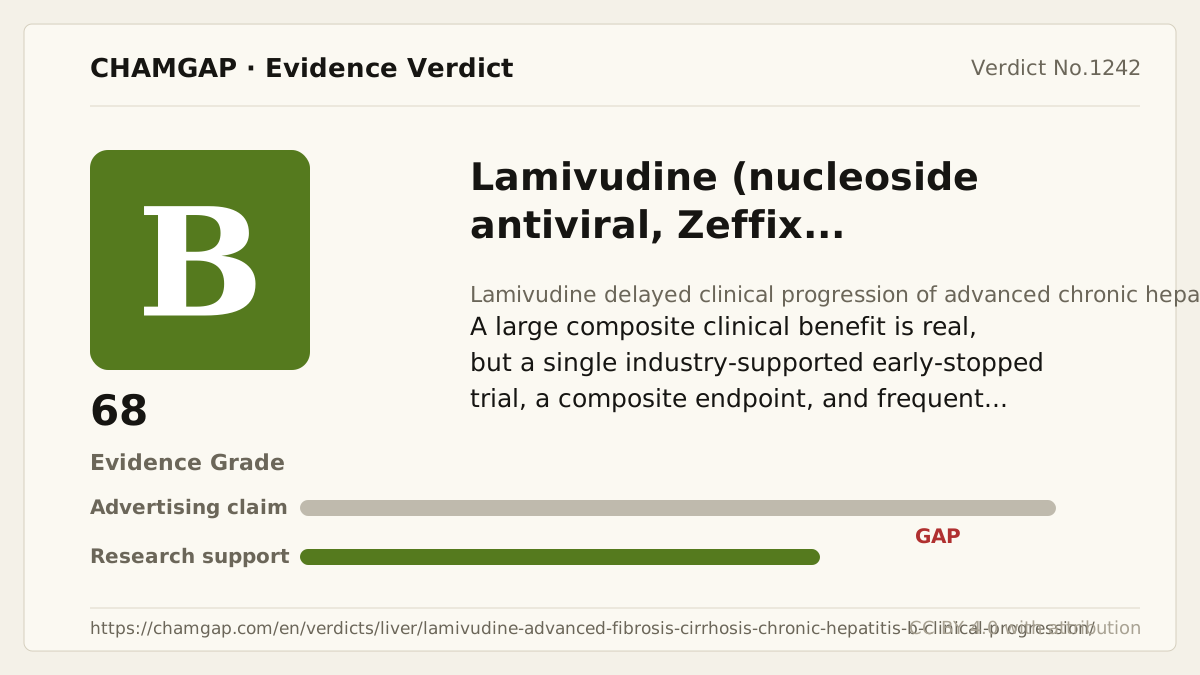
[Chamgap] Lamivudine x reduced clinical progression in chronic hepatitis B with advanced fibrosis or cirrhosis — Evidence Grade B·68. 3 cited sources checked. Source: https://chamgap.com/en/verdicts/liver/lamivudine-advanced-fibrosis-cirrhosis-chronic-hepatitis-b-clinical-progression/ · CC BY 4.0CC BY 4.0 — free to use with attribution; do not distort grades, numbers, or verdict meaning.
What this document does and does not do
Chamgap is an information source. It reports what research has and has not confirmed; it does not tell readers what to take or buy. That decision belongs to readers and, when needed, medical or legal professionals. This verdict reflects literature available up to the search date and may change as new research appears. Nothing here is medical advice.