
Lactulose,
does it really help with Prevention of recurrent overt hepatic encephalopathy in patients with cirrhosis?
research showsLactulose is rated B because direct randomized evidence repeatedly shows reduced recurrence after recovery from overt hepatic encephalopathy in cirrhosis. Recurrence was 19.6% with lactulose versus 46.8% with no treatment in Sharma 2009 and 26.5% with lactulose, 34.4% with probiotics, and 56.9% with no treatment in the three-group Agrawal 2012 trial. Although the Sharma title says placebo, the trial was open label and the literature describes the comparator as effectively no treatment. Direct recurrence was replicated, but both trials came from the same open-label Indian research program, preventing an A grade. This prescription indication is distinct from chronic constipation in verdict 522 and does not assign the same certainty to acute treatment or primary prevention.
ads claimClaims of liver detoxification, ammonia removal, or brain recovery can expand recurrence evidence into treatment of cirrhosis itself or prevention of every cause of confusion. The most direct evidence applies to secondary prevention after recovery from an overt episode.
Useful facts when choosing a product
- Lactulose is a synthetic disaccharide that is minimally absorbed in the intestine, and its prescription dose for hepatic encephalopathy is individualized to maintain appropriately soft stools.
- The hepatic-encephalopathy regimen and bowel-movement target should not be assumed to match ordinary constipation use; prescription directions, mental status, and hydration all require review.
- With recurrent episodes, infection, gastrointestinal bleeding, constipation, dehydration, renal deterioration, and sedating medicines should be sought and corrected.
- Diarrhea, bloating, and abdominal discomfort are common, and excessive dosing can cause dehydration and sodium or potassium disturbances that may worsen mental status.
Chamgap Semantic Classification Code
Candidate index · review held
M.lactulose.UNK.recurrent-overt-hepatic-encephalopathy-with-cirrhosis.prevent.MULTIMedicinal interventions > Lactulose > Unknown > recurrent overt hepatic encephalopathy with cirrhosis > Occurrence-prevention claim > Multiple: primary unresolved
An automated migration candidate, not an issued permanent code; exact claim scope remains under review. This machine-generated migration candidate helps retrieval but is not a permanent assignment. The original verdict ID and URL remain authoritative.
What the research actually shows
Sharma and colleagues randomized 140 patients with cirrhosis who had recovered from overt hepatic encephalopathy to lactulose or effectively no treatment. During a median 14 months, recurrence among 125 analyzable participants was 19.6% versus 46.8%; despite placebo in the paper title, the trial was open label. The same group then randomized 235 patients in Agrawal 2012 to lactulose, probiotics, or no treatment, with recurrence rates of 26.5%, 34.4%, and 56.9% among those followed. The 2016 Cochrane set of 24 trials mixed acute treatment with prevention and lactulose with lactitol, so it was used only as broad supportive context rather than direct replication. The 2014 AASLD and EASL guideline supports lactulose after a first overt episode.
Why this is classified as B (76)
The direct endpoint showed a large 19.6% versus 46.8% recurrence difference and was repeated at 26.5% versus 56.9% in a subsequent three-group trial. Both trials nevertheless came from the same open-label research program, while the Cochrane synthesis was too broad to count as direct replication. This gives B with 76 points. Diarrhea, dehydration, and electrolyte disturbance are separate safety issues.
Counterpoint. For patients who have experienced overt hepatic encephalopathy, the absolute reduction in recurrence is clinically important. Treatment should not be stopped arbitrarily or escalated until diarrhea occurs; a clinician should manage the bowel target and precipitating factors together.
Rejudgment record. New verdict — Accepted direct clinical recurrence results of 19.6% versus 46.8% and subsequent replication at 26.5% versus 56.9%, but assigned B because both trials were open label and concentrated in the same research group and region and the broad Cochrane synthesis was not direct independent replication
Sub-claim grades by effect
This ingredient is marketed for several effects. A single overall grade blends strong and weak claims together, so each effect is graded separately here. The overall grade reflects the strongest disconfirming or core claim.
| Effect (sub-claim) | Grade | Basis |
|---|---|---|
| Prevention of recurrence after recovery from overt hepatic encephalopathy in cirrhosis | B | The direct recurrence endpoint was replicated in two open-label randomized trials, but both came from the same research group and region. Acute treatment and prevention of a first episode are outside this verdict. |
Cross-check — AI research and Codex final gate
Evidence Table
| Study | Design | Sample | Funding | Endpoint | Result | Weight |
|---|---|---|---|---|---|---|
| Sharma BC et al. 2009 | Open-label randomized effectively no-treatment-controlled secondary-prevention trial | 140 randomized; 125 included in the efficacy analysis | Academic single-center study; no commercial funding reported | Recurrence of overt hepatic encephalopathy | During a median 14 months, recurrence was 19.6% with lactulose and 46.8% with effectively no treatment (P=0.001). | Pivotal direct clinical endpoint; placebo appears in the title, but the trial was open label and single center |
| Agrawal A et al. 2012 | Open-label randomized three-group secondary-prevention trial of lactulose, probiotics, and no treatment | 235 participants; 80 assigned to lactulose, 77 to probiotics, and 78 to no treatment | Same Indian single-center research group; no commercial funding reported | Recurrence of overt hepatic encephalopathy over 12 months | Recurrence was 26.5% with lactulose, 34.4% with probiotics, and 56.9% with no treatment; lactulose differed significantly from no treatment (P=0.001). | Replication of the direct recurrence endpoint with same-group and open-label limitations |
| Gluud LL et al. 2016 Cochrane review | Systematic review and meta-analysis of randomized trials of nonabsorbable disaccharides | Twenty-four randomized trials and 1,487 participants in the mortality analysis versus no intervention; prevention and treatment trials included | Academic Cochrane review | Hepatic encephalopathy, mortality, and serious adverse events | The review supported fewer episodes and serious liver-related events versus no intervention, but trial bias and clinical heterogeneity remained. | Supportive context only; mixes acute treatment with prevention and lactulose with lactitol, so it is not direct replication |
| Vilstrup H et al. 2014 AASLD/EASL guideline | Joint evidence-based clinical practice guideline | Not applicable; synthesis of published evidence | AASLD and EASL society guideline | Treatment and recurrence-prevention strategies for overt hepatic encephalopathy | It supported lactulose secondary prevention after a first overt episode. | Clinical context; the guideline itself does not substitute for efficacy grading |
Receipt — 4 References
All 4 cited sources were verified for existence at the original page (as of 2026-07-20).
Final verification and publication gate: Codex · Evidence date: 2026-07-20 · Corrections: none
Cite this verdict
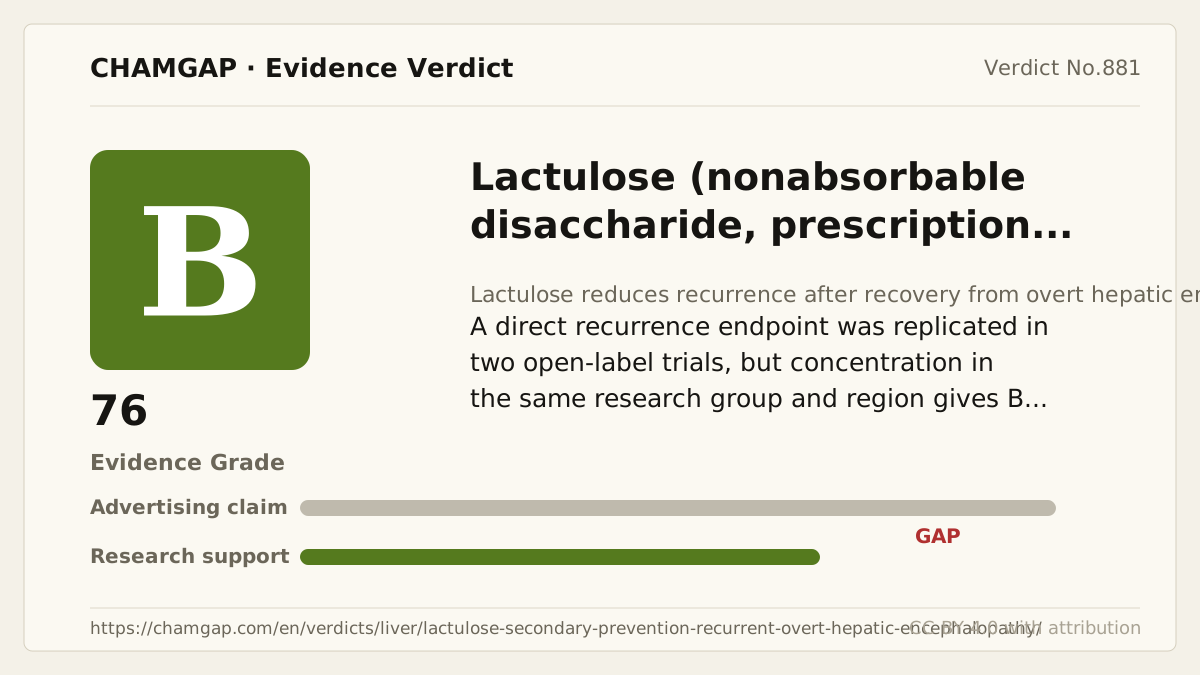
[Chamgap] Lactulose x prevention of recurrent overt hepatic encephalopathy in cirrhosis — Evidence Grade B·76. 4 cited sources checked. Source: https://chamgap.com/en/verdicts/liver/lactulose-secondary-prevention-recurrent-overt-hepatic-encephalopathy/ · CC BY 4.0CC BY 4.0 — free to use with attribution; do not distort grades, numbers, or verdict meaning.
What this document does and does not do
Chamgap is an information source. It reports what research has and has not confirmed; it does not tell readers what to take or buy. That decision belongs to readers and, when needed, medical or legal professionals. This verdict reflects literature available up to the search date and may change as new research appears. Nothing here is medical advice.