
Intravenous N-acetylcysteine,
does it really help with Prevent or lessen hepatotoxicity and liver failure after acute acetaminophen overdose?
research showsIntravenous N-acetylcysteine is rated B with 79 points as the standard antidote for preventing or lessening hepatotoxicity and liver failure after acute acetaminophen overdose. In the 1979 intravenous comparative series, 40 patients treated within eight hours had virtually complete hepatic protection, and severe liver injury occurred in 1 of 62 treated within ten hours versus 33 of 57 historical supportive-care patients. In a prospective randomized trial of 50 patients who already had fulminant hepatic failure, survival was 48% versus 20%. The effect size and temporal consistency are exceptionally strong, but the pivotal prevention comparison used historical controls rather than randomized placebo, and Cochrane rated the randomized efficacy evidence as low or very low certainty. A large placebo trial withholding antidote is ethically difficult, so a high B is appropriate, but the large independent randomized-trial requirement for A should not be claimed as met.
ads claimSimplifications such as 100% detoxification, complete recovery regardless of timing, or one injection is enough are unsafe. Protection is greatest when treatment begins early, intravenous therapy uses weight-based continuous infusion and repeat testing to determine stopping, and delayed, massive, or liver-failure presentations can require critical care and transplant evaluation.
Useful facts when choosing a product
- Intravenous acetylcysteine is a prescription antidote administered in an emergency department or hospital. A representative standard regimen delivers a total of 300 mg/kg in weight-based diluted infusions over about 21 hours; the hospital protocol and toxicology guidance take priority.
- If an interpretable acetaminophen concentration will not be available within eight hours or toxicity is clinically suspected, treatment should not be delayed. Ingestion time, concentration, aminotransferases, international normalized ratio, creatinine, and clinical status guide initiation, extension, and stopping.
- Nausea, vomiting, flushing, pruritus, urticaria, and non-IgE-mediated anaphylactoid reactions can occur, with uncommon hypotension, bronchospasm, or severe hypersensitivity. Close observation is especially important early in the infusion.
- An infusion reaction should not lead to unsupervised permanent abandonment of antidotal therapy. The clinical team may pause the infusion, treat with antihistamines, bronchodilators, epinephrine, or other measures, and decide when to restart based on risk and benefit.
Chamgap Semantic Classification Code
Candidate index · review held
M.n-acetylcysteine.intravenous.MULTI.MULTI.MULTIMedicinal interventions > N-acetylcysteine > Intravenous > Multiple: primary unresolved > Multiple: primary unresolved > Multiple: primary unresolved
An automated migration candidate, not an issued permanent code; exact claim scope remains under review. This machine-generated migration candidate helps retrieval but is not a permanent assignment. The original verdict ID and URL remain authoritative.
What the research actually shows
Prescott and colleagues in 1979 treated 100 cases of severe acetaminophen poisoning with intravenous acetylcysteine and compared them with earlier supportive-care patients. The 40 treated within eight hours had a mean maximum alanine aminotransferase of 27 IU/L and virtually complete protection; severe liver injury within ten hours occurred in 1 of 62 versus 33 of 57 historical controls. Keays and colleagues in 1991 randomized 50 patients with fulminant hepatic failure who had not previously received acetylcysteine to continued intravenous acetylcysteine or dextrose control, finding survival of 48% versus 20%, cerebral edema of 40% versus 68%, and hypotension requiring inotropes of 48% versus 80%. The 2,540-participant Smilkstein study strongly reinforced the timing relationship but used a 72-hour oral regimen, so it was separated from direct intravenous evidence. The 2018 Cochrane review recommended acetylcysteine for people at risk of toxicity and those with liver failure while rating the randomized efficacy evidence as low or very low certainty and noting the observational foundation of current practice.
Why this is classified as B (79)
Virtually complete hepatic protection with intravenous treatment within eight hours, a marked reduction in severe injury versus historical controls, and survival of 48% versus 20% in a 50-participant fulminant-liver-failure randomized trial demonstrate a very large direct clinical effect. Pivotal early prevention evidence nevertheless used historical controls, no large independent placebo trial exists, and Cochrane rated randomized efficacy evidence as low or very low certainty. Definitive magnitude, temporal consistency, and universal standard-of-care status justify the top of B with 79 points but do not replace the design requirement for A. Anaphylactoid reactions and dosing errors are separate safety issues.
Counterpoint. Evidence-design limitations are not a reason to delay emergency treatment. Suspected overdose requires immediate emergency or poison-center assessment, and delayed presentation or liver failure still warrants consideration of acetylcysteine and transplant-center consultation.
Rejudgment record. New verdict — Applied the top of B because dramatic prevention of hepatotoxicity with intravenous acetylcysteine within eight hours and improved survival in a randomized fulminant-liver-failure trial strongly support a direct clinical effect, while pivotal prevention evidence relies heavily on historical observational controls and Cochrane rated randomized evidence as low certainty, falling short of the large independent randomized-trial requirement for A
Sub-claim grades by effect
This ingredient is marketed for several effects. A single overall grade blends strong and weak claims together, so each effect is graded separately here. The overall grade reflects the strongest disconfirming or core claim.
| Effect (sub-claim) | Grade | Basis |
|---|---|---|
| Prevention of hepatotoxicity when started within eight hours of acute acetaminophen overdose | B | The intravenous series showed virtually complete protection and a dramatic historical-control difference, but it did not use randomized concurrent controls. |
| Improved survival in acetaminophen-induced fulminant hepatic failure | B | A 50-participant prospective randomized trial found survival of 48% versus 20%, but it was small and single center. |
| Mitigation of liver injury or failure after delayed presentation with acute overdose | B | Preventive efficacy declines with time, but observational evidence and a small randomized trial support benefit after liver injury or failure has developed. |
Cross-check — AI research and Codex final gate
Evidence Table
| Study | Design | Sample | Funding | Endpoint | Result | Weight |
|---|---|---|---|---|---|---|
| Prescott LF et al. 1979 | Prospective intravenous treatment series compared with retrospective historical controls | 100 receiving intravenous acetylcysteine, 62 analyzed within ten hours, and 57 historical supportive-care controls | Academic toxicology research with no industry funding reported | Time-dependent severe liver injury, renal impairment, and death | All 40 treated within eight hours had virtually complete hepatic protection; severe injury within ten hours was 1 of 62 versus 33 of 57 historical controls. | Core direct intravenous evidence for a dramatic early effect, limited by nonrandomized controls |
| Keays R et al. 1991 | Prospective randomized dextrose-controlled trial | 50 participants with acetaminophen-induced fulminant hepatic failure | Academic liver-center research with no industry funding reported | Survival, cerebral edema, renal failure, and hypotension requiring inotropes | Survival was 48% versus 20%, cerebral edema 40% versus 68%, and hypotension requiring inotropes 48% versus 80% with intravenous acetylcysteine versus control. | Randomized direct hard-outcome evidence with a small sample |
| Smilkstein MJ et al. 1988 | National multicenter prospective treatment-registry observational study | 2,540 participants treated with oral acetylcysteine | United States multicenter poison-center research | Hepatotoxicity and death by treatment delay | Early acetylcysteine was associated with markedly lower hepatotoxicity and death, reinforcing the timing relationship, but the regimen was oral for 72 hours. | Supportive route-general timing evidence, not direct intravenous evidence |
| Chiew AL et al. 2018 Cochrane review | Systematic review and meta-analysis of randomized clinical trials | Eleven trials with 700 participants; acetylcysteine efficacy comparisons were few and small | Independent academic Cochrane review | Mortality, hepatotoxicity, adverse effects, and regimen comparisons | The review supported acetylcysteine treatment but rated randomized efficacy evidence as low or very low certainty and noted that practice is based mainly on observational studies. | Independent assessment of evidence-certainty limitations |
Receipt — 4 References
All 4 cited sources were verified for existence at the original page (as of 2026-07-21).
Final verification and publication gate: Codex · Evidence date: 2026-07-21 · Corrections: none
Cite this verdict
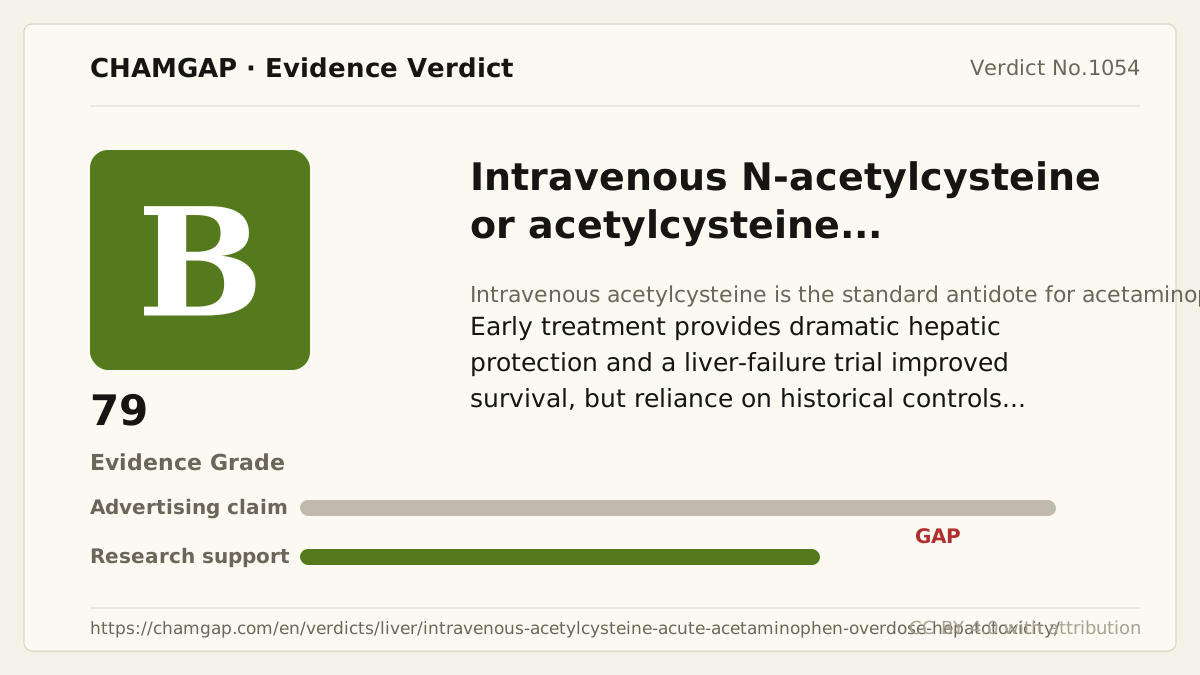
[Chamgap] Intravenous N-acetylcysteine x prevention or mitigation of hepatotoxicity after acute acetaminophen overdose — Evidence Grade B·79. 4 cited sources checked. Source: https://chamgap.com/en/verdicts/liver/intravenous-acetylcysteine-acute-acetaminophen-overdose-hepatotoxicity/ · CC BY 4.0CC BY 4.0 — free to use with attribution; do not distort grades, numbers, or verdict meaning.
What this document does and does not do
Chamgap is an information source. It reports what research has and has not confirmed; it does not tell readers what to take or buy. That decision belongs to readers and, when needed, medical or legal professionals. This verdict reflects literature available up to the search date and may change as new research appears. Nothing here is medical advice.