
Entecavir,
does it really help with Prevention of cirrhosis, liver cancer, and liver-related death in chronic hepatitis B?
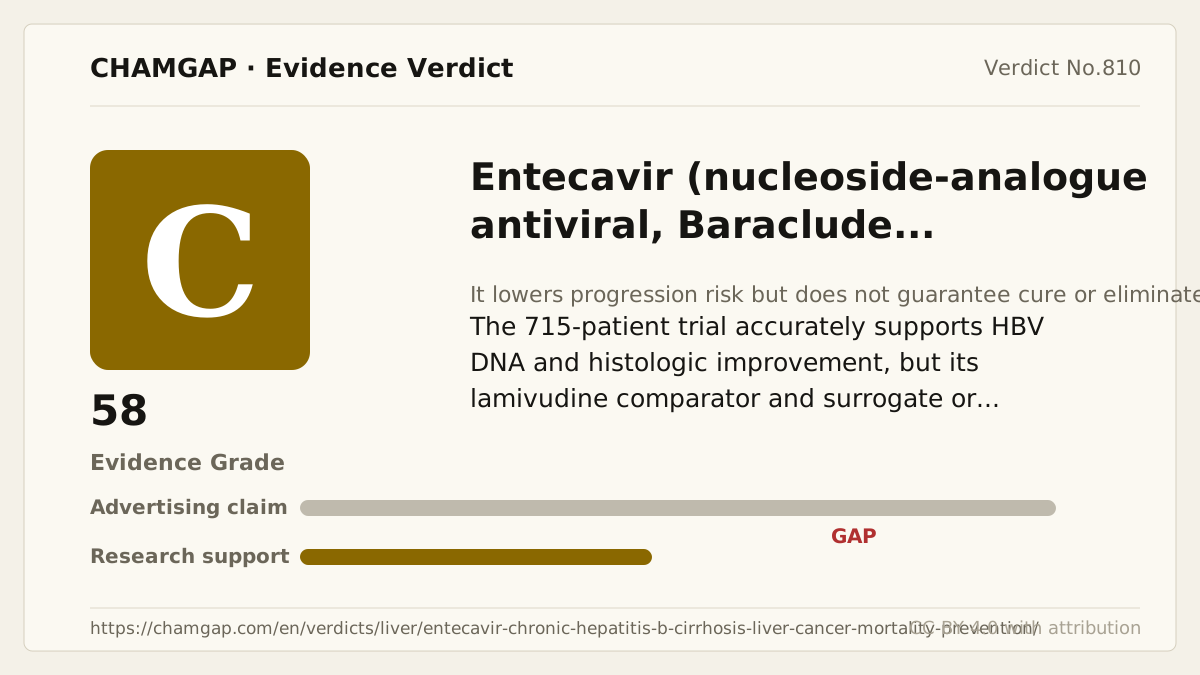
research showsEntecavir is rated C for prevention of cirrhosis, liver cancer, and death despite randomized evidence for HBV DNA suppression and histologic improvement. In a 715-patient phase 3 trial, histologic improvement at week 48 was 72% versus 62% with lamivudine and undetectable HBV DNA was 67% versus 36%. Those results used lamivudine as the comparator and measured surrogate and histologic endpoints. Reductions in liver cancer, cirrhotic complications, and death rely mainly on propensity-matched or historical-control cohorts, with no large randomized entecavir-only hard-endpoint trial. The resulting grade is C with 58 points.
ads claimPromotion can turn undetectable virus into cure, guaranteed cancer prevention, or no need for surveillance. Entecavir is suppressive therapy, HBsAg loss is uncommon, and patients with cirrhosis or high risk still require HCC surveillance.
Useful facts when choosing a product
- Entecavir is a prescription oral HBV-polymerase inhibitor generally taken once daily on an empty stomach for long-term therapy.
- Viral suppression is not eradication or cure, and stopping without medical direction can cause severe hepatitis exacerbation.
- Dose-interval adjustment may be required with renal impairment, and rare warnings include lactic acidosis and severe hepatomegaly with steatosis.
- Prior lamivudine resistance lowers the resistance barrier to entecavir, and HIV coinfection requires management with a fully suppressive antiretroviral regimen.
Chamgap Semantic Classification Code
Candidate index · review held
M.entecavir.UNK.cirrhosis-liver-cancer-and-liver-related-death-in-chronic-hepatitis-b.prevent.MULTIMedicinal interventions > Entecavir > Unknown > cirrhosis, liver cancer, and liver-related death in chronic hepatitis B > Occurrence-prevention claim > Multiple: primary unresolved
An automated migration candidate, not an issued permanent code; exact claim scope remains under review. This machine-generated migration candidate helps retrieval but is not a permanent assignment. The original verdict ID and URL remain authoritative.
What the research actually shows
Chang and colleagues randomized 715 nucleoside-naive HBeAg-positive patients to entecavir or lamivudine and found superior histologic, virologic, and ALT outcomes at week 48. Hosaka and colleagues compared 472 entecavir-treated with 1,143 untreated patients and reported lower HCC risk after propensity matching. The C-TEAM study compared 1,315 entecavir-treated patients with cirrhosis and HBV DNA at least 2,000 IU/mL against 503 historical untreated controls and observed fewer HCCs, variceal bleeding, peritonitis, and deaths.
Why this is classified as C (58)
The 715-patient randomized trial accurately found histologic improvement of 72% versus 62% and undetectable HBV DNA of 67% versus 36%, but it compared entecavir with lamivudine and measured surrogate or histologic endpoints. Reductions in cancer, cirrhotic events, and death rely mainly on propensity-matched or historical-control cohorts, with no large randomized entecavir-only hard-endpoint trial, yielding C with 58 points. Post-withdrawal flare, renal dosing, and resistance are separate safety issues.
Counterpoint. Expected benefit is substantial in active chronic hepatitis B and cirrhosis when treatment is indicated. Initiation, discontinuation, and drug choice should integrate HBV DNA, ALT, fibrosis, prior resistance, renal function, pregnancy, and coinfection.
Rejudgment record. Reassessment (cross-check reflected) — Accepted the 715-patient trial's 72% versus 62% histologic improvement and 67% versus 36% undetectable HBV DNA, but applied C because lamivudine was the comparator, outcomes were surrogate or histologic, cancer and mortality reductions rely mainly on cohorts, and no large randomized entecavir-only hard-endpoint trial exists
Sub-claim grades by effect
This ingredient is marketed for several effects. A single overall grade blends strong and weak claims together, so each effect is graded separately here. The overall grade reflects the strongest disconfirming or core claim.
| Effect (sub-claim) | Grade | Basis |
|---|---|---|
| HBV DNA suppression and histologic improvement | B | Confirmed in a 715-patient phase 3 trial, but against lamivudine and using surrogate and histologic endpoints. |
| Prevention of cirrhotic complications, liver cancer, and liver-related death | C | Several cohorts consistently favor reduction, but a large randomized entecavir-only hard-endpoint trial is lacking. |
| No cure and risk of reactivation after discontinuation | ? | Viral suppression is not eradication, and post-discontinuation flare belongs to a separate safety axis. |
Cross-check — AI research and Codex final gate
Evidence Table
| Study | Design | Sample | Funding | Endpoint | Result | Weight |
|---|---|---|---|---|---|---|
| Chang TT et al. 2006 | Randomized double-blind active-controlled phase 3 trial | 715 nucleoside-naive HBeAg-positive patients | Bristol-Myers Squibb | Week-48 histologic improvement, HBV DNA, and ALT | Entecavir was superior for histology, 72% versus 62%, and undetectable HBV DNA, 67% versus 36%. | Pivotal surrogate and histologic randomized evidence |
| Hosaka T et al. 2013 | Propensity-matched treated-versus-untreated cohort | 472 versus 1,143 patients; 316 per group after matching | Academic single-center cohort | Incident hepatocellular carcinoma | Five-year HCC incidence was 3.7% versus 13.7%, adjusted HR 0.37. | Direct observational cancer evidence |
| Su TH et al. 2016 C-TEAM | Nationwide multicenter retrospective-prospective cohort with historical controls | 1,315 entecavir-treated and 503 untreated patients | Taiwan multicenter academic consortium | HCC, cirrhotic events, liver-related and all-cause mortality | Reported an HCC HR of 0.40 and fewer variceal bleeds, peritonitis events, and deaths. | Large direct hard-endpoint observational evidence |
Receipt — 3 References
All 3 cited sources were verified for existence at the original page (as of 2026-07-20).
Final verification and publication gate: Codex · Evidence date: 2026-07-20 · Corrections: none
Cite this verdict
[Chamgap] Entecavir x prevention of cirrhosis, liver cancer, and liver-related death in chronic hepatitis B — Evidence Grade C·58. 3 cited sources checked. Source: https://chamgap.com/en/verdicts/liver/entecavir-chronic-hepatitis-b-cirrhosis-liver-cancer-mortality-prevention/ · CC BY 4.0CC BY 4.0 — free to use with attribution; do not distort grades, numbers, or verdict meaning.
What this document does and does not do
Chamgap is an information source. It reports what research has and has not confirmed; it does not tell readers what to take or buy. That decision belongs to readers and, when needed, medical or legal professionals. This verdict reflects literature available up to the search date and may change as new research appears. Nothing here is medical advice.