
Elafibranor,
does it really help with Improved the alkaline-phosphatase and bilirubin composite biochemical response in primary biliary cholangitis with inadequate UDCA response?
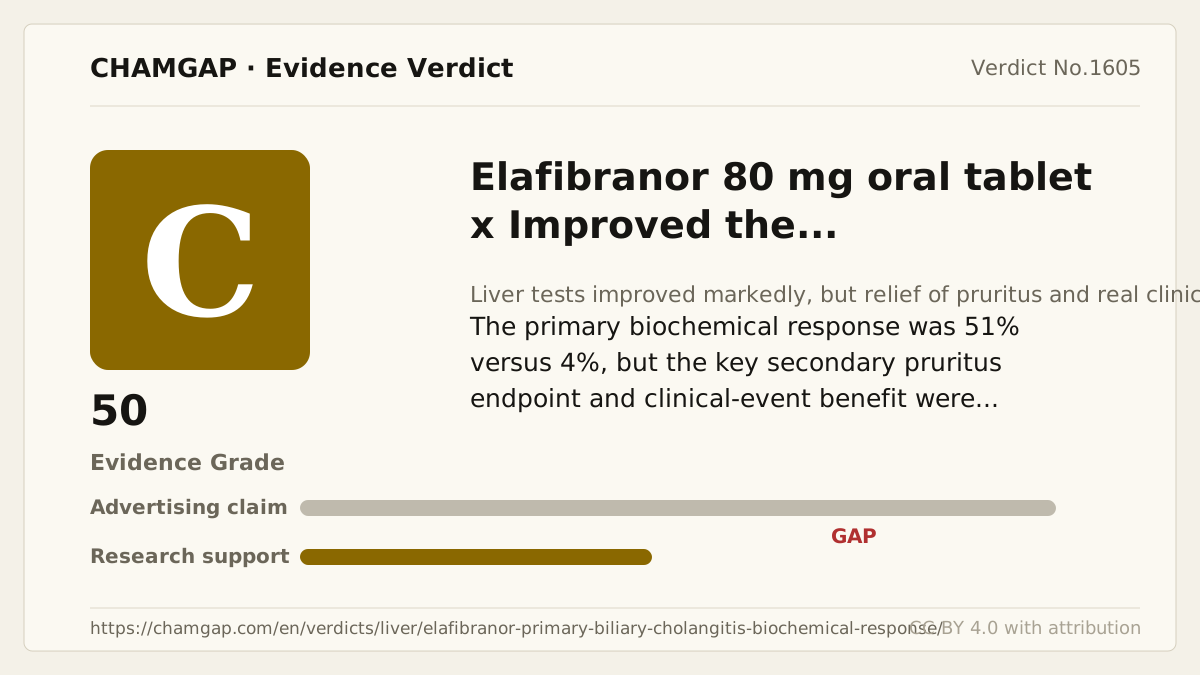
research showsElafibranor is rated C because it improves the alkaline-phosphatase and bilirubin composite biochemical response in primary biliary cholangitis with inadequate UDCA response, but clinical-event benefit remains unproven. ELATIVE's primary endpoint was the week-52 composite biochemical response, which occurred in 51% versus 4%. Alkaline phosphatase normalization was 15% versus 0%, but no evidence yet shows fewer liver transplants, hepatic decompensations, or deaths. WI-NRS pruritus was a key secondary endpoint in the fixed-sequence testing procedure and was null, with a between-group difference of -0.78 points (95% CI -1.99 to 0.42; P=.20). The rule ①-ⓐ ceiling for laboratory surrogates limits the verdict to C with 50 points.
ads claimMarketing may expand the biochemical response into claims that the drug stops liver damage, prevents cirrhosis or transplantation, or relieves itching. What was established is that more patients met alkaline-phosphatase and bilirubin criteria. Fewer transplants or deaths and improved pruritus have not been demonstrated.
Useful facts when choosing a product
- The United States product Iqirvo is taken as one elafibranor 80-mg tablet once daily with or without food, with UDCA in adults who respond inadequately or alone in adults unable to tolerate UDCA.
- FDA granted accelerated approval based on the alkaline-phosphatase and bilirubin biochemical response. Continued approval may depend on confirmation of clinical benefit.
- Myalgia, creatine-phosphokinase elevation, myopathy, and rhabdomyolysis can occur. New muscle pain or weakness warrants evaluation of creatine phosphokinase and kidney function, particularly with statin use or advanced liver disease.
- Weight gain, abdominal pain, diarrhea, nausea, vomiting, fractures, and worsening liver function have been reported. Use is not recommended in decompensated cirrhosis, and liver tests require monitoring.
Chamgap Semantic Classification Code
Candidate index · review held
S.elafibranor-oral-tablet.oral.the-alkaline-phosphatase-and-bilirubin-composite-biochemical-response-in-primary-biliary-cholangitis-with-inadequate-udca-response.improve.placeboSupplements and nutraceuticals > Elafibranor oral tablet > Oral > the alkaline-phosphatase and bilirubin composite biochemical response in primary biliary cholangitis with inadequate UDCA response > Improvement claim > Placebo
An automated migration candidate, not an issued permanent code; exact claim scope remains under review. This machine-generated migration candidate helps retrieval but is not a permanent assignment. The original verdict ID and URL remain authoritative.
What the research actually shows
ELATIVE was a 52-week double-blind phase 3 trial that assigned 161 patients with primary biliary cholangitis and an inadequate response or intolerance to UDCA in a 2:1 ratio to elafibranor 80 mg or placebo. The primary endpoint required alkaline phosphatase below 1.67 times the upper limit of normal, a reduction of at least 15% from baseline, and normal total bilirubin. Response occurred in 55 of 108 patients (51%) versus 2 of 53 (4%), while alkaline phosphatase normalization was 15% versus 0%. WI-NRS pruritus was not a primary endpoint; it was a key secondary endpoint in the fixed-sequence testing procedure and was null in 66 patients with moderate-to-severe pruritus, with a between-group difference of -0.78 points (95% CI -1.99 to 0.42; P=.20). An earlier 45-participant phase 2 trial reduced 12-week alkaline phosphatase by 48.3% with 80 mg and 40.6% with 120 mg, but it was also a laboratory-outcome trial. A confirmatory trial including liver transplantation and death is ongoing, with no clinical-event efficacy literature yet.
Why this is classified as C (50)
ELATIVE's primary biochemical response of 51% versus 4% and alkaline-phosphatase reduction in phase 2 are large and reproducible, but they remain laboratory surrogates. The fixed-sequence key secondary WI-NRS pruritus endpoint was null and transplantation or mortality data are absent, so rule ①-ⓐ gives C with 50 points.
Counterpoint. Elafibranor can be an approved second-line option when UDCA does not sufficiently reduce biochemical risk. The meaning of laboratory improvement, muscle and liver safety, statin use, fracture risk, and the unconfirmed clinical-event benefit should all be discussed.
Rejudgment record. Cross-check applied — Rule ①-ⓐ, surrogate only: improvement only in biomarkers that stand in for clinical benefit, such as HbA1c, LDL, blood pressure, intraocular pressure, bone density, laboratory values, or imaging measures, allows a maximum grade of C. Applied C because the alkaline-phosphatase and bilirubin response was positive, pruritus was null, and liver transplantation or mortality evidence was absent
Sub-claim grades by effect
This ingredient is marketed for several effects. A single overall grade blends strong and weak claims together, so each effect is graded separately here. The overall grade reflects the strongest disconfirming or core claim.
| Effect (sub-claim) | Grade | Basis |
|---|---|---|
| Improved the alkaline-phosphatase and bilirubin composite biochemical response | C | The ELATIVE difference was large at 51% versus 4%, but it is a laboratory surrogate and therefore capped at C. |
| Improved moderate-to-severe pruritus | D | The prespecified WI-NRS analysis was null, with a between-group difference of -0.78 points (95% CI -1.99 to 0.42; P=.20). |
| Reduced liver transplantation, hepatic decompensation, or death | ? | No human efficacy results testing these clinical events are available yet; a confirmatory trial is ongoing. |
Cross-check — AI research and Codex final gate
Evidence Table
| Study | Design | Sample | Funding | Endpoint | Result | Weight |
|---|---|---|---|---|---|---|
| Kowdley KV et al.; for the ELATIVE Study Investigators’ Group. 2024 | Multinational randomized double-blind placebo-controlled phase 3 trial | 161 participants; 108 elafibranor and 53 placebo | Funded by GENFIT and Ipsen; company employees were coauthors | Primary: week-52 alkaline-phosphatase and total-bilirubin composite biochemical response; key secondary in fixed-sequence testing: pruritus WI-NRS; alkaline-phosphatase normalization | The primary biochemical response was 51% versus 4% and alkaline-phosphatase normalization was 15% versus 0%. The fixed-sequence key secondary WI-NRS pruritus difference was null at -0.78 points (95% CI -1.99 to 0.42; P=.20). | Key surrogate confirmation with a null symptom outcome |
| Schattenberg JM et al. 2021 | Twelve-week randomized double-blind placebo-controlled phase 2 dose-ranging trial | 45 participants assigned to 80 mg, 120 mg, or placebo | GENFIT development trial; authors included company employees | Relative change in alkaline phosphatase and composite biochemical response at 12 weeks | Alkaline phosphatase decreased by 48.3% with 80 mg and 40.6% with 120 mg, versus a 3.2% increase with placebo. Composite response was 67% and 79% versus 6.7%. | Preceding replication of the biochemical surrogate |
| U.S. FDA IQIRVO accelerated approval. 2024 | Accelerated-approval regulatory review | Efficacy based on 161 ELATIVE participants | Regulatory assessment; applicant was Ipsen | Week-52 biochemical response and postapproval confirmation of clinical benefit | Accelerated approval was based on the alkaline-phosphatase and bilirubin surrogate, with continued confirmation of clinical benefit required. | Confirmation of surrogate-based approval |
Receipt — 3 References
All 3 cited sources were verified for existence at the original page (as of 2026-07-24).
Final verification and publication gate: Codex · Evidence date: 2026-07-24 · Corrections: none
Cite this verdict
[Chamgap] Elafibranor x improved biochemical response in primary biliary cholangitis — Evidence Grade C·50. 3 cited sources checked. Source: https://chamgap.com/en/verdicts/liver/elafibranor-primary-biliary-cholangitis-biochemical-response/ · CC BY 4.0CC BY 4.0 — free to use with attribution; do not distort grades, numbers, or verdict meaning.
What this document does and does not do
Chamgap is an information source. It reports what research has and has not confirmed; it does not tell readers what to take or buy. That decision belongs to readers and, when needed, medical or legal professionals. This verdict reflects literature available up to the search date and may change as new research appears. Nothing here is medical advice.