
Coffee,
does it really help with Prevention of cirrhosis and hepatocellular carcinoma through long-term consumption?
research showsCoffee is consistently associated with less cirrhosis and hepatocellular carcinoma, but preventive efficacy is rated D. In a 2017 dose-response meta-analysis, two additional cups per day of caffeinated coffee were associated with 27% lower hepatocellular-carcinoma risk, with an RR of 0.73 (95% CI 0.63 to 0.85), yet the authors rated certainty very low because there were no randomized trials, publication bias was possible, and coffee lacked a standard definition. A cirrhosis meta-analysis also reported an RR of 0.56 per two additional cups, but it contained only five cohort and four case-control studies and had substantial heterogeneity. Smoking, alcohol, liver disease, metabolic health, and reverse causation from ill people reducing coffee cannot be eliminated. The observational association is acknowledged, but the absence of randomized evidence and residual confounding give D with 33 points. Insomnia, anxiety, and palpitations from excess caffeine remain separate safety issues.
ads claimHealth marketing turns a 27% relative-risk association per two additional cups into claims that two cups prevent liver cancer or detoxify the liver. The 27% estimate is a cohort association for caffeinated coffee, not an individual absolute benefit, and bean, brewing method, additives, and drinking patterns vary.
Useful facts when choosing a product
- Caffeine and chlorogenic-acid content per cup vary widely with bean, roast, brewing method, serving size, and decaffeination, so two cups are not a standardized drug dose.
- Coffee drinks high in sugar, syrup, or cream can add substantial energy and sugar and may not match the coffee exposure assessed in observational cohorts.
- For most healthy adults, up to 400 mg of caffeine per day is generally not associated with major adverse effects, but sensitivity, medicines, pregnancy, and medical conditions can lower an appropriate limit.
- Caffeine can cause insomnia, anxiety, tremor, gastrointestinal discomfort, transient blood-pressure elevation, and palpitations, and coffee does not replace liver-disease treatment or cancer surveillance.
Chamgap Semantic Classification Code
Candidate index · review held
F.coffee.oral.cirrhosis-and-hepatocellular-carcinoma-through-long-term-consumption.prevent.UNKFoods and beverages > Coffee > Oral > cirrhosis and hepatocellular carcinoma through long-term consumption > Occurrence-prevention claim > Unknown
An automated migration candidate, not an issued permanent code; exact claim scope remains under review. This machine-generated migration candidate helps retrieval but is not a permanent assignment. The original verdict ID and URL remain authoritative.
What the research actually shows
Kennedy and colleagues in 2017 analyzed 18 cohorts with 2,272,642 participants and 2,905 HCC cases, plus eight case-control studies. The overall RR per two additional cups was 0.65 and the higher-quality cohort estimate was 0.71. The caffeinated estimate was 0.73, whereas decaffeinated coffee was borderline at 0.86. The authors downgraded certainty to very low for absent randomized trials, possible publication bias, and nonstandard coffee definitions. The 2016 cirrhosis analysis included 432,133 participants and 1,990 cases and reported an RR of 0.56 per two additional cups, but all evidence was observational and heterogeneous. Short-term liver-enzyme or antioxidant changes cannot replace incident cirrhosis or HCC.
Why this is classified as D (33)
Large cohort meta-analyses show strong inverse associations with HCC and cirrhosis, but no randomized trial exists and HCC certainty was graded very low. Residual confounding, reverse causation, exposure-definition variability, and substantial cirrhosis heterogeneity give D with 33 points. Beverage variability and caffeine adverse effects remain independent of efficacy.
Counterpoint. Adults who enjoy and tolerate coffee may consider the observational association, but evidence does not support starting high intake to prevent liver disease or replacing vaccination, alcohol reduction, weight management, treatment, or HCC surveillance. Pragmatic randomized trials or stronger natural experiments with clinical endpoints are needed.
Rejudgment record. Cross-verification incorporated — Accepted the consistent dose-response inverse associations for hepatocellular carcinoma and cirrhosis, but assigned D because no long-term randomized trial exists, HCC certainty was graded very low, and residual confounding, reverse causation, and inconsistent exposure definitions remain
Sub-claim grades by effect
This ingredient is marketed for several effects. A single overall grade blends strong and weak claims together, so each effect is graded separately here. The overall grade reflects the strongest disconfirming or core claim.
| Effect (sub-claim) | Grade | Basis |
|---|---|---|
| Prevention of hepatocellular carcinoma through long-term coffee consumption | D | A large dose-response inverse association exists, but absent randomized trials and very-low GRADE certainty prevent a causal preventive conclusion. |
| Prevention of cirrhosis through long-term coffee consumption | D | The RR was 0.56 per two additional cups, but evidence is observational and vulnerable to heterogeneity, confounding, and reverse causation. |
| Prevention of hepatocellular carcinoma with decaffeinated coffee | D | The two-cup estimate from three cohorts was borderline at RR 0.86, with sparse exposure data and even weaker causal inference. |
Cross-check — AI research and Codex final gate
Evidence Table
| Study | Design | Sample | Funding | Endpoint | Result | Weight |
|---|---|---|---|---|---|---|
| Kennedy OJ et al. 2017 | Systematic review and dose-response meta-analysis of observational studies | 18 cohorts with 2,272,642 participants and 2,905 HCC cases; eight case-control studies | No commercial funding reported in the article abstract | Incident hepatocellular carcinoma by coffee consumption | Per two additional cups, overall RR was 0.65, cohort RR 0.71, and caffeinated-coffee RR 0.73, but GRADE certainty was very low. | Large observational synthesis with low causal certainty |
| Kennedy OJ et al. 2016 | Systematic review and meta-analysis of observational studies | Five cohorts and four case-control studies; 432,133 participants and 1,990 cirrhosis cases | Funding source not reported in the PubMed abstract | Cirrhosis incidence or mortality by coffee dose | Cirrhosis RR was 0.56 per two additional cups, with substantial heterogeneity of I² 83.3%. | Observational synthesis vulnerable to confounding |
| van Dam RM et al. 2020 | Clinical review of coffee, caffeine, and health | Review of multiple observational and intervention studies | Funding source not reported in the PubMed abstract | Coffee composition, health associations, caffeine adverse effects, and special-population precautions | Moderate coffee intake was generally acceptable, with dose, individual sensitivity, pregnancy, and other contexts requiring caution. | Product and safety context |
Receipt — 3 References
All 3 cited sources were verified for existence at the original page (as of 2026-07-21).
Final verification and publication gate: Codex · Evidence date: 2026-07-21 · Corrections: none
Cite this verdict
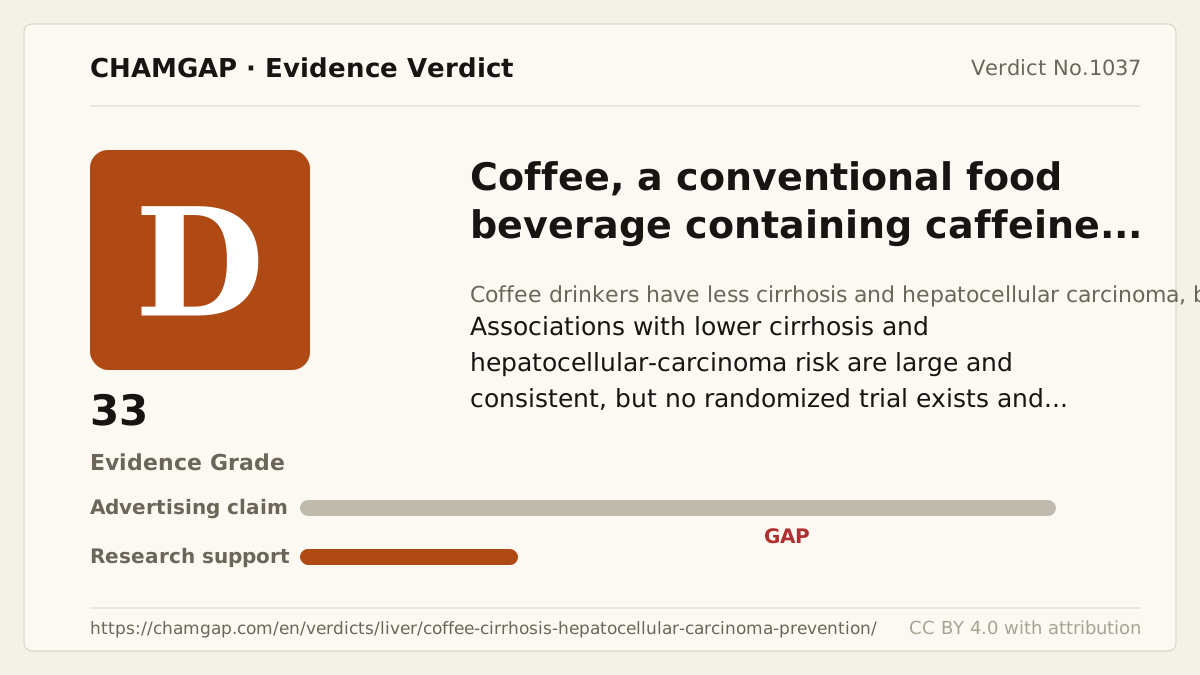
[Chamgap] Coffee x prevention of cirrhosis and hepatocellular carcinoma through long-term consumption — Evidence Grade D·33. 3 cited sources checked. Source: https://chamgap.com/en/verdicts/liver/coffee-cirrhosis-hepatocellular-carcinoma-prevention/ · CC BY 4.0CC BY 4.0 — free to use with attribution; do not distort grades, numbers, or verdict meaning.
What this document does and does not do
Chamgap is an information source. It reports what research has and has not confirmed; it does not tell readers what to take or buy. That decision belongs to readers and, when needed, medical or legal professionals. This verdict reflects literature available up to the search date and may change as new research appears. Nothing here is medical advice.