
Ciprofloxacin,
does it really help with Primary prevention of spontaneous bacterial peritonitis (SBP) and death in cirrhosis with low-protein ascites?
research showsCiprofloxacin is rated C because a small double-blind trial produced a positive signal for primary SBP prevention in cirrhosis with low-protein ascites. In 100 participants, SBP occurred in 4% versus 14% and 12-month survival was 86% versus 66%, but event counts were small and the SBP difference was not definitive. A Cochrane network meta-analysis of 29 randomized trials rated certainty for antibiotic-specific mortality and SBP effects as very low. Norfloxacin evidence was not treated as if it were ciprofloxacin-specific evidence.
ads claimMarketing or simplified summaries may claim that ciprofloxacin certainly prevents SBP and death whenever ascitic protein is low. The evidence applies to selected high-risk patients under prescription care, and resistance plus serious adverse effects preclude self-treatment.
Useful facts when choosing a product
- Ciprofloxacin is a prescription fluoroquinolone antibiotic; specialist assessment and local guidance determine its use for SBP prophylaxis.
- The Terg trial used 500 mg once daily for 12 months; patients should not copy its dose or duration without medical supervision.
- Long-term quinolone exposure can select resistant organisms and carries risks including tendinitis or tendon rupture, peripheral neuropathy, central nervous system effects, QT prolongation, and C. difficile-associated diarrhea.
Chamgap Semantic Classification Code
Candidate index · review held
M.ciprofloxacin.UNK.primary-prevention-of-spontaneous-bacterial-peritonitis-sbp-and-death-in-cirrhosis-with-low-protein-ascites.prevent.placeboMedicinal interventions > Ciprofloxacin > Unknown > Primary prevention of spontaneous bacterial peritonitis (SBP) and death in cirrhosis with low-protein ascites > Occurrence-prevention claim > Placebo
An automated migration candidate, not an issued permanent code; exact claim scope remains under review. This machine-generated migration candidate helps retrieval but is not a permanent assignment. The original verdict ID and URL remain authoritative.
What the research actually shows
Terg and colleagues randomized 100 patients with cirrhosis and ascitic protein below 1.5 g/dL to ciprofloxacin 500 mg daily or placebo for 12 months. SBP occurred in 2 of 50 versus 7 of 50, and 12-month survival was 86% versus 66%. The Cochrane network meta-analysis by Komolafe and colleagues assessed 29 trials with 3,896 participants but found mostly high risk of bias, sparse events, and very low certainty, preventing selection of a best antibiotic. AASLD guidance considers primary prophylaxis in selected patients with low-protein ascites plus renal dysfunction or severe liver failure and accepts ciprofloxacin where norfloxacin is unavailable.
Why this is classified as C (52)
A ciprofloxacin-specific double-blind trial showed a trend toward less SBP and a survival benefit, but it enrolled only 100 people with sparse events, while the 29-trial network meta-analysis had very low certainty. A credible positive human signal with substantial uncertainty warrants C with 52 points.
Counterpoint. The decision uses renal function, serum sodium, Child-Pugh severity, prior SBP, resistance risk, and adverse effects rather than ascitic protein alone.
Rejudgment record. New verdict — A ciprofloxacin-specific double-blind trial showed a trend toward less SBP and a survival benefit, but it enrolled only 100 people with sparse events, while the 29-trial network meta-analysis had very low certainty. A credible positive human signal with substantial uncertainty warrants C with 52 points.
Sub-claim grades by effect
This ingredient is marketed for several effects. A single overall grade blends strong and weak claims together, so each effect is graded separately here. The overall grade reflects the strongest disconfirming or core claim.
| Effect (sub-claim) | Grade | Basis |
|---|---|---|
| Primary prevention of SBP | C | A ciprofloxacin trial showed a reduction signal, but event counts were sparse and statistical certainty was limited. |
| Reduced mortality | C | Twelve-month survival was positive in a 100-person trial, but this is a single small study. |
| Reduction of overall cirrhosis complications | C | Some signals exist, but the network meta-analysis was of very low certainty and is not definitive. |
Cross-check — AI research and Codex final gate
Evidence Table
| Study | Design | Sample | Funding | Endpoint | Result | Weight |
|---|---|---|---|---|---|---|
| Terg R et al. 2008 | Randomized double-blind placebo-controlled trial | 100 participants; 50 ciprofloxacin and 50 placebo | Inadequately reported | SBP incidence and survival at 12 months | SBP showed a 4% versus 14% trend and survival a positive 86% versus 66% signal. | Key ciprofloxacin-specific direct evidence |
| Komolafe O et al. 2020 | Cochrane systematic review and network meta-analysis | 29 randomized trials and 3,896 participants | Public and academic support | Mortality, SBP, and serious adverse events | Certainty was very low for most comparisons and no best prophylactic antibiotic could be established. | Key certainty assessment |
Receipt — 3 References
All 3 cited sources were verified for existence at the original page (as of 2026-07-23).
Final verification and publication gate: Codex · Evidence date: 2026-07-23 · Corrections: none
Cite this verdict
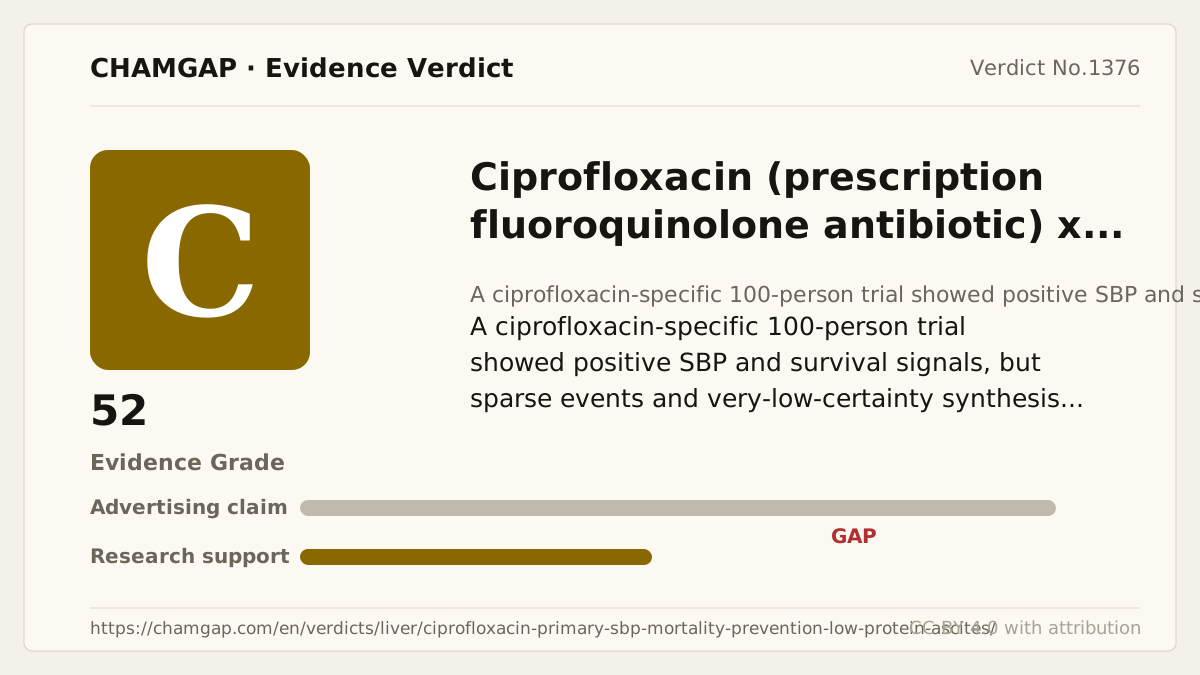
[Chamgap] Ciprofloxacin x Primary prevention of spontaneous bacterial peritonitis (SBP) and death in cirrhosis with low-protein ascites — Evidence Grade C·52. 3 cited sources checked. Source: https://chamgap.com/en/verdicts/liver/ciprofloxacin-primary-sbp-mortality-prevention-low-protein-ascites/ · CC BY 4.0CC BY 4.0 — free to use with attribution; do not distort grades, numbers, or verdict meaning.
What this document does and does not do
Chamgap is an information source. It reports what research has and has not confirmed; it does not tell readers what to take or buy. That decision belongs to readers and, when needed, medical or legal professionals. This verdict reflects literature available up to the search date and may change as new research appears. Nothing here is medical advice.