
Caffeinated coffee, two to four cups daily,
does it really help with Prevention of symptomatic gallstone disease and cholecystectomy?
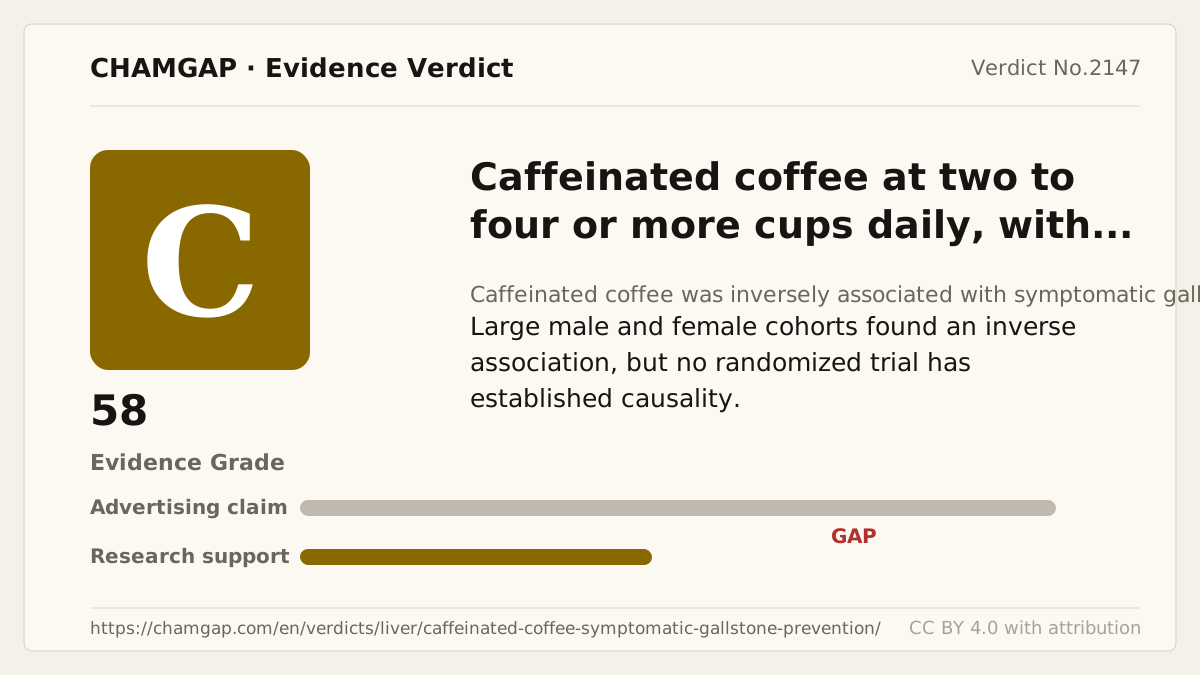
research showsThe grade is C. Among 46,008 men, 1,081 symptomatic cases included 885 cholecystectomies; persistent intake gave 0.60 (0.42 to 0.86) at two to three cups/day and 0.55 (0.33 to 0.92) at four or more. A separate 80,898-woman cohort followed 7,811 cholecystectomies as a proxy for symptomatic gallstones and found 0.72 (0.62 to 0.84) at four or more cups. This was not randomized, giving C with 56 points.
ads claimCaffeinated and decaffeinated coffee differ in caffeine content. An observational association confined to caffeinated coffee still does not establish an individual preventive effect.
Useful facts when choosing a product
- Neither original article reported analyses by filtered, instant, or espresso preparation. Caffeinated-versus-decaffeinated analyses were reported, but these are not brewing-method analyses.
- The baseline mean total caffeine intake in the four-or-more-cup group was 738 mg/day; this included all sources and was not a laboratory measurement of coffee.
- The FDA reports that an 8-fl-oz decaf coffee typically contains 2 to 15 mg caffeine; this was not measured in cohort products.
Chamgap Semantic Classification Code
Candidate index · review held
F.caffeinated-coffee-at-two-to-four-or-more-cups.food.symptomatic-gallstone-disease-and-cholecystectomy.prevent.UNKFoods and beverages > Caffeinated coffee at two to four or more cups > Food consumption > symptomatic gallstone disease and cholecystectomy > Occurrence-prevention claim > Unknown
An automated migration candidate, not an issued permanent code; exact claim scope remains under review. This machine-generated migration candidate helps retrieval but is not a permanent assignment. The original verdict ID and URL remain authoritative.
What the research actually shows
The male cohort included 46,008 men and recorded 1,081 symptomatic cases, including 885 cholecystectomies. Persistent-intake estimates were 1.00, 0.88 (0.67 to 1.14), 0.60 (0.42 to 0.86), and 0.55 (0.33 to 0.92). The separate female cohort followed 80,898 women for 20 years and recorded 7,811 cholecystectomies, used as a proxy for symptomatic gallstones. Its persistent-intake estimates were 1.00, 0.91, 0.78, and 0.72 (0.62 to 0.84).
Why this is classified as C (56)
Dose-response associations in large male and female cohorts, tempered by nonrandomized design and multiple observational limitations, give C with 56 points.
Counterpoint. The evidence does not show that coffee dissolves existing stones or treats biliary pain.
Rejudgment record. Cross-check applied — Large prospective male and female cohorts found dose-related inverse associations for symptomatic gallstone events, but randomized evidence is absent and observational limitations remain
| Endpoint | H | Hard endpoint - actual events such as death |
| Replication | R1 | Single confirmatory trial |
| Independence | I2 | Decisive evidence is publicly or non-profit funded |
| Effect size | E+ | Meets the clinically important threshold |
Stored derived and displayed grades match; this is not a current recalculation or validity check (C).
Sub-claim grades by effect
This ingredient is marketed for several effects. A single overall grade blends strong and weak claims together, so each effect is graded separately here. The overall grade reflects the strongest disconfirming or core claim.
| Effect (sub-claim) | Grade | Basis |
|---|---|---|
| Prevention of symptomatic gallstones in men | C | A dose-response inverse association was observed, but the evidence is observational. |
| Prevention of cholecystectomy in women | C | A separate female cohort found the same direction. |
| Gallstone prevention with decaffeinated coffee | D | The pivotal cohorts did not show a preventive association. |
Cross-check — AI research and Codex final gate
Evidence Table
| Study | Design | Sample | Funding | Endpoint | Result | Weight |
|---|---|---|---|---|---|---|
| Leitzmann et al. 1999 HPFS | Prospective male cohort | 46,008 men, 404,166 person-years, 1,081 symptomatic cases | Public funding including NCI CA55075 and NHLBI HL35464 | Symptomatic gallstone disease and cholecystectomy | Persistent two to three cups RR 0.60 (0.42 to 0.86); four or more RR 0.55 (0.33 to 0.92) | Pivotal male event cohort |
| Leitzmann et al. 2002 NHS | Prospective female cohort | 80,898 women, 20 years, 7,811 cholecystectomies | U.S. public research-network support | Cholecystectomy | Persistent intake: 1.00, 0.91, 0.78, and 0.72 (0.62 to 0.84) | Same-direction observation in a separate female population |
Receipt — 3 References
All 3 cited sources were verified for existence at the original page (as of 2026-08-04).
Final verification and publication gate: Codex · Evidence date: 2026-08-04 · Corrections: none
Cite this verdict
[Chamgap] Caffeinated coffee, two to four cups daily x symptomatic gallstone prevention — Evidence Grade C·56. 3 cited sources checked. Source: https://chamgap.com/en/verdicts/liver/caffeinated-coffee-symptomatic-gallstone-prevention/ · CC BY 4.0CC BY 4.0 — free to use with attribution; do not distort grades, numbers, or verdict meaning.
What this document does and does not do
Chamgap is an information source. It reports what research has and has not confirmed; it does not tell readers what to take or buy. That decision belongs to readers and, when needed, medical or legal professionals. This verdict reflects literature available up to the search date and may change as new research appears. Nothing here is medical advice.