
Black seed oil,
does it really help with Improvement of ALT, AST, and ultrasound steatosis in MASLD or nonalcoholic fatty liver disease?
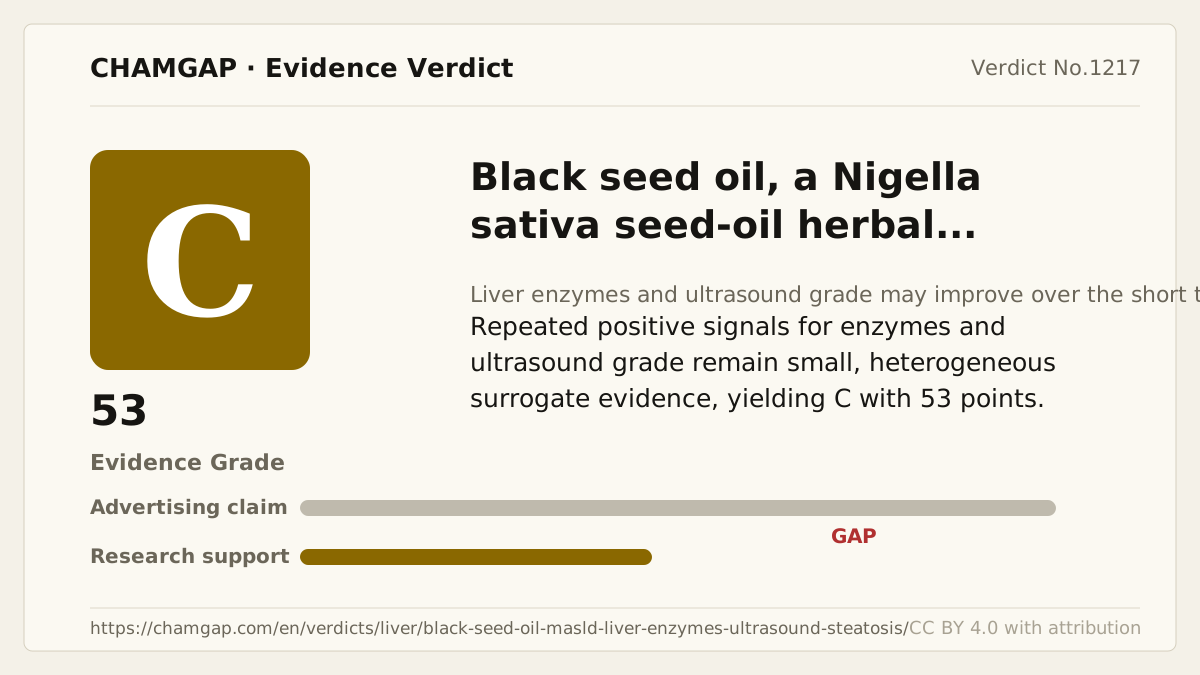
research showsBlack seed oil is rated C for MASLD or nonalcoholic fatty liver disease. A 2021 meta-analysis of five trials and 358 participants reported improvements in ALT, AST, and ultrasound fatty-liver grade with Nigella sativa, and a double-blind 120-person trial of standardized seed oil at 5 mL/day for three months improved all three measures. The evidence, however, is confined to small single-region studies, mixed oil and powder preparations, short interventions of 8 to 24 weeks, and heterogeneous surrogate outcomes. There is no evidence of histologic MASH resolution, fibrosis improvement, or clinical liver outcomes, producing C with 53 points.
ads claimMarketing turns the antioxidant constituent thymoquinone and lower enzymes into treatment of fatty liver or liver regeneration. The actual evidence concerns blood tests and ultrasound grades after two to six months of Nigella sativa preparations added to lifestyle management, not treatment of advanced MASH or fibrosis and not replacement of medicine.
Useful facts when choosing a product
- Black seed oil is obtained from Nigella sativa seeds. Thymoquinone content and fatty-acid composition can vary substantially with extraction, storage, and product standardization.
- A representative positive NAFLD trial used seed oil at 2.5 mL twice daily for three months, but the meta-analysis combined oil with seed-powder and capsule trials.
- Short trials generally found good tolerability, but abdominal discomfort, bloating, diarrhea, headache, altered taste, and rare rash or hypersensitivity can occur.
- Black seed may lower glucose, so hypoglycemia should be monitored with diabetes medicines. Potential bleeding and drug-metabolism interactions should be reviewed before use with anticoagulants, antiplatelet drugs, or planned surgery.
Chamgap Semantic Classification Code
Candidate index · review held
S.black-seed-oil.UNK.alt-ast-and-ultrasound-steatosis-in-masld-or-nonalcoholic-fatty-liver-disease.improve.placeboSupplements and nutraceuticals > Black seed oil > Unknown > ALT, AST, and ultrasound steatosis in MASLD or nonalcoholic fatty liver disease > Improvement claim > Placebo
An automated migration candidate, not an issued permanent code; exact claim scope remains under review. This machine-generated migration candidate helps retrieval but is not a permanent assignment. The original verdict ID and URL remain authoritative.
What the research actually shows
Tang and colleagues synthesized five randomized trials and 358 participants through June 2020 and concluded that Nigella sativa improved ALT, AST, and fatty-liver grade, while explicitly calling for larger high-quality trials. Khonche and colleagues randomized 120 patients with NAFLD to standardized seed oil at 5 mL/day or placebo for three months and reported significant improvements in ultrasound steatosis grade, ALT, and AST. Rashidmayvan and colleagues randomized 44 patients to seed oil or paraffin oil for eight weeks and reported improvements in ALT, AST, and inflammatory markers, but did not assess imaging-based liver fat. A later review found improvement in steatosis grade and enzymes in three of four trials, but studies were concentrated in small Iranian and Pakistani cohorts and included no biopsy or long-term liver event.
Why this is classified as C (53)
A five-trial, 358-person meta-analysis and randomized oil trials of 120 and 44 participants support positive signals for ALT, AST, and ultrasound grade. Mixed preparations, regional and sample limitations, short follow-up, very high heterogeneity, and no histology, fibrosis, or clinical events limit the evidence to surrogate-only C with 53 points. Safety and interactions are assessed separately from efficacy.
Counterpoint. Weight loss, diet, activity, and management of diabetes and lipids remain central to MASLD care. Anyone using the supplement should still monitor enzymes and imaging with a clinician and should not stop established treatment.
Rejudgment record. New verdict — Applied C because a five-trial meta-analysis and standardized seed-oil trials support positive ALT, AST, and ultrasound signals, while mixed oil and powder preparations, small regional studies, high heterogeneity, short follow-up, and absence of histology, fibrosis, and clinical outcomes limit the evidence to surrogates
Sub-claim grades by effect
This ingredient is marketed for several effects. A single overall grade blends strong and weak claims together, so each effect is graded separately here. The overall grade reflects the strongest disconfirming or core claim.
| Effect (sub-claim) | Grade | Basis |
|---|---|---|
| Improvement of ALT and AST in MASLD or nonalcoholic fatty liver disease | C | Meta-analysis and small seed-oil trials were positive, but heterogeneity is high and the outcomes are surrogate measures. |
| Improvement of ultrasound fatty-liver grade | C | A 120-person oil trial and synthesis were positive, but follow-up was short and imaging was limited to semiquantitative ultrasound. |
| Improvement of MASH histology, liver fibrosis, or long-term liver events | ? | No human intervention trial directly evaluating these clinical benefits was identified. |
Cross-check — AI research and Codex final gate
Evidence Table
| Study | Design | Sample | Funding | Endpoint | Result | Weight |
|---|---|---|---|---|---|---|
| Tang G et al. 2021 | Systematic review and meta-analysis of randomized controlled trials | Five trials, six reports, and 358 participants | Chinese academic investigators; no industry funding reported in the abstract | ALT, AST, metabolic markers, and fatty-liver grade | Nigella sativa improved ALT, AST, and fatty-liver grade versus placebo, while several metabolic markers were null. | Key synthesis limited by small trials and mixed preparations |
| Khonche A et al. 2019 | Randomized double-blind placebo-controlled clinical trial | 120 adults with NAFLD | Iranian academic investigators; detailed funding not stated in the public abstract | Ultrasound steatosis grade, ALT, AST, and lipids | Standardized seed oil at 2.5 mL twice daily for three months improved ultrasound grade and ALT and AST versus placebo. | Largest direct seed-oil trial, limited to surrogate outcomes |
| Rashidmayvan M et al. 2019 | Randomized double-blind placebo-controlled clinical trial | 44 adults with NAFLD | Investigators at Ahvaz Jundishapur University of Medical Sciences; detailed funding not stated in the public abstract | ALT, AST, GGT, inflammation, lipids, and glucose | Eight weeks of seed oil reduced ALT, AST, and several metabolic and inflammatory markers versus placebo, but did not assess imaging-based liver fat. | Small direct seed-oil surrogate-outcome trial |
| Tiwari A et al. 2022 | Systematic review and meta-analysis of randomized controlled trials | Four randomized trials and 224 adults with NAFLD | Institutional core grant from NIPER under the Indian Department of Pharmaceuticals | ALT, AST, BMI, and lipids | ALT and AST reductions were significant, but heterogeneity was very high at I² 96% and 95%, respectively. | Synthesis showing both positive direction and very high heterogeneity |
Receipt — 4 References
All 4 cited sources were verified for existence at the original page (as of 2026-07-23).
Final verification and publication gate: Codex · Evidence date: 2026-07-23 · Corrections: none
Cite this verdict
[Chamgap] Black seed oil x improved liver enzymes and ultrasound steatosis in MASLD — Evidence Grade C·53. 4 cited sources checked. Source: https://chamgap.com/en/verdicts/liver/black-seed-oil-masld-liver-enzymes-ultrasound-steatosis/ · CC BY 4.0CC BY 4.0 — free to use with attribution; do not distort grades, numbers, or verdict meaning.
What this document does and does not do
Chamgap is an information source. It reports what research has and has not confirmed; it does not tell readers what to take or buy. That decision belongs to readers and, when needed, medical or legal professionals. This verdict reflects literature available up to the search date and may change as new research appears. Nothing here is medical advice.