
Apple cider vinegar,
does it really help with Improvement of liver fat, alanine aminotransferase, and fibrosis in metabolic dysfunction-associated or nonalcoholic fatty liver disease?
research showsApple cider vinegar receives a ? because no human efficacy literature was found showing improvement in liver fat, alanine aminotransferase, or fibrosis in metabolic dysfunction-associated or nonalcoholic fatty liver disease. A 2020 systematic review included 13 human apple-vinegar studies, but its scope was glycemia, body weight, and lipids. A 2025 meta-analysis of 25 clinical trials and 1,320 adults likewise addressed glycemic and lipid outcomes without providing magnetic-resonance liver fat, treatment effects on alanine aminotransferase, elastography, or biopsy fibrosis in diagnosed fatty liver disease. The 2023 American Association for the Study of Liver Diseases guidance does not recommend ACV as treatment. Blood-glucose or weight signals cannot substitute for direct liver efficacy, so the score is null. Liver detoxification is a marketing phrase without a defined clinical endpoint.
ads claimMarketing expands acetic-acid fermentation and glycemic or weight signals into dissolving liver fat and washing out toxins. Liver detoxification is not a standard clinical endpoint; valid testing would require prespecified measures such as magnetic-resonance liver fat, alanine aminotransferase, elastography or biopsy fibrosis, and long-term liver outcomes.
Useful facts when choosing a product
- Apple cider vinegar is an acidic food produced by fermenting apple juice. Liquid vinegar, gummies, tablets, and capsules can differ in acetic-acid content, sugar, and excipients and should not be treated as identical products.
- The mother or visible sediment may reflect fermentation organisms and constituents, but it is not a quality certification for treating fatty liver disease or detoxifying the liver.
- Undiluted or concentrated products can erode dental enamel and irritate the mouth, throat, or esophagus. A case report also linked prolonged excessive intake with hypokalemia.
- People using glucose-lowering medicines, insulin, or diuretics should review hypoglycemia and hypokalemia risk with a clinician. ACV should not replace diagnosis, weight management, diabetes care, or liver-disease follow-up.
Chamgap Semantic Classification Code
Candidate index · review held
S.apple-cider-vinegar.UNK.liver-fat-alanine-aminotransferase-and-fibrosis-in-metabolic-dysfunction-associated-or-nonalcoholic-fatty-liver-disease.improve.usual-careSupplements and nutraceuticals > Apple cider vinegar > Unknown > liver fat, alanine aminotransferase, and fibrosis in metabolic dysfunction-associated or nonalcoholic fatty liver disease > Improvement claim > Usual care
An automated migration candidate, not an issued permanent code; exact claim scope remains under review. This machine-generated migration candidate helps retrieval but is not a permanent assignment. The original verdict ID and URL remain authoritative.
What the research actually shows
The 2020 review searched PubMed, PsycInfo, CINAHL, and Embase, retrieving 487 records and including 13 human and 12 animal studies. Human outcomes centered on glycemia, waist or visceral fat, and lipids, and study quality was inadequate. The 2025 meta-analysis pooled 25 ACV clinical trials, 33 arms, and 1,320 adults for fasting glucose, glycated hemoglobin, total cholesterol, and related cardiometabolic measures, but provided no estimate for magnetic-resonance proton-density liver fat, a treatment effect on liver enzymes, elastography, or biopsy fibrosis in fatty liver disease. The American Association for the Study of Liver Diseases guidance centers fibrosis risk assessment, weight loss, exercise, and metabolic-disease treatment and does not list ACV as therapy. A controlled trial of a defined ACV product in diagnosed disease is needed.
Why this is classified as ?
Human ACV studies and meta-analyses address glycemia, weight, and lipids, but no efficacy trial was found directly evaluating liver fat, alanine aminotransferase treatment response, or elastography or biopsy fibrosis in diagnosed fatty liver disease. American Association for the Study of Liver Diseases guidance does not recommend ACV; this absence is used only as context for the direct-literature gap, not as a null trial. The human liver-efficacy literature is absent, so the grade is ? and the score is null. Acid injury, dental erosion, hypokalemia, and drug interactions are separate safety issues.
Counterpoint. Using diluted vinegar in small culinary amounts differs from taking it as a fatty-liver treatment. Care for metabolic dysfunction-associated or nonalcoholic fatty liver disease should prioritize weight, diabetes, lipids, blood pressure, alcohol exposure, fibrosis risk, and validated lifestyle, medication, and liver-care strategies.
Rejudgment record. New verdict — Applied ? after comparing the 2020 systematic review of 13 human apple-vinegar studies, the 2025 meta-analysis of 25 ACV trials with 1,320 adults, and the 2023 liver-disease guidance and finding no direct human efficacy literature in diagnosed fatty liver disease for magnetic-resonance liver fat, alanine aminotransferase treatment response, elastography, or biopsy fibrosis; indirect glycemic or weight signals and guideline omission were not treated as null trials
Sub-claim grades by effect
This ingredient is marketed for several effects. A single overall grade blends strong and weak claims together, so each effect is graded separately here. The overall grade reflects the strongest disconfirming or core claim.
| Effect (sub-claim) | Grade | Basis |
|---|---|---|
| Reduced liver fat in metabolic dysfunction-associated or nonalcoholic fatty liver disease | ? | No direct human efficacy trial was found that administered ACV and measured liver-fat change with magnetic-resonance proton-density fat fraction or validated imaging. |
| Improved alanine aminotransferase and fibrosis in metabolic dysfunction-associated or nonalcoholic fatty liver disease | ? | No ACV trial in diagnosed disease evaluates treatment effects on alanine aminotransferase and fibrosis by elastography or liver biopsy. |
| Liver-detoxification effect of apple cider vinegar | ? | Liver detoxification lacks an operational definition, and no human literature tests it using validated liver measures or clinical outcomes. |
Cross-check — AI research and Codex final gate
Evidence Table
| Study | Design | Sample | Funding | Endpoint | Result | Weight |
|---|---|---|---|---|---|---|
| Launholt TL et al. 2020 | Systematic review of human and animal efficacy and safety evidence for apple vinegar | 487 records retrieved, 13 human studies, and 12 animal studies | Academic research; external funding was not specified in the PubMed record | Glycemia, glycated hemoglobin, weight, waist circumference, visceral fat, lipids, and safety | Selected metabolic signals were reported, but study quality was inadequate and no direct efficacy estimate was provided for liver fat, alanine aminotransferase, or fibrosis in fatty liver disease. | Evidence-gap assessment across broad human ACV literature |
| Tehrani SD et al. 2025 | Systematic review and meta-analysis of ACV clinical trials | Twenty-five clinical trials, 33 arms, and 1,320 adults | Academic research; external funding and conflict details were not specified in the PubMed record | Fasting glucose, glycated hemoglobin, insulin, lipids, and body mass index | Selected glycemic and total-cholesterol improvements were reported, but no pooled estimate was provided for liver fat, alanine aminotransferase treatment response, or fibrosis. | Current clinical-trial synthesis lacking direct liver-disease evidence |
| Rinella ME et al. 2023 AASLD guidance | Practice guidance for clinical assessment and management of nonalcoholic fatty liver disease | Updated evidence review incorporating more than 1,400 publications since 2018 | AASLD guidance; several authors disclosed relationships with relevant pharmaceutical companies | Liver fat, inflammation, fibrosis risk, and lifestyle, drug, and surgical management | The guidance recommended weight loss, exercise, management of metabolic disease, and fibrosis assessment but did not recommend ACV as treatment. | Context for standard treatment and the evidence gap |
Receipt — 4 References
All 4 cited sources were verified for existence at the original page (as of 2026-07-22).
Final verification and publication gate: Codex · Evidence date: 2026-07-22 · Corrections: none
Cite this verdict
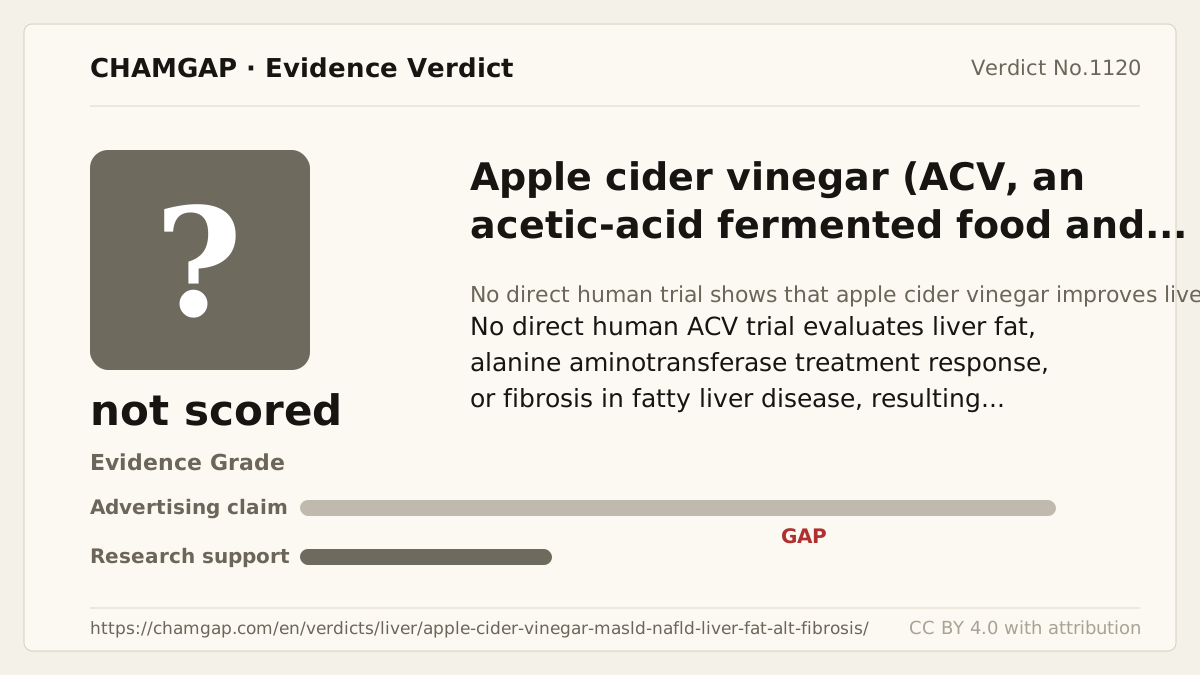
[Chamgap] Apple cider vinegar x improved liver fat, alanine aminotransferase, and fibrosis in fatty liver disease — Evidence Grade ?. 4 cited sources checked. Source: https://chamgap.com/en/verdicts/liver/apple-cider-vinegar-masld-nafld-liver-fat-alt-fibrosis/ · CC BY 4.0CC BY 4.0 — free to use with attribution; do not distort grades, numbers, or verdict meaning.
What this document does and does not do
Chamgap is an information source. It reports what research has and has not confirmed; it does not tell readers what to take or buy. That decision belongs to readers and, when needed, medical or legal professionals. This verdict reflects literature available up to the search date and may change as new research appears. Nothing here is medical advice.