
Aquamin marine-algae multimineral,
does it really help with Increased bone mineral density and prevention of fractures?
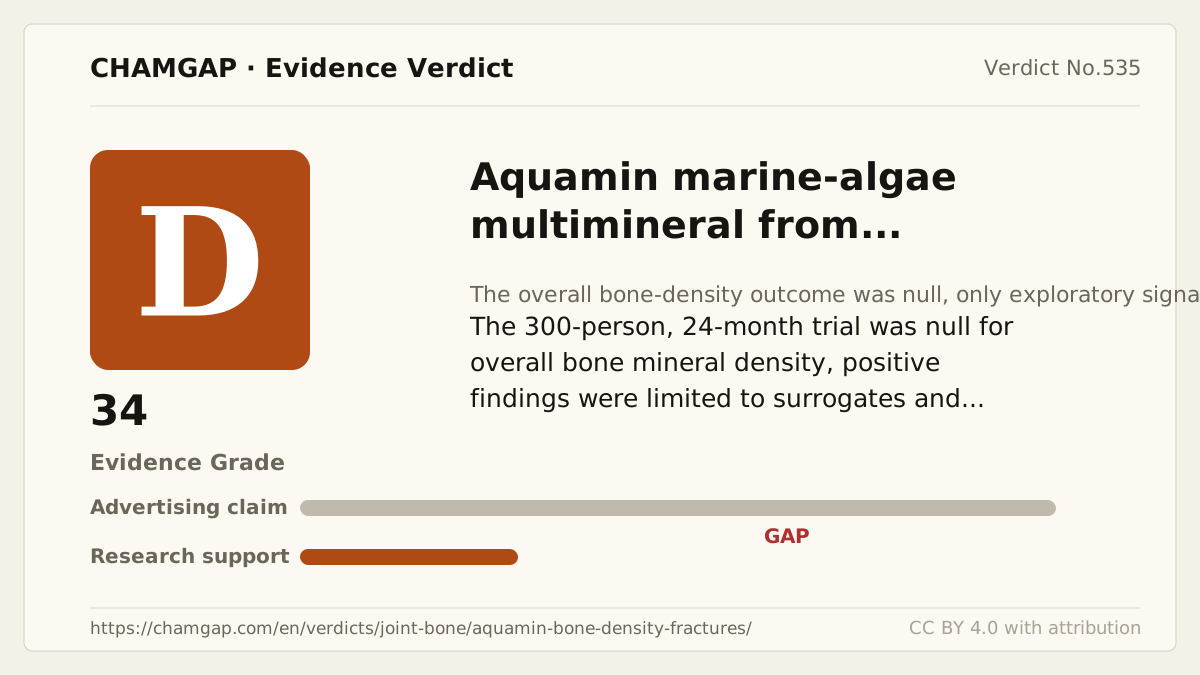
research showsEvidence for Aquamin's direct claim of increasing bone mineral density is rated D. In a 24-month double-blind randomized trial that assigned 300 postmenopausal women in groups of 100, neither Aquamin alone nor Aquamin plus short-chain fructo-oligosaccharides improved overall intention-to-treat bone mineral density compared with placebo. Positive findings were limited to the bone-turnover markers C-terminal telopeptide and osteocalcin and an exploratory osteopenia subgroup, while no human trial directly tested fracture prevention.
ads claimThe claim that algae-derived calcium plus approximately 72 minerals increases bone density and prevents fractures converts composition and preclinical mechanisms into clinical outcomes. Bone density itself is a surrogate, and separate evidence that Aquamin reduces fractures is absent.
Useful facts when choosing a product
- The 24-month trial used 2,400 mg/day Aquamin, providing 800 mg/day calcium.
- Aquamin is a proprietary multimineral derived from Lithothamnion red algae; generic algae calcium is not guaranteed to have the same composition.
- As of July 18, 2026, no reliable public source confirming formal South Korean functional-food registration or distribution of the Aquamin trademark ingredient was found.
- Kidney stones, hypercalcemia, kidney disease, and dose spacing from thyroid hormone, iron, and selected antibiotics require professional review.
Chamgap Semantic Classification Code
Candidate index · review held
UNK.aquamin-marine-algae-multimineral-from-lithothamnion.UNK.bone-mineral-density-and-prevention-of-fractures.prevent.placeboUnknown > Aquamin marine-algae multimineral from Lithothamnion > Unknown > bone mineral density and prevention of fractures > Occurrence-prevention claim > Placebo
An automated migration candidate, not an issued permanent code; exact claim scope remains under review. This machine-generated migration candidate helps retrieval but is not a permanent assignment. The original verdict ID and URL remain authoritative.
What the research actually shows
The 2014 Slevin trial assigned 300 postmenopausal women without osteoporosis to Aquamin providing 800 mg/day calcium, Aquamin plus short-chain fructo-oligosaccharides, or maltodextrin. At 24 months, overall intention-to-treat bone mineral density did not differ at any site, while selected 12-month bone-turnover markers and an exploratory osteopenia subgroup receiving the combination were positive. The 2017 Zenk crossover pilot in 12 women measured only acute serum calcium and parathyroid hormone. A 2025 pilot in 28 patients with ulcerative colitis reported improvement in selected density and calculated hip-strength measures after 180 days of Aquamin, but it was small, population-specific, and did not measure fractures.
Why this is classified as D (34)
The direct claim of increased bone mineral density was null in the overall intention-to-treat analysis of the 300-person, 24-month randomized trial. Bone-turnover markers and an exploratory subgroup are surrogate and hypothesis-generating evidence, no direct fracture trial exists, and the evidence is concentrated in studies sponsored by Marigot and Corn Products, supporting D with 34 points.
Counterpoint. Possible usefulness as a calcium source in people with low calcium intake is different from a proprietary Aquamin fracture-prevention effect.
Rejudgment record. Reassessment (cross-check reflected) — Prioritized the overall intention-to-treat bone mineral density result in the 300-person, 24-month trial and separately considered bone markers, exploratory subgroups, absent fracture trials, and industry sponsorship
Sub-claim grades by effect
This ingredient is marketed for several effects. A single overall grade blends strong and weak claims together, so each effect is graded separately here. The overall grade reflects the strongest disconfirming or core claim.
| Effect (sub-claim) | Grade | Basis |
|---|---|---|
| Increased bone mineral density | D | Overall bone mineral density was null versus placebo in a 300-person, 24-month randomized trial. |
| Changes in bone-turnover markers (C-terminal telopeptide and osteocalcin) | C | The markers changed, but they are surrogate outcomes and the positive density signal was subgroup-based. |
| Prevention of fractures | ? | No direct human fracture trial exists. |
Cross-check — AI research and Codex final gate
Evidence Table
| Study | Design | Sample | Funding | Endpoint | Result | Weight |
|---|---|---|---|---|---|---|
| Slevin et al. 2014 | Twenty-four-month double-blind randomized controlled trial | 300 | Marigot and Corn Products International | Whole-body, spine, and femur bone mineral density plus C-terminal telopeptide and osteocalcin | Overall intention-to-treat bone mineral density did not differ from placebo; selected 12-month markers and exploratory subgroups were positive. | Key |
| Zenk et al. 2017 | Single-dose double-blind crossover pilot | 12 | Proprietary-product study | Serum and urinary calcium and parathyroid hormone | Only acute calcium-metabolism signals were measured; this was not a bone-density or fracture trial. | Supportive |
| Varani et al. 2025 | Randomized pilot biomarker trial | 28 | Aquamin research program and proprietary product | Dual-energy X-ray absorptiometry bone density, bone mineral content, and calculated hip strength index | Selected measures improved after 180 days, but the study was small, population-specific, and did not measure fractures. | Limited |
| Study 4 | Search for direct human fracture outcomes | Not applicable | Incident clinical fractures | No controlled human Aquamin fracture-prevention trial was identified through July 18, 2026. | Evidence gap |
Receipt — 4 References
All 4 cited sources were verified for existence at the original page (as of 2026-07-18).
Final verification and publication gate: Codex · Evidence date: 2026-07-18 · Corrections: none
Cite this verdict
[Chamgap] Aquamin marine-algae multimineral x bone density and fracture prevention — Evidence Grade D·34. 4 cited sources checked. Source: https://chamgap.com/en/verdicts/joint-bone/aquamin-bone-density-fractures/ · CC BY 4.0CC BY 4.0 — free to use with attribution; do not distort grades, numbers, or verdict meaning.
What this document does and does not do
Chamgap is an information source. It reports what research has and has not confirmed; it does not tell readers what to take or buy. That decision belongs to readers and, when needed, medical or legal professionals. This verdict reflects literature available up to the search date and may change as new research appears. Nothing here is medical advice.