
Whole perilla leaves,
does it really help with Relief of seasonal allergic-rhinitis symptoms?
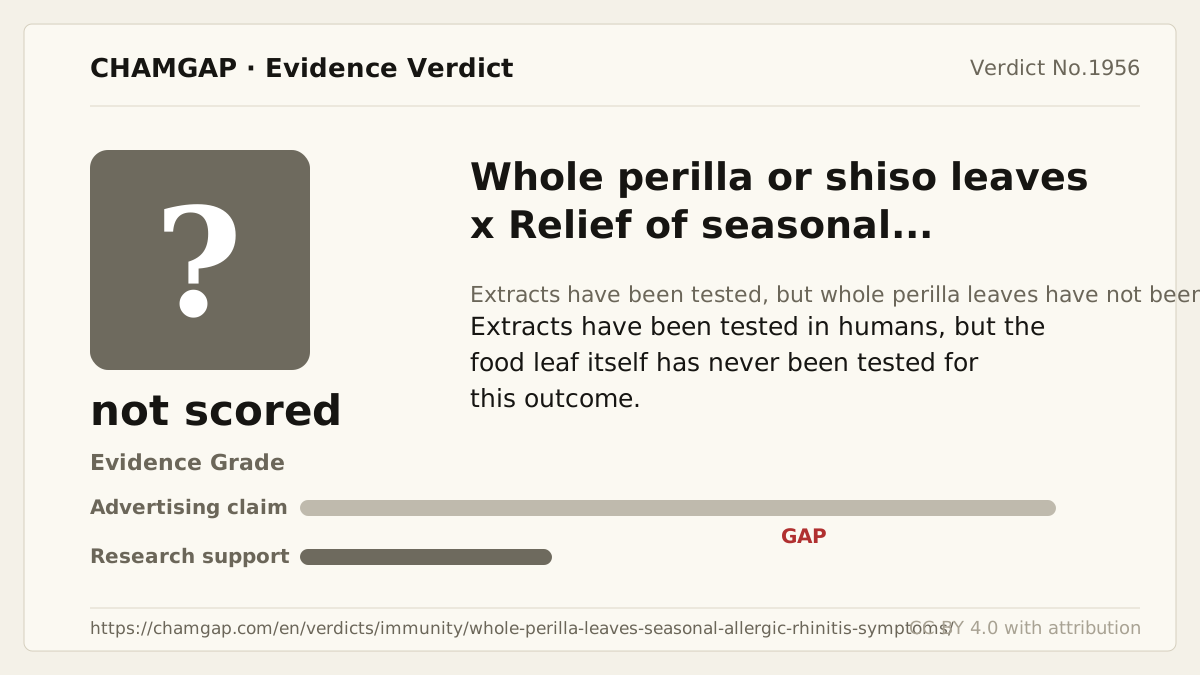
research showsThe grade is ?. Perilla extracts and rosmarinic acid have been tested in humans, but no study was found that fed whole leaves, leaf powder, or juice and measured seasonal allergic-rhinitis symptoms. Extract findings cannot be transferred to food leaves, so there is no score.
ads claimA positive extract-capsule result is not the same claim as benefit from leaves eaten at a meal. Extraction and standardization can change the delivered dose, and no valid conversion to a few leaves has been established.
Useful facts when choosing a product
- On 2026-08-02, PubMed exact query 「("Perilla frutescens"[Title/Abstract] OR perilla[Title/Abstract] OR shiso[Title/Abstract]) AND (rhinitis[Title/Abstract] OR rhinoconjunctivitis[Title/Abstract] OR pollinosis[Title/Abstract])」 was screened in full. There were 0 eligible whole-leaf studies; extracts, isolated rosmarinic acid, animal, and cell studies were excluded.
- On 2026-08-02, ClinicalTrials.gov and WHO ICTRP searches combining the plant names with rhinitis, pollinosis, and allergic rhinoconjunctivitis found 0 eligible whole-leaf-alone registrations. Registrations of perilla extract, seed, and multicomponent products exist but were excluded from this count.
- Takano 2004 was funded by Meiji Seika Kaisha, Ltd., and multiple authors were affiliated with the company's Health and Bioscience Laboratories.
- On 2026-08-02, 37 searches across KCI, RISS, ScienceON, J-STAGE, CiNii, CNKI, and Wanfang found 0 eligible human studies using fresh leaves, leaf powder, or juice for this outcome.
- Bencao Gangmu places the su and ren entries in juan 14, the herb section, and explicitly says they were moved there from the vegetable section.
- Shiliao Bencao describes pounding the fresh leaf with vinegar and applying it externally. Donguibogam records wind-cold and epigastric fullness, not allergic rhinitis.
- Verdict 260 is C with 45 points for a perilla-leaf extract and eye fatigue. The present question differs in both outcome and whole-food form.
Chamgap Semantic Classification Code
Candidate index · review held
UNK.whole-perilla-or-shiso-leaves.UNK.seasonal-allergic-rhinitis-symptoms.relieve.placeboUnknown > Whole perilla or shiso leaves > Unknown > seasonal allergic-rhinitis symptoms > Symptom-relief claim > Placebo
An automated migration candidate, not an issued permanent code; exact claim scope remains under review. This machine-generated migration candidate helps retrieval but is not a permanent assignment. The original verdict ID and URL remain authoritative.
What the research actually shows
Human research clearly exists, but the identified rhinitis studies used perilla extract or multicomponent formulations. Takano 2004 randomized 29 people with mild seasonal allergic rhinoconjunctivitis to 200 mg enriched extract, 10 participants; 50 mg enriched extract, 9 participants; or placebo, 10 participants, for 21 days in a double-blind trial. The work was supported by a grant from Meiji Seika Kaisha, Ltd., and multiple authors, including Osakabe, Sanbongi, Yasuda, Natsume, and Baba, were affiliated with Meiji Seika's Health and Bioscience Laboratories. Thus, the rhinitis trial's funding and much of its research team came from the company selling the tested material. No study fed whole perilla leaves as food and measured rhinitis symptoms. This verdict concerns the food itself, not an extract.
Why this is classified as ?
No human study measured the claimed outcome after whole-leaf intake, so the grade is ? and the score is null.
Counterpoint. The human extract signal can motivate a food trial but cannot establish efficacy of the leaf itself.
Rejudgment record. Cross-check applied — Multilingual searches found no human study feeding whole perilla leaves and measuring seasonal allergic-rhinitis symptoms
Sub-claim grades by effect
This ingredient is marketed for several effects. A single overall grade blends strong and weak claims together, so each effect is graded separately here. The overall grade reflects the strongest disconfirming or core claim.
| Effect (sub-claim) | Grade | Basis |
|---|---|---|
| Seasonal allergic-rhinitis relief from whole perilla leaves | ? | No human study measured this exact food-and-outcome combination. |
| Symptom response to rosmarinic-acid-enriched perilla extract | C | A separate formulation tested in a short 29-person trial. |
| Relief of ocular and nasal allergy symptoms from whole perilla leaves | ? | This has not been measured in humans using whole leaves. |
Cross-check — AI research and Codex final gate
Evidence Table
| Study | Design | Sample | Funding | Endpoint | Result | Weight |
|---|---|---|---|---|---|---|
| Takano H et al. 2004 | Twenty-one-day randomized double-blind placebo-controlled extract trial | 29 randomized and analyzed: 10 at 200 mg, 9 at 50 mg, and 10 placebo | Grant from Meiji Seika Kaisha, Ltd.; multiple authors affiliated with its Health and Bioscience Laboratories | Nasal and ocular symptom diaries and nasal-lavage inflammatory cells | Some symptom responder rates exceeded placebo, but the intervention was enriched extract | Excluded from the whole-leaf question because the formulation differs |
Receipt — 1 References
All 1 cited sources were verified for existence at the original page (as of 2026-08-02).
Final verification and publication gate: Codex · Evidence date: 2026-08-02 · Corrections: none
Cite this verdict
[Chamgap] Whole perilla leaves x relief of seasonal allergic-rhinitis symptoms — Evidence Grade ?. 1 cited sources checked. Source: https://chamgap.com/en/verdicts/immunity/whole-perilla-leaves-seasonal-allergic-rhinitis-symptoms/ · CC BY 4.0CC BY 4.0 — free to use with attribution; do not distort grades, numbers, or verdict meaning.
What this document does and does not do
Chamgap is an information source. It reports what research has and has not confirmed; it does not tell readers what to take or buy. That decision belongs to readers and, when needed, medical or legal professionals. This verdict reflects literature available up to the search date and may change as new research appears. Nothing here is medical advice.