
Vi capsular polysaccharide typhoid vaccine,
does it really help with Prevention of culture-confirmed typhoid fever in residents of and travelers to endemic areas?
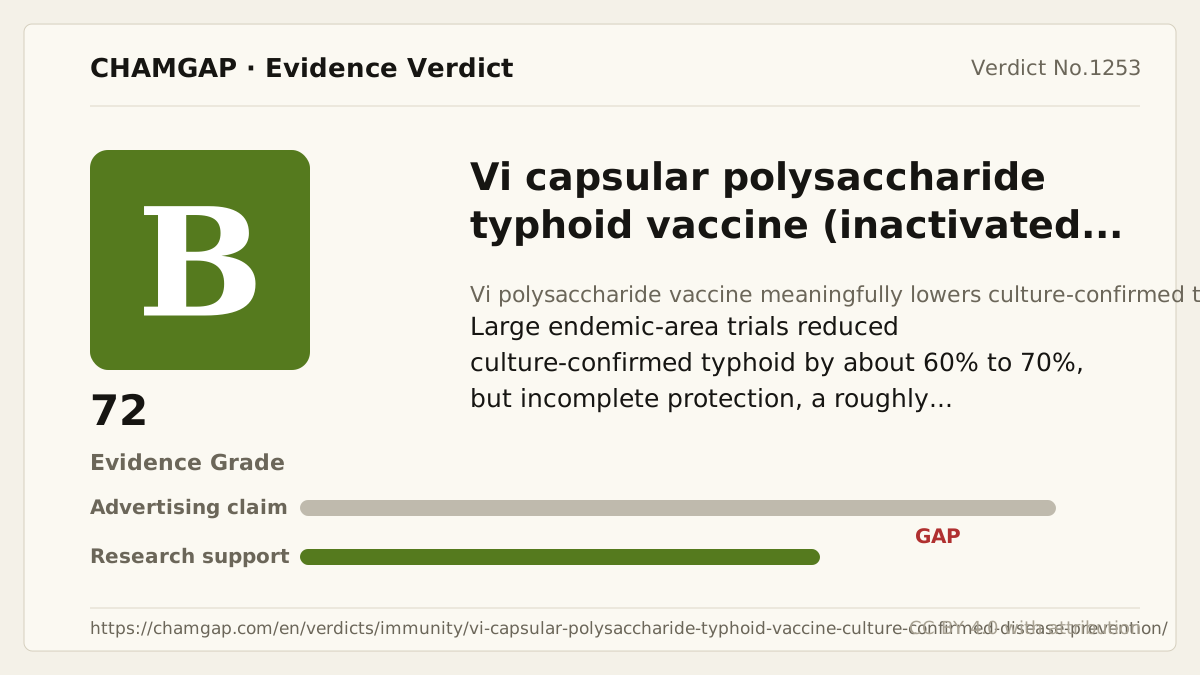
research showsVi capsular polysaccharide typhoid vaccine is rated B because it moderately reduces culture-confirmed typhoid fever in endemic settings. In a cluster-randomized trial of 37,673 vaccine recipients in Kolkata, two-year protective effectiveness was 61%, with 34 versus 96 culture-confirmed cases. A double-blind trial of 6,907 people in Nepal found 72% efficacy against culture-confirmed disease over 17 months. A Cochrane synthesis estimated efficacy at 69% in year one, 59% in year two, and 55% cumulatively around three years. Repeated randomized evidence on a direct infection endpoint is strong, but protection is incomplete, long-term duration is limited, and no disease-endpoint trial directly enrolled travelers, supporting B with 72 points.
ads claimPromotion can imply that one injection completely and durably prevents typhoid and every enteric fever. Protection is incomplete and declines over time, and the vaccine does not prevent paratyphoid fever caused by Salmonella Paratyphi or other causes of travelers' diarrhea.
Useful facts when choosing a product
- Vi polysaccharide vaccine is an inactivated injectable vaccine made from purified Vi capsular polysaccharide of Salmonella Typhi; the standard single dose in efficacy trials was 25 micrograms intramuscularly.
- Direct clinical-efficacy evidence primarily comes from endemic-area residents and children aged two years or older, while unconjugated polysaccharide vaccine is poorly immunogenic below age two.
- Protection is incomplete and evidence beyond roughly three years is uncertain, so people with continuing risk should follow national guidance and the specific product label for revaccination.
- Injection-site pain, redness, swelling, fever, and headache can occur; food and water precautions remain necessary, and protection against paratyphoid fever should not be expected.
Chamgap Semantic Classification Code
Candidate index · review held
M.vi-capsular-polysaccharide-typhoid-vaccine.UNK.culture-confirmed-typhoid-fever-in-residents-of-and-travelers-to-endemic-areas.prevent.activeMedicinal interventions > Vi capsular polysaccharide typhoid vaccine > Unknown > culture-confirmed typhoid fever in residents of and travelers to endemic areas > Occurrence-prevention claim > Active comparator
An automated migration candidate, not an issued permanent code; exact claim scope remains under review. This machine-generated migration candidate helps retrieval but is not a permanent assignment. The original verdict ID and URL remain authoritative.
What the research actually shows
Sur 2009 cluster-randomized residents aged two years or older in 80 Kolkata clusters to Vi vaccine or inactivated hepatitis A vaccine. Among 37,673 recipients, two-year culture-confirmed typhoid occurred in 34 versus 96 people, for 61% direct protection; unvaccinated residents of Vi clusters also had a 44% indirect-protection signal. Acharya 1987 double-masked 6,907 residents of five Nepalese villages to Vi or pneumococcal vaccine and reported 72% efficacy against culture-confirmed typhoid over 17 months. The 2018 Milligan Cochrane review estimated Vi polysaccharide efficacy at about 69% in year one and 59% in year two, with 55% cumulative efficacy at 2.5 to 3 years in one trial.
Why this is classified as B (72)
The 61% protective effectiveness in a 37,673-recipient cluster trial and 72% efficacy in the Nepal trial are consistent on the direct endpoint of culture-confirmed typhoid. Cochrane synthesis confirmed 69% efficacy in year one and 59% in year two, but cumulative efficacy around three years was 55%, and long-term and traveler-specific efficacy data are limited. This supports moderate-vaccine-effect grade B with 72 points.
Counterpoint. Direct evidence is strong for endemic-area residents, but absolute benefit in travelers varies greatly with destination, duration, and food exposure, and vaccination cannot replace food and water hygiene.
Rejudgment record. New verdict — A 37,673-recipient Kolkata cluster trial and a 6,907-participant double-blind Nepal trial reduced culture-confirmed typhoid by 61% to 72%, with Cochrane confirmation over years one and two; incomplete protection, an approximately three-year duration limit, and no direct traveler disease-endpoint trial support moderate-vaccine-effect grade B
Sub-claim grades by effect
This ingredient is marketed for several effects. A single overall grade blends strong and weak claims together, so each effect is graded separately here. The overall grade reflects the strongest disconfirming or core claim.
| Effect (sub-claim) | Grade | Basis |
|---|---|---|
| Prevention of culture-confirmed typhoid in endemic-area residents aged two years or older | B | Multiple large randomized trials replicated direct protection of about 60% to 70%, but protection was incomplete. |
| Prevention of culture-confirmed typhoid in travelers to endemic areas | C | No randomized disease-endpoint trial directly followed travelers; use is extrapolated from endemic-resident field efficacy. |
| Indirect prevention of typhoid among unvaccinated people in partially vaccinated communities | C | The 44% indirect effect in a single Kolkata cluster trial was positive, but the 95% CI of 2 to 69 was wide and replication across settings is limited. |
Cross-check — AI research and Codex final gate
Evidence Table
| Study | Design | Sample | Funding | Endpoint | Result | Weight |
|---|---|---|---|---|---|---|
| Sur D et al. 2009 Kolkata trial | Phase 4 effectiveness trial with 80 geographic clusters and an active control | 37,673 vaccine recipients | Led by the International Vaccine Institute; the manufacturer performed blinded serology but did not participate in design, analysis, or manuscript preparation | Blood-culture-confirmed typhoid fever | Over two years there were 34 versus 96 cases, for 61% direct protection (95% CI 41 to 75); indirect protection among unvaccinated cluster residents was 44% (2 to 69). | Key large field trial with a direct endpoint |
| Acharya IL et al. 1987 Nepal trial | Village-based randomized double-blind active-control trial using pneumococcal vaccine | 6,907 participants | Funding source not stated in the abstract | Blood-culture-confirmed and clinically suspected typhoid fever | At 17 months, efficacy was 72% against culture-confirmed disease and 75% against all adjudicated typhoid. | Independent replication in an endemic setting |
| Milligan R et al. 2018 Cochrane review | Systematic review of randomized and quasi-randomized typhoid-vaccine trials | Three Vi polysaccharide trials with 99,797 participants at year one and four trials with 194,969 at year two | Academic Cochrane Infectious Diseases Group review | Culture-confirmed typhoid fever | Efficacy was 69% in year one, 59% in year two, and 55% cumulatively at 2.5 to 3 years, with substantial heterogeneity at year two. | Synthesis of magnitude and duration |
Receipt — 4 References
All 4 cited sources were verified for existence at the original page (as of 2026-07-24).
Final verification and publication gate: Codex · Evidence date: 2026-07-24 · Corrections: none
Cite this verdict
[Chamgap] Vi capsular polysaccharide typhoid vaccine x prevention of culture-confirmed typhoid fever — Evidence Grade B·72. 4 cited sources checked. Source: https://chamgap.com/en/verdicts/immunity/vi-capsular-polysaccharide-typhoid-vaccine-culture-confirmed-disease-prevention/ · CC BY 4.0CC BY 4.0 — free to use with attribution; do not distort grades, numbers, or verdict meaning.
What this document does and does not do
Chamgap is an information source. It reports what research has and has not confirmed; it does not tell readers what to take or buy. That decision belongs to readers and, when needed, medical or legal professionals. This verdict reflects literature available up to the search date and may change as new research appears. Nothing here is medical advice.