
Seasonal inactivated influenza vaccine,
does it really help with Prevention of symptomatic laboratory-confirmed influenza?
research showsSeasonal inactivated influenza vaccine is rated A because it directly reduces symptomatic laboratory-confirmed influenza. In the 2018 Cochrane review of randomized placebo- or no-vaccine-controlled trials in healthy adults, confirmed influenza fell from 2.3% to 0.9% (RR 0.41, 95% CI 0.36 to 0.47; 71,221 participants; moderate-certainty evidence). A separate placebo-controlled trial of 1,952 adults in 2007-2008 found 68% absolute efficacy for inactivated vaccine. Effectiveness varies by season, circulating strain, and antigenic match, does not prevent every infection, and evidence for hospitalization or death depends more heavily on observational studies than this healthy-adult randomized evidence axis.
ads claimPromotion can imply that annual vaccination makes influenza impossible or prevents every common cold. The evidence shows reduced risk of symptomatic laboratory-confirmed influenza under the relationship between that season's vaccine and circulating strains; it does not mean complete infection blockade or prevention of all respiratory illness.
Useful facts when choosing a product
- Seasonal inactivated influenza vaccines are reformulated each year to reflect recommended strains, so vaccination in a prior season does not replace vaccination for the next season.
- Eligibility and timing in national programs can vary by age, pregnancy, underlying disease, and the current year's program, so official schedules and clinical advice should be followed.
- Injection-site pain or redness and transient fever or muscle aches are common but usually mild and short-lived, and an injected inactivated vaccine cannot cause influenza.
- Severe allergic reactions are very rare, and Guillain-Barre syndrome is an extremely rare safety signal; prior severe vaccine allergy or Guillain-Barre syndrome within six weeks of vaccination should be discussed with a clinician.
Chamgap Semantic Classification Code
Candidate index · review held
M.seasonal-inactivated-influenza-vaccine.UNK.symptomatic-laboratory-confirmed-influenza.prevent.placeboMedicinal interventions > Seasonal inactivated influenza vaccine > Unknown > symptomatic laboratory-confirmed influenza > Occurrence-prevention claim > Placebo
An automated migration candidate, not an issued permanent code; exact claim scope remains under review. This machine-generated migration candidate helps retrieval but is not a permanent assignment. The original verdict ID and URL remain authoritative.
What the research actually shows
The Cochrane review by Demicheli and colleagues identified 52 trials involving more than 80,000 healthy adults and emphasized 25 comparisons of injected inactivated vaccines most relevant to decisions. Confirmed influenza fell from 2.3% without vaccination to 0.9% with vaccination, for an RR of 0.41. Monto and colleagues randomized 1,952 healthy adults under double masking to inactivated vaccine, live vaccine, or placebo and reported 68% absolute efficacy of inactivated vaccine against culture- or PCR-confirmed influenza. A separate placebo-controlled trial by Beran and colleagues reported 61.6% efficacy against any circulating strain and 66.9% against vaccine-matched strains, reproducing the direct effect.
Why this is classified as A (86)
Randomized synthesis including 71,221 participants found RR 0.41 for laboratory-confirmed influenza, and separate double-blind placebo-controlled trials reproduced roughly 60% to 70% efficacy. This meets A for a direct clinical endpoint supported by large, repeated randomized evidence. Seasonal and antigenic-match variability and low absolute incidence place it at A with 86 points; severe outcomes and safety remain separate axes.
Counterpoint. Individual benefit varies with seasonal intensity, exposure, age, and immune status. The A grade for confirmed-influenza prevention should not be read as the same grade for hospitalization or death or as complete infection prevention.
Rejudgment record. New verdict — Applied A because randomized synthesis in 71,221 healthy adults and a separate large double-blind placebo-controlled trial directly reduced laboratory-confirmed influenza, while seasonal and antigenic-match variability placed the score in lower A
Sub-claim grades by effect
This ingredient is marketed for several effects. A single overall grade blends strong and weak claims together, so each effect is graded separately here. The overall grade reflects the strongest disconfirming or core claim.
| Effect (sub-claim) | Grade | Basis |
|---|---|---|
| Prevention of symptomatic laboratory-confirmed influenza | A | Large randomized synthesis and placebo-controlled trials repeatedly showed a direct reduction. |
| Seasonal and antigenic-match variability in vaccine efficacy | A | Efficacy is established, but its magnitude varies with circulating-strain match and seasonal incidence. |
| Prevention of hospitalization, severe disease, and death | C | Hospitalization evidence in healthy-adult trials is low certainty, and severe disease and death rely more heavily on observational data. |
| Complete prevention of influenza infection | D | Breakthrough infections occurred in randomized trials, so complete prevention is not supported. |
Cross-check — AI research and Codex final gate
Evidence Table
| Study | Design | Sample | Funding | Endpoint | Result | Weight |
|---|---|---|---|---|---|---|
| Demicheli V et al. 2018 | Cochrane systematic review of randomized and quasi-randomized trials | More than 80,000 participants across 52 trials; 71,221 in the confirmed-influenza analysis of injected inactivated vaccine | Academic Cochrane review; 15 included randomized trials had industry funding | Symptomatic laboratory-confirmed influenza and influenza-like illness | Inactivated vaccine reduced confirmed influenza from 2.3% to 0.9% (RR 0.41, 95% CI 0.36 to 0.47). | Pivotal large synthesis with a direct clinical endpoint |
| Monto AS et al. 2009 | Randomized double-blind inactivated-vaccine, live-vaccine, and placebo-controlled trial | 1,952 healthy adults | Support from the United States NIH and vaccine manufacturers | Symptomatic influenza confirmed by culture or PCR | Absolute efficacy of inactivated vaccine versus placebo in 2007-2008 was 68% (95% CI 46 to 81). | Large direct placebo-controlled replication |
Receipt — 3 References
All 3 cited sources were verified for existence at the original page (as of 2026-07-19).
Final verification and publication gate: Codex · Evidence date: 2026-07-19 · Corrections: none
Cite this verdict
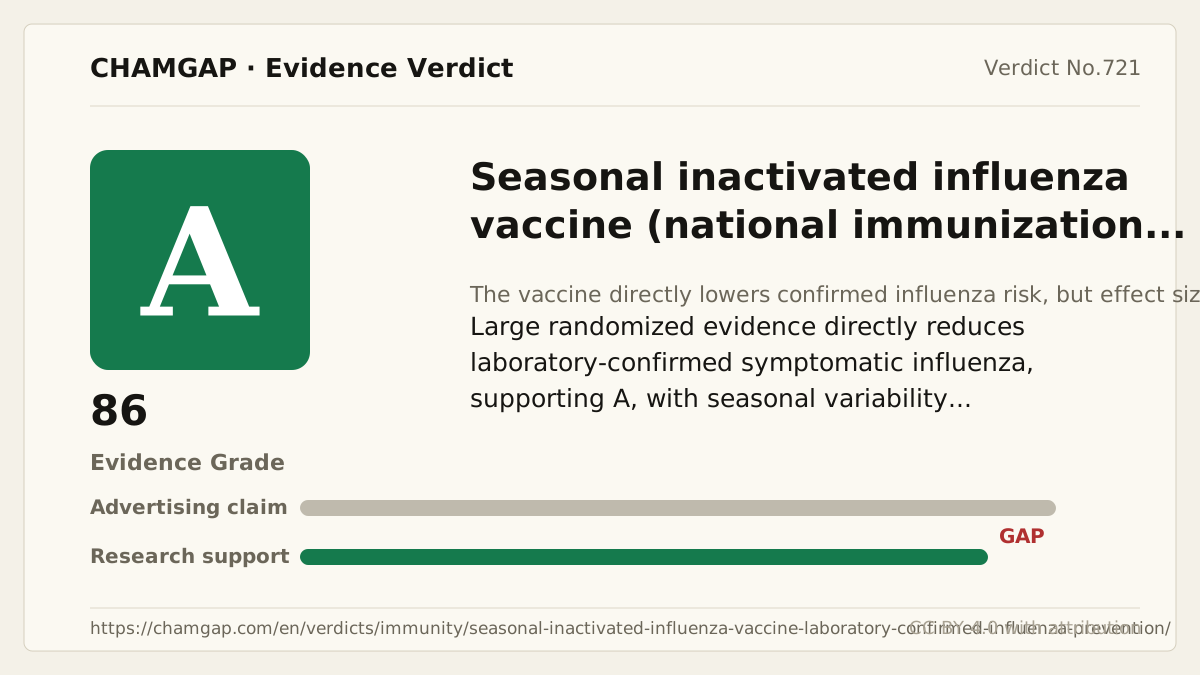
[Chamgap] Seasonal inactivated influenza vaccine x prevention of symptomatic laboratory-confirmed influenza — Evidence Grade A·86. 3 cited sources checked. Source: https://chamgap.com/en/verdicts/immunity/seasonal-inactivated-influenza-vaccine-laboratory-confirmed-influenza-prevention/ · CC BY 4.0CC BY 4.0 — free to use with attribution; do not distort grades, numbers, or verdict meaning.
What this document does and does not do
Chamgap is an information source. It reports what research has and has not confirmed; it does not tell readers what to take or buy. That decision belongs to readers and, when needed, medical or legal professionals. This verdict reflects literature available up to the search date and may change as new research appears. Nothing here is medical advice.