
Lopinavir-ritonavir,
does it really help with Reduced death and clinical progression in hospitalized COVID-19?
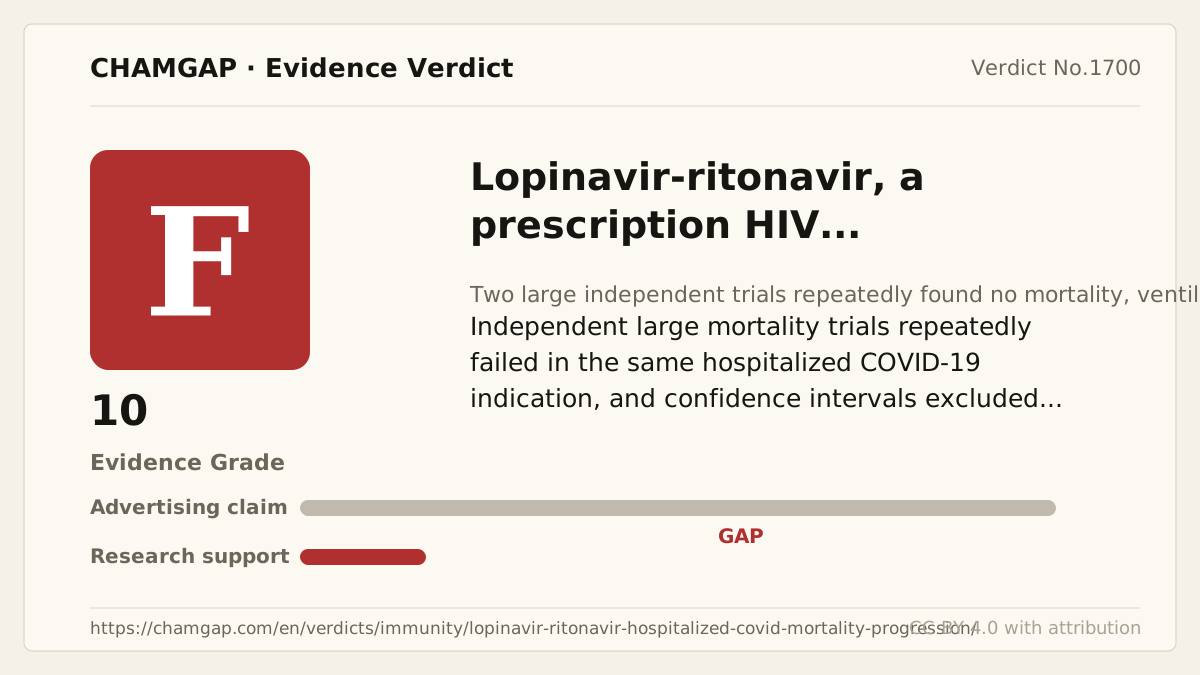
research showsLopinavir-ritonavir is rated F because it did not reduce death or progression in hospitalized COVID-19. The RECOVERY lopinavir comparison included all 5,040 participants by intention to treat, 1,616 versus 3,424; 28-day mortality was 23% versus 22%, RR 1.03 (95% CI 0.91 to 1.17), P=.60. SOLIDARITY randomized 11,330 overall and analyzed 11,266 by intention to treat, but its concurrent lopinavir primary comparison was 2,771 participants, 1,399 versus 1,372; inpatient mortality had RR 1.00 (0.79 to 1.25), P=.97.
ads claimLaboratory antiviral rationale or experience in HIV does not translate into a survival benefit for hospitalized COVID-19.
Useful facts when choosing a product
- RECOVERY used lopinavir 400 mg plus ritonavir 100 mg every 12 hours for up to 10 days.
- Kaletra is an HIV treatment; COVID-19 efficacy requires separate evidence.
Chamgap Semantic Classification Code
Candidate index · review held
M.lopinavir-ritonavir.UNK.death-and-clinical-progression-in-hospitalized-covid-19.reduce.usual-careMedicinal interventions > Lopinavir-ritonavir > Unknown > death and clinical progression in hospitalized COVID-19 > Reduction claim > Usual care
An automated migration candidate, not an issued permanent code; exact claim scope remains under review. This machine-generated migration candidate helps retrieval but is not a permanent assignment. The original verdict ID and URL remain authoritative.
What the research actually shows
The RECOVERY lopinavir comparison included 5,040 participants, 1,616 lopinavir versus 3,424 usual care, all analyzed by intention to treat. The 28-day mortality primary endpoint failed at 23% versus 22%, RR 1.03 (95% CI 0.91 to 1.17), P=.60. SOLIDARITY randomized 11,330 overall and analyzed 11,266 by intention to treat, but its concurrent lopinavir primary comparison included 2,771 participants, 1,399 versus 1,372; inpatient mortality failed with RR 1.00 (0.79 to 1.25), P=.97. RECOVERY had public UKRI/MRC and NIHR funding, with AbbVie providing drug; SOLIDARITY had public support from WHO and participating countries.
Why this is classified as F (10)
Independent large hard-endpoint mortality trials repeatedly failed in the same hospitalized COVID-19 indication, and confidence intervals excluded about a 20% relative mortality reduction, yielding F with 10 points.
Counterpoint. Direct efficacy-trial failures, not regulatory or guideline actions, determine this grade.
Rejudgment record. Cross-check applied — Distinguished the 5,040-participant RECOVERY lopinavir comparison from SOLIDARITY's 11,330 randomized and 11,266 intention-to-treat overall population and its 2,771-participant concurrent lopinavir comparison, then applied repeated same-indication mortality failure and exclusion of about a 20% relative mortality reduction
Sub-claim grades by effect
This ingredient is marketed for several effects. A single overall grade blends strong and weak claims together, so each effect is graded separately here. The overall grade reflects the strongest disconfirming or core claim.
| Effect (sub-claim) | Grade | Basis |
|---|---|---|
| Reduced 28-day mortality in hospitalized COVID-19 | F | The large RECOVERY primary endpoint and SOLIDARITY inpatient-mortality analysis repeatedly failed. |
| Reduced invasive ventilation or death | F | RECOVERY found no benefit, with RR 1.09. |
| Shorter hospital stay and increased live discharge by day 28 | F | Median stay and live discharge did not differ from usual care. |
Cross-check — AI research and Codex final gate
Evidence Table
| Study | Design | Sample | Funding | Endpoint | Result | Weight |
|---|---|---|---|---|---|---|
| RECOVERY Collaborative Group. 2020 | Multicenter open-label randomized controlled platform trial | 5,040 randomized and analyzed by intention to treat (1,616 lopinavir-ritonavir, 3,424 usual care) | Public UKRI/MRC and NIHR funding; AbbVie provided study drug | Primary endpoint of 28-day all-cause mortality | Primary endpoint failed: 23% versus 22%, RR 1.03 (95% CI 0.91 to 1.17), P=.60; discharge and ventilation or death were also null. | Large direct hard-endpoint refutation |
| WHO Solidarity Trial Consortium. 2021 | Multinational open-label randomized adaptive platform trial | 11,330 randomized and 11,266 analyzed by intention to treat overall; concurrent lopinavir primary comparison 2,771 (1,399/1,372) | Public support from WHO and participating countries; AbbVie, Cipla, and Mylan donated drug but provided no trial funding | Prespecified intention-to-treat primary analysis of in-hospital mortality | Primary analysis failed: 148 of 1,399 versus 146 of 1,372 deaths, RR 1.00 (95% CI 0.79 to 1.25), P=.97. | Large independent repeated refutation |
Receipt — 2 References
All 2 cited sources were verified for existence at the original page (as of 2026-07-24).
Final verification and publication gate: Codex · Evidence date: 2026-07-24 · Corrections: none
Cite this verdict
[Chamgap] Lopinavir-ritonavir x reduced death and progression in hospitalized COVID-19 — Evidence Grade F·10. 2 cited sources checked. Source: https://chamgap.com/en/verdicts/immunity/lopinavir-ritonavir-hospitalized-covid-mortality-progression/ · CC BY 4.0CC BY 4.0 — free to use with attribution; do not distort grades, numbers, or verdict meaning.
What this document does and does not do
Chamgap is an information source. It reports what research has and has not confirmed; it does not tell readers what to take or buy. That decision belongs to readers and, when needed, medical or legal professionals. This verdict reflects literature available up to the search date and may change as new research appears. Nothing here is medical advice.