
Larch arabinogalactan,
does it really help with Reduction of colds and upper respiratory infections and immune enhancement?
research showsIn a 12-week trial of 199 adults with frequent colds, proprietary ResistAid at 4.5 g/day produced a small incidence signal, but the main episode-rate result was significant only in the per-protocol analysis and was null in the full-analysis set at p=0.055. Symptom duration and intensity generally did not improve, and Lonza was involved throughout the research.
ads claimPrebiotic effects or antibody changes alone do not establish that colds or upper respiratory infections are actually prevented.
Useful facts when choosing a product
- The pivotal cold trial used proprietary ResistAid at 4.5 g/day.
- Larch arabinogalactan ingredients and imported products may differ in specification and co-ingredients.
- No Korean individually recognized immune-function status was confirmed within this review.
Chamgap Semantic Classification Code
Candidate index · review held
UNK.larch-arabinogalactan.UNK.colds-and-upper-respiratory-infections-and-immune-enhancement.reduce.placeboUnknown > Larch arabinogalactan > Unknown > colds and upper respiratory infections and immune enhancement > Reduction claim > Placebo
An automated migration candidate, not an issued permanent code; exact claim scope remains under review. This machine-generated migration candidate helps retrieval but is not a permanent assignment. The original verdict ID and URL remain authoritative.
What the research actually shows
The key evidence is a 12-week RCT of ResistAid at 4.5 g/day in adults with frequent colds. Other clinical literature emphasizes vaccine antibodies or immune markers and cannot directly replace infection outcomes.
Why this is classified as C (45)
A small, manufacturer-supported, single-product RCT with analysis sensitivity and surrogate mixing warrants C.
Counterpoint. The incidence signal justifies independent follow-up, but is not conclusive now.
Rejudgment record. Reassessment (cross-check reflected) — C for a manufacturer-supported single-product RCT with surrogate and analysis-sensitivity limitations
Sub-claim grades by effect
This ingredient is marketed for several effects. A single overall grade blends strong and weak claims together, so each effect is graded separately here. The overall grade reflects the strongest disconfirming or core claim.
| Effect (sub-claim) | Grade | Basis |
|---|---|---|
| Reduction in cold and upper respiratory infection incidence | C | Incidence signal in one trial that was sensitive to the analysis population |
| Immune enhancement | C | Primarily antibody and immune-marker surrogates |
Cross-check — AI research and Codex final gate
Evidence Table
| Study | Design | Sample | Funding | Endpoint | Result | Weight |
|---|---|---|---|---|---|---|
| Riede et al. (2013), Current Medical Research and Opinion | Randomized double-blind placebo-controlled trial, 12 weeks | 199 | Lonza funded the study and participated in design, data interpretation, and manuscript preparation | Cold episode rate, proportion with episodes, duration, and intensity | Episode count was significant only per protocol and was null at p=0.055 in the full-analysis set; the proportion with at least one cold fell, while duration and intensity were generally unchanged | Moderate-low |
Receipt — 2 References
All 2 cited sources were verified for existence at the original page (as of 2026-07-16).
Final verification and publication gate: Codex · Evidence date: 2026-07-16 · Corrections: none
Cite this verdict
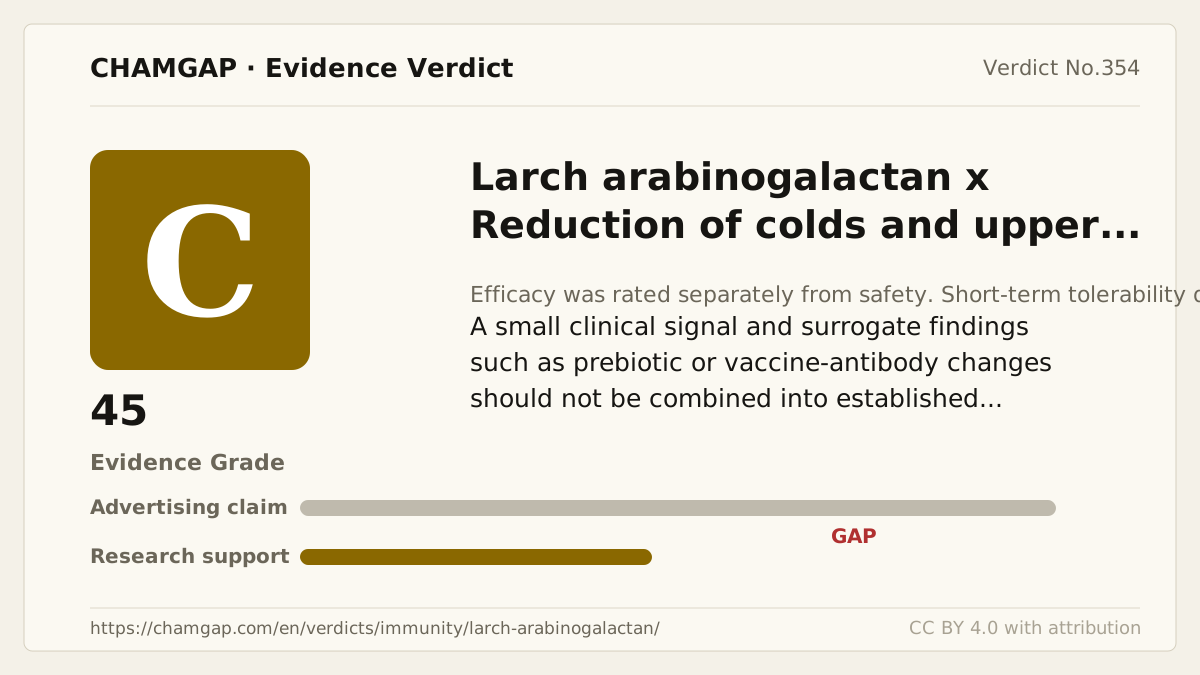
[Chamgap] Does larch arabinogalactan reduce colds and upper respiratory infections? — Evidence Grade C·45. 2 cited sources checked. Source: https://chamgap.com/en/verdicts/immunity/larch-arabinogalactan/ · CC BY 4.0CC BY 4.0 — free to use with attribution; do not distort grades, numbers, or verdict meaning.
What this document does and does not do
Chamgap is an information source. It reports what research has and has not confirmed; it does not tell readers what to take or buy. That decision belongs to readers and, when needed, medical or legal professionals. This verdict reflects literature available up to the search date and may change as new research appears. Nothing here is medical advice.