
Horse ATG,
does it really help with Improved 6-month hematologic response versus rabbit ATG in severe aplastic anemia?
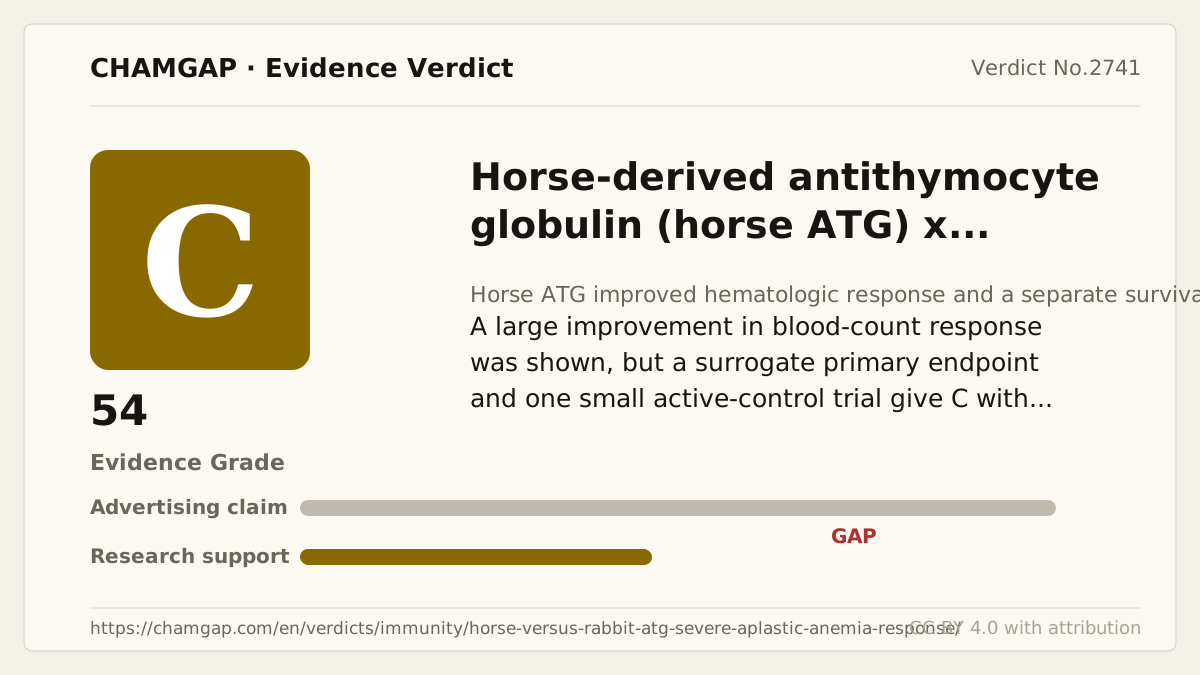
research showsThe grade is C with 54 points. In a 120-patient NIH randomized trial, 6-month hematologic response was 68% (95% CI 56–80) with horse ATG versus 37% (24–49) with rabbit ATG, an absolute 31-point difference, P<0.001. This exceeded the prespecified 25-point target, but the primary endpoint was blood-count recovery and evidence came from one small active-control trial.
ads claimIt is accurate to say horse ATG improved 6-month hematologic response versus rabbit ATG. It is inaccurate to call survival the primary endpoint or generalize beyond this comparator.
Useful facts when choosing a product
- Both ATG products were given with cyclosporine.
- The primary endpoint was 6-month hematologic response; 3-year survival was separate.
- Funding was reported from the NIH Intramural Research Program.
Chamgap Semantic Classification Code
Candidate index · review held
M.antithymocyte-globulin-equine.UNK.severe-aplastic-anemia-hematologic-response.improve.activeMedicinal interventions > Equine antithymocyte globulin > Unknown > Hematologic response in severe aplastic anemia > Improvement claim > Active comparator
An automated migration candidate, not an issued permanent code; exact claim scope remains under review. This machine-generated migration candidate helps retrieval but is not a permanent assignment. The original verdict ID and URL remain authoritative.
What the research actually shows
This prospective NIH single-facility trial randomized 120 patients, 60 per group. It was funded by the NIH Intramural Research Program, with no corporate funding statement. Its two avoidable limitations were total enrollment below 200 and active control without placebo.
Why this is classified as C (54)
A publicly funded randomized trial exceeded its prespecified 25-point target, but a surrogate endpoint, single trial, small sample, and active-control-only design give C with 54 points.
Counterpoint. The separate 3-year survival result, 94% versus 70%, remains clinically important even though grading follows the primary endpoint.
Rejudgment record. Cross-check applied — A publicly funded randomized trial exceeded a prespecified 25-point target, but the primary endpoint was blood-count recovery and the study was a small single active-control trial
| Endpoint | S | Surrogate marker - laboratory or imaging measures |
| Replication | R1 | Single confirmatory trial |
| Independence | I2 | Decisive evidence is publicly or non-profit funded |
| Effect size | E+ | Meets the clinically important threshold |
Stored derived and displayed grades match; this is not a current recalculation or validity check (C).
Sub-claim grades by effect
This ingredient is marketed for several effects. A single overall grade blends strong and weak claims together, so each effect is graded separately here. The overall grade reflects the strongest disconfirming or core claim.
| Effect (sub-claim) | Grade | Basis |
|---|---|---|
| Improved 6-month hematologic response | C | Rates were 68% versus 37%, an absolute 31-point difference. |
| Improved 3-year survival | B | The separate endpoint was 94% versus 70%, P=0.008. |
Cross-check — AI research and Codex final gate
Evidence Table
| Study | Design | Sample | Funding | Endpoint | Result | Weight |
|---|---|---|---|---|---|---|
| Scheinberg P et al. 2011 horse versus rabbit ATG | Single-facility prospective randomized active-control trial | 120 randomized, 60 per group | NIH Intramural Research Program | Hematologic response at 6 months | 68% (95% CI 56–80) versus 37% (24–49), absolute difference 31 points, P<0.001; separate 3-year survival 94% versus 70%, P=0.008 | Pivotal single publicly funded trial |
Receipt — 1 References
All 1 cited sources were verified for existence at the original page (as of 2026-08-18).
Final verification and publication gate: Codex · Evidence date: 2026-08-18 · Corrections: none
Cite this verdict
[Chamgap] Horse ATG x 6-month hematologic response in severe aplastic anemia — Evidence Grade C·54. 1 cited sources checked. Source: https://chamgap.com/en/verdicts/immunity/horse-versus-rabbit-atg-severe-aplastic-anemia-response/ · CC BY 4.0CC BY 4.0 — free to use with attribution; do not distort grades, numbers, or verdict meaning.
What this document does and does not do
Chamgap is an information source. It reports what research has and has not confirmed; it does not tell readers what to take or buy. That decision belongs to readers and, when needed, medical or legal professionals. This verdict reflects literature available up to the search date and may change as new research appears. Nothing here is medical advice.