
Heat-killed L. plantarum L-137,
does it really help with Reduced incidence and duration of upper respiratory tract infections?
research showsHeat-killed L. plantarum L-137 is rated C because a signal for fewer upper respiratory tract infections exists, but it depends on one small manufacturer-linked trial. In 78 adults, only self-reported URTI incidence was significant at p=.011; duration, severity, and other endpoints were not significant. Most authors were affiliated with House Wellness Foods, and no independent infection-endpoint replication exists, yielding C with 43 points.
ads claimMarketing converts immune-cell activation into certain prevention and shorter colds. Immune markers are surrogate outcomes, and direct infection evidence comes from one manufacturer-linked study in a selected high-stress population.
Useful facts when choosing a product
- Heat-killed L-137 is a non-viable preparation of the specific L. plantarum L-137 strain rather than a live probiotic. LP20 generally refers to a blend of heat-killed L-137 and dextrin.
- The pivotal URTI trial used 10 mg of heat-killed L-137 once daily for 12 weeks. A mass dose of non-viable cells cannot be directly compared with CFU counts for live probiotics.
- Cold studies of other L. plantarum strains, live lactic-acid bacteria, or multi-strain probiotics should not be transferred directly to L-137.
- Most URTIs resolve spontaneously, but shortness of breath, persistent high fever, chest pain, dehydration, or high-risk underlying disease calls for medical assessment rather than supplementation.
Chamgap Semantic Classification Code
Candidate index · review held
UNK.heat-killed-lactiplantibacillus-plantarum-l-137.UNK.incidence-and-duration-of-upper-respiratory-tract-infections.reduce.placeboUnknown > Heat-killed Lactiplantibacillus plantarum L-137 > Unknown > incidence and duration of upper respiratory tract infections > Reduction claim > Placebo
An automated migration candidate, not an issued permanent code; exact claim scope remains under review. This machine-generated migration candidate helps retrieval but is not a permanent assignment. The original verdict ID and URL remain authoritative.
What the research actually shows
Hirose 2013 gave 10 mg heat-killed L-137 or placebo for 12 weeks to 78 adults with high occupational stress and collected daily WURSS-21 reports. Only self-reported URTI incidence was significant at p=.011; duration, severity, and other endpoints were not significant, and infections were not laboratory-confirmed. Other trials measured immune or inflammatory markers rather than independently replicating infection outcomes. A mixed-strain meta-analysis is not a direct L-137 effect.
Why this is classified as C (43)
In a 78-person manufacturer-linked double-blind trial, only self-reported URTI incidence was positive at p=.011; duration, severity, and other endpoints were not significant. The special population, lack of laboratory confirmation and independent replication, and surrogate-focused follow-up evidence give C with 43 points.
Counterpoint. Adults with frequent winter colds may consider it as an adjunct, but it does not replace vaccination, sleep, hand hygiene, or management of underlying disease.
Rejudgment record. New verdict — Accepted self-reported URTI incidence at p=.011 in a 78-person manufacturer-linked trial, while reflecting null duration, severity, and other endpoints, no independent replication, and surrogate-dominated follow-up evidence
Sub-claim grades by effect
This ingredient is marketed for several effects. A single overall grade blends strong and weak claims together, so each effect is graded separately here. The overall grade reflects the strongest disconfirming or core claim.
| Effect (sub-claim) | Grade | Basis |
|---|---|---|
| Reduced incidence and duration of upper respiratory tract infections | C | The incidence signal depends on one 78-person manufacturer-linked trial, and duration evidence is weaker. |
| Improvement of immune markers | C | Small randomized trials changed PBMC proliferation and related markers, but these are surrogates for clinical infection outcomes. |
| Independent replication of L-137 infection endpoints | ? | No verifiable independent strain-specific replication trial was found. |
Cross-check — AI research and Codex final gate
Evidence Table
| Study | Design | Sample | Funding | Endpoint | Result | Weight |
|---|---|---|---|---|---|---|
| Hirose Y et al. 2013 | Randomized double-blind placebo-controlled parallel trial | 78 healthy adults with high psychological stress | Three authors affiliated with House Wellness Foods; branded-ingredient development context | Twelve-week self-reported WURSS-21 URTI incidence, duration, severity, and immune markers | URTI incidence was lower than placebo, while some duration and severity findings were reported as negative correlations with intake duration. | Key direct clinical signal |
| Hirose Y et al. 2006 | Randomized double-blind placebo-controlled trial | 60 healthy adults | House Wellness Foods researchers | Twelve-week PBMC proliferation, Th1/Th2-related immune markers, and quality of life | Acquired-immunity markers improved, but URTI incidence and duration were not directly assessed. | Mechanistic surrogate evidence |
| Li L et al. 2020 | Systematic review and meta-analysis of probiotic randomized trials in adults | Six randomized trials and 1,551 participants | Chinese public grants; no conflicts declared | URTI incidence, episode rate, episode duration, and adverse events | Across probiotics, incidence RR was 0.77 and duration was 2.66 days shorter, but certainty was low and strain and duration heterogeneity was substantial. | Indirect synthesis |
Receipt — 4 References
All 4 cited sources were verified for existence at the original page (as of 2026-07-20).
Final verification and publication gate: Codex · Evidence date: 2026-07-20 · Corrections: none
Cite this verdict
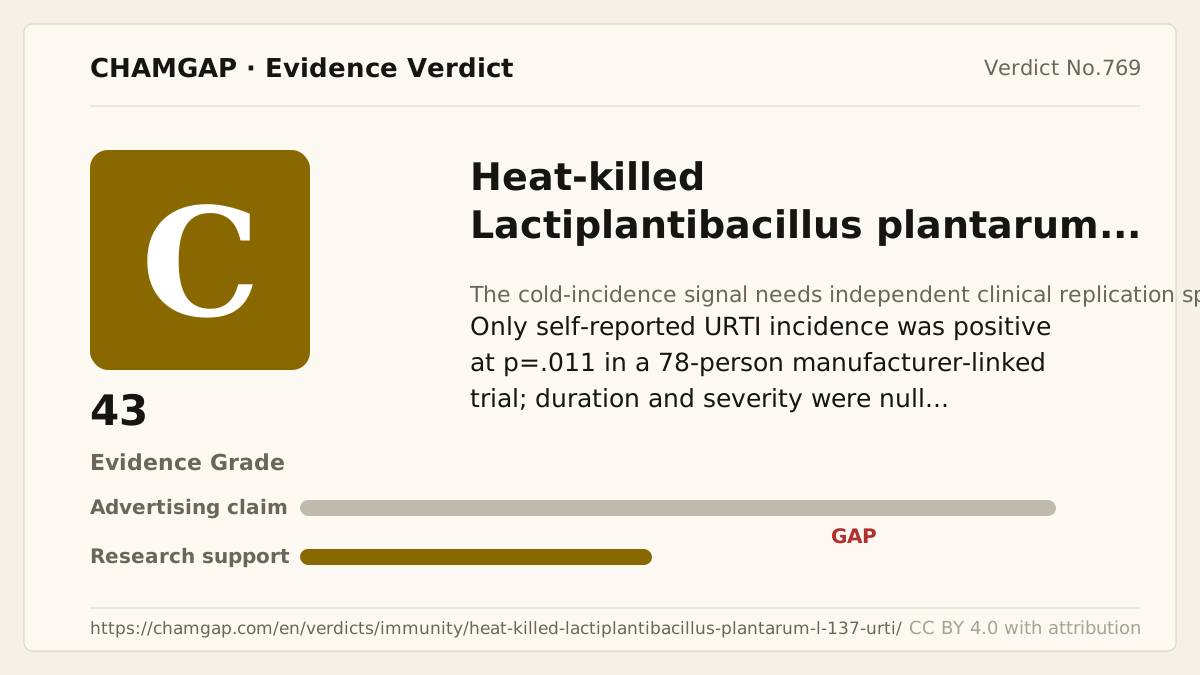
[Chamgap] Heat-killed L. plantarum L-137 x reduced incidence and duration of upper respiratory tract infections — Evidence Grade C·43. 4 cited sources checked. Source: https://chamgap.com/en/verdicts/immunity/heat-killed-lactiplantibacillus-plantarum-l-137-urti/ · CC BY 4.0CC BY 4.0 — free to use with attribution; do not distort grades, numbers, or verdict meaning.
What this document does and does not do
Chamgap is an information source. It reports what research has and has not confirmed; it does not tell readers what to take or buy. That decision belongs to readers and, when needed, medical or legal professionals. This verdict reflects literature available up to the search date and may change as new research appears. Nothing here is medical advice.