
Breastfeeding promotion and support,
does it really help with Reduced infant gastrointestinal infection through 12 months?
research showsThe grade is B. PROBIT cluster-randomized a breastfeeding promotion and support program at 31 maternity facilities, not breastfeeding itself. In the original cluster-adjusted analysis, infant gastrointestinal infection was 9.1% versus 13.2%, adjusted OR 0.60 (95% CI 0.40 to 0.91). Infant eczema also decreased, but asthma, allergy, obesity, and adiposity at age 6.5 years did not, so this must not be read as breastfeeding preventing many diseases.
ads claimThe trial did not randomize breastfeeding itself. It randomized facility promotion and support, and claims must separate the outcomes that decreased from those that did not.
Useful facts when choosing a product
- Exclusive breastfeeding at three months was 43.3% at intervention facilities versus 6.4% at usual-care facilities.
- Gastrointestinal infection was 9.1% versus 13.2%, while respiratory infection was 39.2% versus 39.4%.
- Verdict 1567 is C with 58 points and addresses six-month breastfeeding continuation; this verdict addresses the separate 12-month gastrointestinal-infection outcome.
Chamgap Semantic Classification Code
Candidate index · review held
UNK.facility-level-breastfeeding-promotion-and-support-program.UNK.infant-gastrointestinal-infection-through.reduce.UNKUnknown > Facility-level breastfeeding promotion and support program > Unknown > infant gastrointestinal infection through > Reduction claim > Unknown
An automated migration candidate, not an issued permanent code; exact claim scope remains under review. This machine-generated migration candidate helps retrieval but is not a permanent assignment. The original verdict ID and URL remain authoritative.
What the research actually shows
PROBIT cluster-randomized 31 Belarusian maternity hospitals and affiliated polyclinics, 16 versus 15. The 2001 report records 16,491 of 17,046 pairs completing 12-month follow-up, whereas the 2014 cohort profile records 16,492, a one-pair source difference. Gastrointestinal infection was 9.1% versus 13.2%, OR 0.60 (0.40 to 0.91), in analysis accounting for facility clustering. Infant eczema was positive, while asthma, allergy, obesity, and adiposity at age 6.5 years were all null. The trial ran in 1996-1997 and was registered much later.
Why this is classified as B (72)
A large cluster-randomized trial reduced infant gastrointestinal infection after cluster adjustment. Retrospective registration, lack of provider and assessor blinding, possible record-confirmation bias, and one-country one-period data give B with 72 points.
Counterpoint. Belarus had a centralized health system and routine six-to-seven-day postpartum stays. The result does not directly generalize to preterm or ill infants or families without an initial intention to breastfeed.
Rejudgment record. Cross-check applied — Cluster-adjusted gastrointestinal infection reduction after facility randomization, limited by retrospective registration, no provider or assessor blinding, possible record-confirmation bias, and one-country one-period data
| Endpoint | H | Hard endpoint - actual events such as death |
| Replication | R1 | Single confirmatory trial |
| Independence | I2 | Decisive evidence is publicly or non-profit funded |
| Effect size | E+ | Meets the clinically important threshold |
Stored derived and displayed grades match; this is not a current recalculation or validity check (B).
Sub-claim grades by effect
This ingredient is marketed for several effects. A single overall grade blends strong and weak claims together, so each effect is graded separately here. The overall grade reflects the strongest disconfirming or core claim.
| Effect (sub-claim) | Grade | Basis |
|---|---|---|
| Reduced gastrointestinal infection | B | The cluster-adjusted OR was 0.60. |
| Reduced respiratory infection | D | Rates were 39.2% versus 39.4%, with no significant difference. |
Cross-check — AI research and Codex final gate
Evidence Table
| Study | Design | Sample | Funding | Endpoint | Result | Weight |
|---|---|---|---|---|---|---|
| Kramer MS et al. 2001 PROBIT | Cluster-randomized trial of 31 maternity facilities | 17,046 pairs enrolled; 16,491 completed in the 2001 report versus 16,492 in the 2014 profile | Thrasher Research Fund, Health Canada, UNICEF, and WHO Regional Office for Europe | At least one gastrointestinal infection through 12 months | 9.1% versus 13.2%; cluster-adjusted OR 0.60 (95% CI 0.40 to 0.91) | Definitive large real-illness evidence |
Receipt — 2 References
All 2 cited sources were verified for existence at the original page (as of 2026-08-04).
Final verification and publication gate: Codex · Evidence date: 2026-08-04 · Corrections: none
Cite this verdict
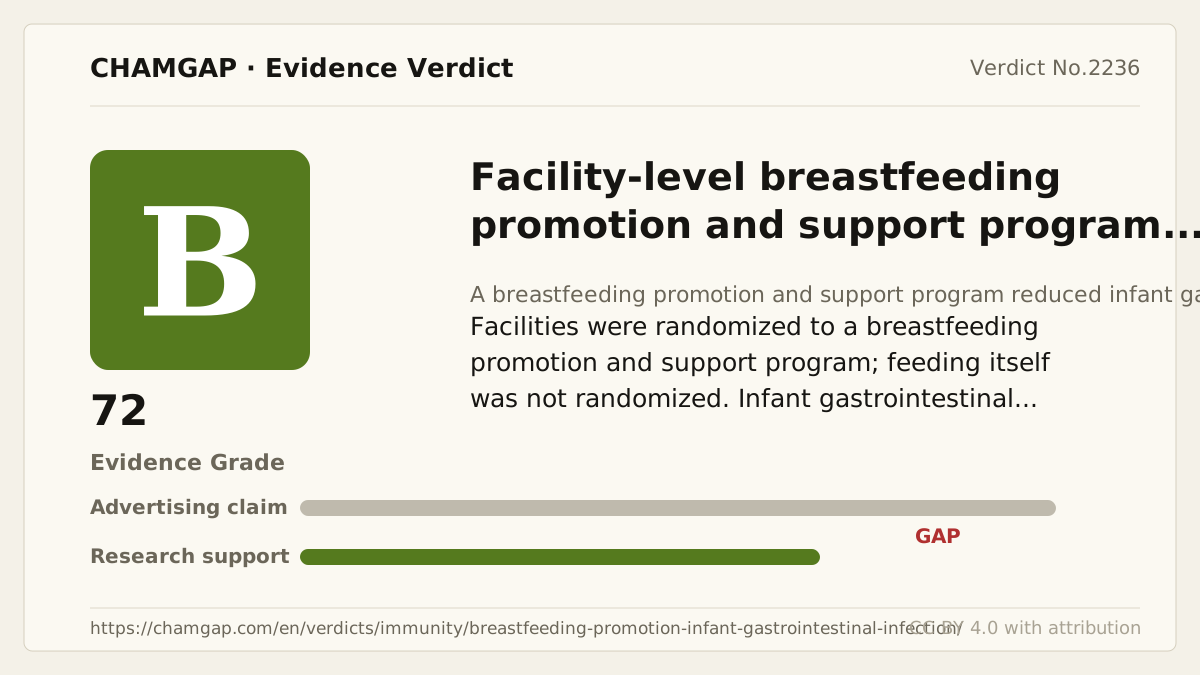
[Chamgap] Breastfeeding promotion and support x reduced infant gastrointestinal infection — Evidence Grade B·72. 2 cited sources checked. Source: https://chamgap.com/en/verdicts/immunity/breastfeeding-promotion-infant-gastrointestinal-infection/ · CC BY 4.0CC BY 4.0 — free to use with attribution; do not distort grades, numbers, or verdict meaning.
What this document does and does not do
Chamgap is an information source. It reports what research has and has not confirmed; it does not tell readers what to take or buy. That decision belongs to readers and, when needed, medical or legal professionals. This verdict reflects literature available up to the search date and may change as new research appears. Nothing here is medical advice.