
Azithromycin,
does it really help with Reduced hospitalization, mechanical ventilation, and death in patients with COVID-19?
research showsThe inpatient and outpatient trials differed in populations and primary endpoints and cannot be pooled as repeated refutation of one endpoint. Randomized mortality evidence had OR 0.97 (95% CI 0.87 to 1.08), while ATOMIC2 hospitalization or death had OR 0.91 (0.43 to 1.92), leaving room for meaningful benefit. Because clinically meaningful benefit is not excluded, the grade is D with 25 points, not F.
ads claimMechanistic descriptions involving anti-inflammatory, immunomodulatory, or in-vitro antiviral effects were expanded into lower hospitalization, ventilation, and mortality from viral COVID-19. Large direct clinical trials do not support that translation.
Useful facts when choosing a product
- Azithromycin is a prescription macrolide antibiotic for bacterial infections and is not an approved antiviral targeting SARS-CoV-2.
- Antibiotic treatment when bacterial pneumonia or another coinfection is clinically suspected is a separate indication from the direct COVID-19 treatment claim evaluated here.
- QT prolongation and rare serious arrhythmias are more concerning with cardiac disease, bradycardia, low potassium or magnesium, or coadministration of other QT-prolonging medicines.
- Unnecessary use can cause diarrhea and other adverse effects and increase antimicrobial resistance, so azithromycin should not be used without prescribing guidance.
Chamgap Semantic Classification Code
Candidate index · review held
M.azithromycin.UNK.hospitalization-mechanical-ventilation-and-death-with-covid-19.reduce.usual-careMedicinal interventions > Azithromycin > Unknown > hospitalization, mechanical ventilation, and death with COVID-19 > Reduction claim > Usual care
An automated migration candidate, not an issued permanent code; exact claim scope remains under review. This machine-generated migration candidate helps retrieval but is not a permanent assignment. The original verdict ID and URL remain authoritative.
What the research actually shows
RECOVERY randomized 7,763 hospitalized patients with COVID-19 and found 28-day mortality of 22% versus 22%, with no benefit for live discharge or invasive ventilation and death. PRINCIPLE compared 540 higher-risk community patients assigned azithromycin with 875 assigned usual care, found no meaningful shortening of recovery or reduction in hospitalization and death, and stopped for futility. ATOMIC2 studied 292 ambulatory patients with mild-to-moderate disease and found no reduction in hospitalization or death within 14 days. Randomized-trial meta-analyses and guidelines align in advising against antibiotics for COVID-19 when bacterial coinfection is not suspected.
Why this is classified as D (25)
The inpatient and outpatient trials differed in populations and primary endpoints and cannot be pooled as repeated refutation of one endpoint. Randomized mortality evidence had OR 0.97 (95% CI 0.87 to 1.08), while ATOMIC2 hospitalization or death had OR 0.91 (0.43 to 1.92), leaving room for meaningful benefit. Because clinically meaningful benefit is not excluded, the grade is D with 25 points, not F.
Counterpoint. When bacterial coinfection is confirmed or strongly suspected, antibiotics may be needed according to cultures, local resistance, patient risk, and guidelines, but COVID-19 alone does not justify choosing azithromycin. Grade-independent note: relevant guidance recommends against use for treating COVID-19. That recommendation and concerns about adverse effects or antimicrobial resistance are not used to determine the efficacy grade.
Rejudgment record. New verdict — The inpatient and outpatient trials differed in populations and primary endpoints and cannot be pooled as repeated refutation of one endpoint. Randomized mortality evidence had OR 0.97 (95% CI 0.87 to 1.08), while ATOMIC2 hospitalization or death had OR 0.91 (0.43 to 1.92), leaving room for meaningful benefit. Because clinically meaningful benefit is not excluded, the grade is D with 25 points, not F.
Sub-claim grades by effect
This ingredient is marketed for several effects. A single overall grade blends strong and weak claims together, so each effect is graded separately here. The overall grade reflects the strongest disconfirming or core claim.
| Effect (sub-claim) | Grade | Basis |
|---|---|---|
| Reduced hospitalization, mechanical ventilation, and death from COVID-19 | D | RECOVERY and multiple outpatient randomized trials repeatedly refuted benefit on direct clinical outcomes. |
| Antibiotic treatment of bacterial coinfection | ? | This is a different indication axis from direct COVID-19 treatment and depends on infection site, organism, and resistance. |
| Anti-inflammatory or antiviral theory translates into clinical benefit | ? | The mechanistic hypothesis is a separate axis, but large clinical trials did not translate it into patient-centered benefit. |
Cross-check — AI research and Codex final gate
Evidence Table
| Study | Design | Sample | Funding | Endpoint | Result | Weight |
|---|---|---|---|---|---|---|
| RECOVERY Collaborative Group 2021 | Large randomized open-label controlled platform trial | 7,763 hospitalized patients with COVID-19 | Public funding from UKRI and NIHR | 28-day mortality, live discharge, and invasive ventilation or death | Mortality was 22% versus 22%, rate ratio 0.97 (95% CI 0.87 to 1.07), with no benefit on major clinical outcomes. | Decisive large direct refutation |
| PRINCIPLE Collaborative Group 2021 | Randomized open-label adaptive community platform trial | 540 assigned azithromycin and 875 assigned usual care | Public funding from UKRI and NIHR | Time to first recovery and COVID-19-related hospitalization or death | There was no clinically meaningful shortening of recovery or reduction in hospitalization and death, meeting futility criteria. | Independent outpatient replication of no benefit |
| Hinks TSC et al. 2021 ATOMIC2 | Randomized open-label standard-care-controlled trial | 292 ambulatory patients with mild-to-moderate COVID-19 | Public and academic support including the NIHR Oxford Biomedical Research Centre | Hospital admission or death within 14 days | Adding azithromycin to standard care did not reduce hospital admission or death. | Replication of no benefit in another outpatient setting |
Receipt — 4 References
All 4 cited sources were verified for existence at the original page (as of 2026-07-19).
Final verification and publication gate: Codex · Evidence date: 2026-07-19 · Corrections: none
Cite this verdict
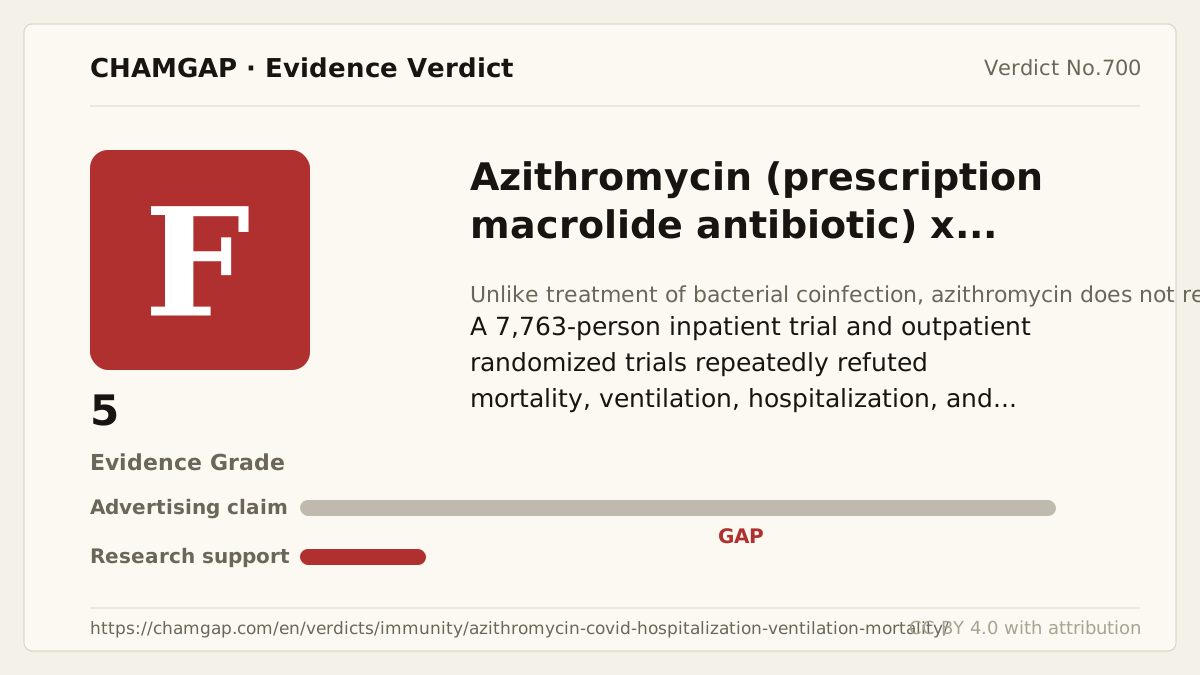
[Chamgap] Azithromycin x reduced hospitalization, mechanical ventilation, and death in patients with COVID-19 — Evidence Grade D·25. 4 cited sources checked. Source: https://chamgap.com/en/verdicts/immunity/azithromycin-covid-hospitalization-ventilation-mortality/ · CC BY 4.0CC BY 4.0 — free to use with attribution; do not distort grades, numbers, or verdict meaning.
What this document does and does not do
Chamgap is an information source. It reports what research has and has not confirmed; it does not tell readers what to take or buy. That decision belongs to readers and, when needed, medical or legal professionals. This verdict reflects literature available up to the search date and may change as new research appears. Nothing here is medical advice.