
Three versus seven days of amoxicillin for pediatric pneumonia,
does it really help with Noninferior treatment failure or antibiotic retreatment versus completing seven days?
research showsThe grade is C with 56 points. Among 814 children who received trial medication in CAP-IT, retreatment by day 28 occurred in 51/413 (12.5%) after three days and 49/401 (12.5%) after seven days. The risk difference was 0.1 points, 90% CI -3.8 to 3.9, within the final eight-point margin. However, after 227 participants had been enrolled, the margin was widened from four to eight points, relaxing the trial's definition of not unacceptably worse. This tested completion of a prescribed three-day course, not stopping whenever symptoms improve.
ads claimThe trial did not test stopping whenever symptoms improve. It tested completing a course prescribed as three days versus completing one prescribed as seven days.
Useful facts when choosing a product
- The final noninferiority margin was eight percentage points and the 90% upper limit was 3.9 points.
- After 227 participants had been enrolled, the margin was widened from four to eight points, relaxing the criterion during the trial.
- The primary analysis used a modified intention-to-treat population, and the planned on-treatment analysis was described as post hoc.
- Three days was not superior to seven days; retreatment was 12.5% in both groups.
- Participants were older than six months, weighed 6 to 24 kg, and could receive oral treatment after discharge.
- Antimicrobial resistance carriage was not used as the efficacy endpoint for this verdict.
Chamgap Semantic Classification Code
Candidate index · review held
UNK.completing-a-prescribed-amoxicillin-course.UNK.treatment-failure-or-antibiotic-retreatment.noninferior.factorialUnknown > Completing a prescribed amoxicillin course > Unknown > treatment failure or antibiotic retreatment > Noninferiority claim > Defined factorial contrast
An automated migration candidate, not an issued permanent code; exact claim scope remains under review. This machine-generated migration candidate helps retrieval but is not a permanent assignment. The original verdict ID and URL remain authoritative.
What the research actually shows
CAP-IT enrolled 824 children older than six months and weighing 6 to 24 kg at 28 UK hospitals and one Irish hospital. They had uncomplicated clinically diagnosed pneumonia and were discharged from an emergency department or within 48 hours of ward care with oral amoxicillin planned. Of 814 who received medication, 413 received three days and 401 received seven days. The primary endpoint was clinically indicated systemic antibiotic retreatment for respiratory infection by day 28. Events were 51 versus 49, risk difference 0.1 points, 90% CI -3.8 to 3.9, within the final eight-point margin. After 227 participants had been enrolled, that margin was widened from four to eight points. The primary analysis used a modified intention-to-treat population, and a planned on-treatment analysis was described in the article as post hoc. Funding was public through NIHR.
Why this is classified as C (56)
Retreatment remained within the final margin, but the margin was relaxed during enrollment, the analysis populations raise an additional design concern, and exact independent replication is absent, giving C with 56 points.
Counterpoint. The result does not cover infants six months or younger, complicated pneumonia, intensive care, prolonged hospitalization, or children requiring other antibiotics.
Rejudgment record. Cross-check applied — Randomized, treated, and primary-outcome counts; age, weight, severity and setting; widening the margin from four to eight points after 227 enrollments; the 90% interval; modified intention-to-treat primary analysis and planned on-treatment analysis described as post hoc; public funding; and absence of exact independent replication were applied
| Endpoint | H | Hard endpoint - actual events such as death |
| Replication | R1 | Single confirmatory trial |
| Independence | I2 | Decisive evidence is publicly or non-profit funded |
| Effect size | E+ | Meets the clinically important threshold |
Stored derived and displayed grades match; this is not a current recalculation or validity check (C).
Sub-claim grades by effect
This ingredient is marketed for several effects. A single overall grade blends strong and weak claims together, so each effect is graded separately here. The overall grade reflects the strongest disconfirming or core claim.
| Effect (sub-claim) | Grade | Basis |
|---|---|---|
| A completed three-day amoxicillin course is noninferior to seven days | C | The 90% interval for retreatment remained within the final eight-point margin, which had been widened from four points during enrollment. |
| Amoxicillin may be stopped before day three whenever symptoms improve | ? | CAP-IT did not test this behavior. |
Cross-check — AI research and Codex final gate
Evidence Table
| Study | Design | Sample | Funding | Endpoint | Result | Weight |
|---|---|---|---|---|---|---|
| Bielicki JA et al. 2021 CAP-IT | Multicenter double-blind 2-by-2 factorial randomized noninferiority trial | 824 randomized; 814 received trial medication; 789 had primary outcome data; 413 versus 401 in the duration comparison | Public funding from the UK NIHR Health Technology Assessment Programme | Systemic antibiotic retreatment for respiratory infection other than trial medication within 28 days | Three days 51/413 (12.5%) versus seven days 49/401 (12.5%); risk difference 0.1 points, 90% CI -3.8 to 3.9, within the final eight-point margin, which was widened from four points after 227 enrollments. | Pivotal publicly funded noninferiority trial |
Receipt — 2 References
All 2 cited sources were verified for existence at the original page (as of 2026-08-05).
Final verification and publication gate: Codex · Evidence date: 2026-08-05 · Corrections: none
Cite this verdict
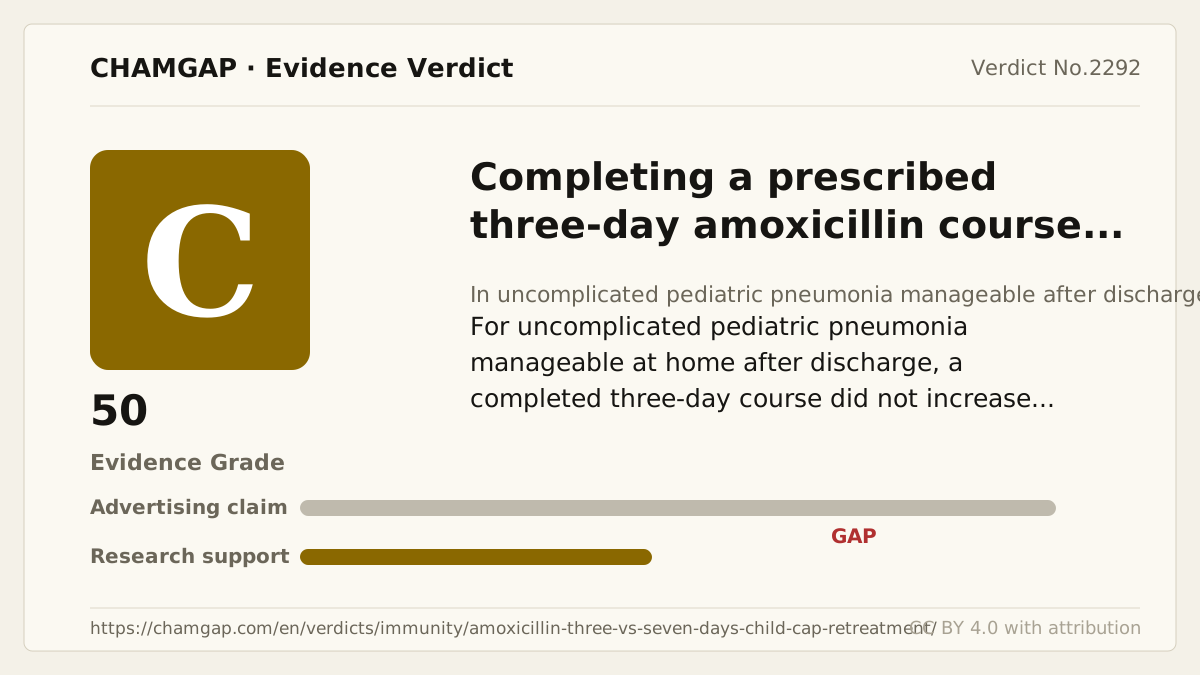
[Chamgap] Three versus seven days of amoxicillin for pediatric pneumonia x treatment failure or retreatment — Evidence Grade C·56. 2 cited sources checked. Source: https://chamgap.com/en/verdicts/immunity/amoxicillin-three-vs-seven-days-child-cap-retreatment/ · CC BY 4.0CC BY 4.0 — free to use with attribution; do not distort grades, numbers, or verdict meaning.
What this document does and does not do
Chamgap is an information source. It reports what research has and has not confirmed; it does not tell readers what to take or buy. That decision belongs to readers and, when needed, medical or legal professionals. This verdict reflects literature available up to the search date and may change as new research appears. Nothing here is medical advice.