
Lactotripeptides IPP and VPP,
does it really help with Blood-pressure reduction in mild hypertension?
research showsMultiple RCTs and meta-analyses of IPP and VPP signal an average systolic-blood-pressure reduction of about 1-2 mmHg, but Japanese studies tend to be more positive, while European trials in 135 and 275 participants were null. Any effect is small and dependent on product and region; this is not evidence for prevention of cardiovascular events.
ads claimAn ACE-inhibition mechanism or Japanese fermented-milk studies cannot be converted into efficacy of ordinary milk protein, casein, or Lactium. A small blood-pressure change is not direct evidence for prevention of myocardial infarction or stroke.
Useful facts when choosing a product
- In Korea, IPP and VPP are mainly encountered in fermented-milk ingredients or imported blood-pressure support products.
- Research doses are commonly about 3-14 mg/day, with differing production methods and IPP-to-VPP ratios.
- Lactium is an alpha-S1 casein hydrolysate marketed for stress or sleep and is not the same ingredient as IPP and VPP.
- People with milk allergy or those taking antihypertensive medication should check the source material and possible additive blood-pressure lowering.
Chamgap Semantic Classification Code
Candidate index · review held
UNK.lactotripeptides-ipp-and-vpp.UNK.blood-pressure-reduction-in-mild-hypertension.reduce.placeboUnknown > Lactotripeptides IPP and VPP > Unknown > Blood-pressure reduction in mild hypertension > Reduction claim > Placebo
An automated migration candidate, not an issued permanent code; exact claim scope remains under review. This machine-generated migration candidate helps retrieval but is not a permanent assignment. The original verdict ID and URL remain authoritative.
What the research actually shows
A 24-study meta-analysis reported small mean reductions of 1.66 mmHg systolic and 0.76 mmHg diastolic. A 30-RCT meta-analysis found office reductions of 2.95 and 1.51 mmHg, but heterogeneity was high, 24-hour blood pressure was null, and effects were larger in Japanese than European studies. Dutch trials in 135 and 275 participants were null, including the primary office and ambulatory outcomes in the 135-person trial. EFSA assessment is kept as regulatory context; efficacy is graded from the trials themselves.
Why this is classified as B (60)
Multiple RCTs and meta-analyses support B, but effects are small, office-blood-pressure heterogeneity is high in the 30-RCT synthesis, and 24-hour blood pressure is null. Regional differences and null Dutch trials in 135 and 275 participants place the verdict at the very bottom of B with 60 points. EFSA regulatory status itself was not used as evidence for B.
Counterpoint. A large independent replication trial stratified in advance by region and production method, with ambulatory blood pressure as the primary endpoint, is needed.
Rejudgment record. Reassessment (cross-check reflected) — Integrated small office-blood-pressure effects in the 24-study and 30-RCT meta-analyses with null ambulatory findings and null 135- and 275-person trials, excluding regulatory status as grade evidence
Cross-check — AI research and Codex final gate
Evidence Table
| Study | Design | Sample | Funding | Endpoint | Result | Weight |
|---|---|---|---|---|---|---|
| Engberink et al. (2008), Hypertension | Randomized double-blind placebo-controlled trial, eight weeks | 135 | Mixed public and industry-related support | Office, home, and 24-hour blood pressure | All three 14 mg/day preparations were null for primary and secondary blood-pressure endpoints | High |
| van der Zander et al. (2008), American Journal of Clinical Nutrition | Multicenter randomized double-blind placebo-controlled trial, eight weeks | 275 | Unilever research institute | Systolic and diastolic blood pressure | No placebo-adjusted effect with 10.2 mg/day of enzymatically produced IPP and VPP | High |
| Qin et al. (2013), Nutrition, Metabolism and Cardiovascular Diseases | Systematic review and meta-analysis of randomized trials | 1919 | Unknown | Systolic, diastolic, and ambulatory blood pressure | Small mean reductions of 1.66 mmHg systolic and 0.76 mmHg diastolic | High |
| EFSA NDA Panel (2012), EFSA Journal | Scientific assessment of a health claim | 15 | Regulatory assessment | Blood pressure | Cause and effect between IPP and VPP and maintenance of normal blood pressure was not established | High |
Receipt — 4 References
All 4 cited sources were verified for existence at the original page (as of 2026-07-16).
Final verification and publication gate: Codex · Evidence date: 2026-07-16 · Corrections: none
Cite this verdict
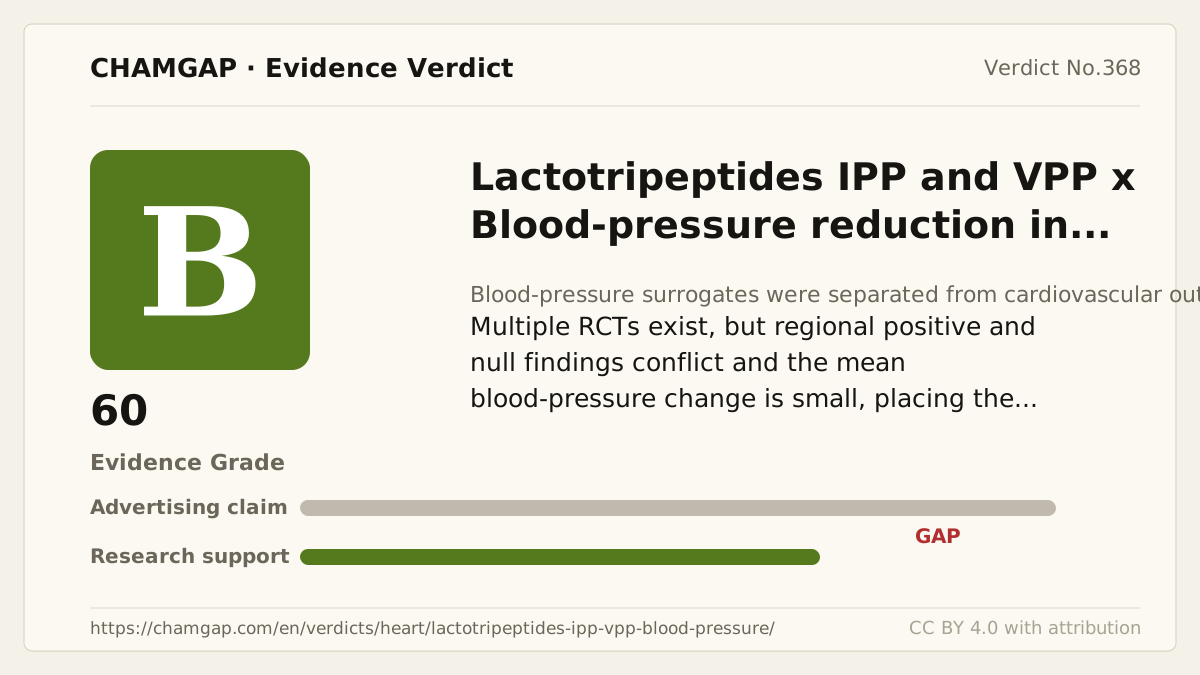
[Chamgap] Do lactotripeptides IPP and VPP lower blood pressure in mild hypertension? — Evidence Grade B·60. 4 cited sources checked. Source: https://chamgap.com/en/verdicts/heart/lactotripeptides-ipp-vpp-blood-pressure/ · CC BY 4.0CC BY 4.0 — free to use with attribution; do not distort grades, numbers, or verdict meaning.
What this document does and does not do
Chamgap is an information source. It reports what research has and has not confirmed; it does not tell readers what to take or buy. That decision belongs to readers and, when needed, medical or legal professionals. This verdict reflects literature available up to the search date and may change as new research appears. Nothing here is medical advice.