
Inclisiran,
does it really help with Approximately 50% lower LDL-C leading to fewer myocardial infarctions and ischemic strokes?
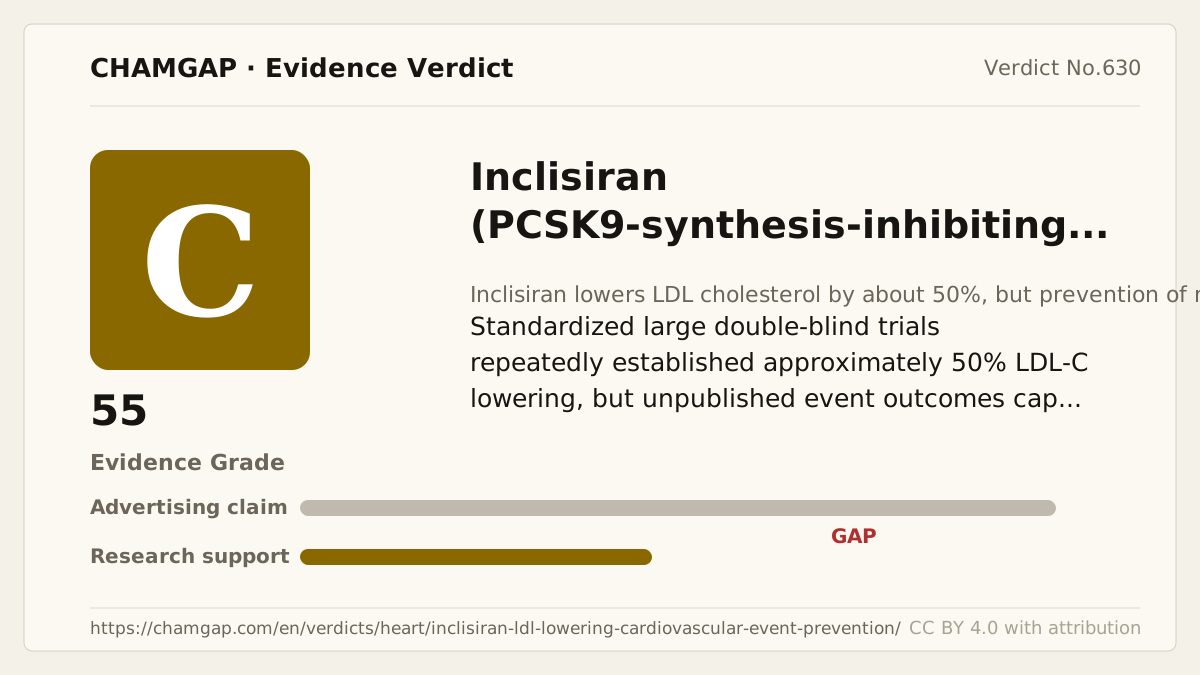
research showsInclisiran is rated C for the combined claim because it lowers LDL-C by about 50%, but definitive evidence that the drug itself reduces myocardial infarction or ischemic stroke is not yet available. In the 3,178-participant ORION-10 and ORION-11 randomized trials, placebo-corrected LDL-C reductions at day 510 were 52.3% and 49.9%, but both coprimary outcomes were lipid surrogates. Exploratory event analyses were not designed or adjudicated to confirm cardiovascular outcomes, and results from the 16,124-participant ORION-4 outcomes trial had not been posted as of July 19, 2026. Separating the strong surrogate from the unconfirmed clinical outcome yields B-level evidence for LDL lowering, no grade for event prevention, and C for the causal combined claim.
ads claimPromotion can convert 50% lower LDL into 50% fewer heart attacks or strokes. The LDL reduction percentage is not the cardiovascular event relative-risk reduction, and the event effect of inclisiran cannot be quantified until a confirmatory outcomes trial such as ORION-4 reports.
Useful facts when choosing a product
- Inclisiran is a prescription small interfering RNA that inhibits PCSK9 synthesis in hepatocytes, with a mechanism, quality control, and administration route entirely different from red yeast rice or policosanol.
- It is administered subcutaneously initially, again at three months, and then every six months. Indication, background lipid-lowering therapy, and LDL-C target must follow the current national label and specialist judgment.
- The pivotal result directly established by ORION-10 and ORION-11 is approximately 50% LDL-C lowering. No completed cardiovascular-outcomes trial has yet directly confirmed prevention of myocardial infarction or ischemic stroke.
- Injection-site pain, erythema, or rash can occur more often than with placebo. Longer follow-up is needed for rare adverse effects and clinical-event safety over repeated long-term dosing.
Chamgap Semantic Classification Code
Candidate index · review held
M.inclisiran.UNK.approximately-50-percent-lower-ldl-c-leading-to-fewer-myocardial-infarctions-and-ischemic-strokes.reduce.placeboMedicinal interventions > Inclisiran > Unknown > Approximately 50% lower LDL-C leading to fewer myocardial infarctions and ischemic strokes > Reduction claim > Placebo
An automated migration candidate, not an issued permanent code; exact claim scope remains under review. This machine-generated migration candidate helps retrieval but is not a permanent assignment. The original verdict ID and URL remain authoritative.
What the research actually shows
ORION-10 and ORION-11 added inclisiran or placebo to maximally tolerated statins and other therapy in patients with atherosclerotic cardiovascular disease or equivalent risk and assessed LDL-C over 18 months. Dosing about every six months sustained an approximately 50% LDL-C reduction, while injection-site reactions were more frequent. A patient-level event analysis suggested a MACE signal but was exploratory and based on nonadjudicated safety events. ORION-4 tests a composite of coronary death, myocardial infarction, ischemic stroke, and urgent coronary revascularization in 16,124 participants; the April 2026 official pipeline listed an event-driven 2027 readout and publication as undetermined. Unlike red yeast rice or policosanol, inclisiran is an siRNA pathway that inhibits hepatic PCSK9 synthesis.
Why this is classified as C (55)
ORION-10 and ORION-11 were standardized large double-blind trials that repeatedly established LDL-C reductions of 52.3% and 49.9% in 3,178 participants, providing strong surrogate efficacy. The 16,124-participant ORION-4 event trial remained unpublished as of July 19, 2026, and existing MACE signals are nonadjudicated exploratory analyses. The combined claim is capped at C, but replication and scale place it above red yeast rice and policosanol at 55 points. Injection-site reactions and limited long-term data remain separate safety issues.
Counterpoint. For an appropriately indicated patient whose treatment goal is LDL-C lowering, inclisiran is a potent option with infrequent dosing. Patients should still be told that LDL target attainment and definitive cardiovascular event prevention are different levels of evidence.
Rejudgment record. New verdict — Applied the rule ① surrogate ceiling of C because ORION-4 event results remain unpublished, while assigning a higher C score for the repeated 52.3% and 49.9% LDL-C reductions in the standardized large double-blind ORION-10 and ORION-11 trials
Sub-claim grades by effect
This ingredient is marketed for several effects. A single overall grade blends strong and weak claims together, so each effect is graded separately here. The overall grade reflects the strongest disconfirming or core claim.
| Effect (sub-claim) | Grade | Basis |
|---|---|---|
| Approximately 50% reduction in LDL-C | B | This strong lipid-surrogate result was replicated in 3,178 randomized participants across ORION-10 and ORION-11. |
| Prevention of myocardial infarction and ischemic stroke | ? | The direct event-outcome ORION-4 result remained unpublished as of July 19, 2026, so this cannot be confirmed. |
| Combined claim that approximately 50% LDL-C lowering leads to fewer cardiovascular events | C | A strong surrogate is available, but direct confirmation of clinical events with inclisiran is absent, so the surrogate ceiling applies. |
Cross-check — AI research and Codex final gate
Evidence Table
| Study | Design | Sample | Funding | Endpoint | Result | Weight |
|---|---|---|---|---|---|---|
| Ray KK et al. 2020, ORION-10 and ORION-11 | Two randomized double-blind placebo-controlled phase 3 trials | 1,561 participants in ORION-10 and 1,617 in ORION-11; 3,178 total | The Medicines Company; subsequent development by Novartis | Change in LDL-C at day 510 and time-adjusted LDL-C change from day 90 through day 540 | Placebo-corrected LDL-C reductions at day 510 were 52.3% in ORION-10 and 49.9% in ORION-11. | Pivotal strong surrogate evidence |
| Ray KK et al. 2023 patient-level event analysis | Prespecified exploratory patient-level event analysis of phase 3 trials | 3,655 participants across ORION-9, ORION-10, and ORION-11 | Novartis; multiple authors had industry relationships | Exploratory MACE based on nonadjudicated safety reports | A lower MACE signal was observed, but few nonadjudicated exploratory events could not establish cardiovascular benefit. | Assessment of limitations in clinical-event evidence |
| ORION-4 official pipeline status, April 2026 | Ongoing event-driven randomized placebo-controlled cardiovascular-outcomes trial | 16,124 participants | Novartis and the University of Oxford | Composite of coronary death, myocardial infarction, ischemic stroke, and urgent coronary revascularization | The April 2026 official pipeline listed an event-driven readout in 2027 and publication as undetermined. | Confirmation that direct event evidence remains incomplete |
Receipt — 3 References
All 3 cited sources were verified for existence at the original page (as of 2026-07-19).
Final verification and publication gate: Codex · Evidence date: 2026-07-19 · Corrections: none
Cite this verdict
[Chamgap] Inclisiran x LDL-C lowering and prevention of myocardial infarction and ischemic stroke — Evidence Grade C·55. 3 cited sources checked. Source: https://chamgap.com/en/verdicts/heart/inclisiran-ldl-lowering-cardiovascular-event-prevention/ · CC BY 4.0CC BY 4.0 — free to use with attribution; do not distort grades, numbers, or verdict meaning.
What this document does and does not do
Chamgap is an information source. It reports what research has and has not confirmed; it does not tell readers what to take or buy. That decision belongs to readers and, when needed, medical or legal professionals. This verdict reflects literature available up to the search date and may change as new research appears. Nothing here is medical advice.