
Evolocumab,
does it really help with Reduced recurrent myocardial infarction and stroke in statin-treated atherosclerotic cardiovascular disease?
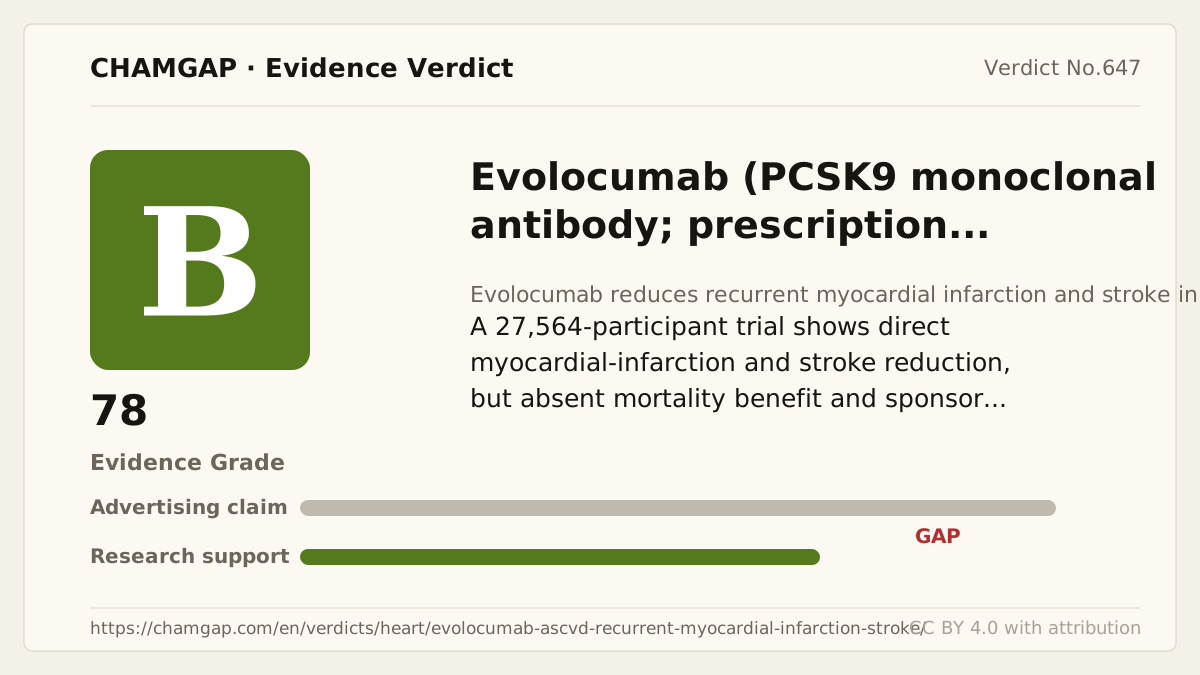
research showsEvolocumab is rated high B for reducing recurrent events, including myocardial infarction and stroke, in statin-treated patients with atherosclerotic cardiovascular disease. FOURIER followed 27,564 participants for a median of 2.2 years and reduced major composite cardiovascular events; a prespecified total-events analysis also found fewer first and recurrent myocardial infarctions and strokes. Cardiovascular and all-cause mortality were not clearly reduced in the original trial, however, and the pivotal positive evidence is concentrated in the Amgen-sponsored program, so the evidence does not meet the independence requirement for A. Unlike inclisiran's siRNA and LDL-surrogate evidence axis, this is a PCSK9 monoclonal antibody with direct recurrent-event evidence.
ads claimMarketing can turn a roughly 60% LDL reduction into a claim of proven cardiovascular-death prevention or longer life for every patient. The strongest evidence concerns fewer nonfatal myocardial infarctions, strokes, and related events in high-risk statin-treated ASCVD; mortality is a separate unresolved claim.
Useful facts when choosing a product
- Evolocumab is a monoclonal antibody that binds hepatic PCSK9 and increases LDL-receptor recycling; it is a prescription injection distinct from inclisiran's siRNA mechanism.
- For ASCVD it is generally added to maximally tolerated lipid-lowering therapy, commonly as 140 mg subcutaneously every two weeks or 420 mg monthly. Prescribing and coverage criteria are patient-specific.
- Injection-site redness or pain, nasopharyngitis, upper respiratory infection, influenza, and influenza-like illness have been reported. Suspected serious hypersensitivity requires discontinuation and medical care.
- Very low LDL cholesterol prompted concern about neurocognitive effects, but the randomized EBBINGHAUS study found no significant cognitive difference over a median of 19 months. Rare and longer-term events still require ordinary clinical monitoring.
Chamgap Semantic Classification Code
Candidate index · review held
M.evolocumab.UNK.recurrent-myocardial-infarction-and-stroke-in-statin-treated-atherosclerotic-cardiovascular-disease.reduce.placeboMedicinal interventions > Evolocumab > Unknown > recurrent myocardial infarction and stroke in statin-treated atherosclerotic cardiovascular disease > Reduction claim > Placebo
An automated migration candidate, not an issued permanent code; exact claim scope remains under review. This machine-generated migration candidate helps retrieval but is not a permanent assignment. The original verdict ID and URL remain authoritative.
What the research actually shows
The 2017 FOURIER trial by Sabatine and colleagues randomized 27,564 statin-treated patients with clinical ASCVD and elevated LDL cholesterol to evolocumab or placebo. Over a median 2.2 years, the five-part composite hazard ratio was 0.85 and the three-part composite of cardiovascular death, myocardial infarction, or stroke had a hazard ratio of 0.80, while cardiovascular and all-cause death were not reduced. Murphy and colleagues' 2019 prespecified analysis examined total rather than only first events and confirmed fewer recurrent myocardial infarctions and strokes. Erviti and colleagues' 2022 reanalysis of regulatory clinical-study-report death narratives identified discrepancies with the original mortality classification, supporting a cautious interpretation of mortality. The EBBINGHAUS cognitive substudy found no objective cognitive difference over a median of 19 months.
Why this is classified as B (78)
In 27,564 FOURIER participants, the primary composite occurred in 9.8% versus 11.3%, hazard ratio 0.85, and the key three-part composite had a hazard ratio of 0.80, demonstrating direct myocardial-infarction and stroke reduction rather than LDL-surrogate-only evidence. Cardiovascular and all-cause mortality were not reduced, and pivotal outcomes are concentrated in the Amgen program, so the result is B with 78 points rather than A. Injection-site reactions, influenza-like symptoms, and the neurocognitive debate remain separate safety considerations.
Counterpoint. Evolocumab is a meaningful add-on for patients at high recurrent-event risk who retain elevated LDL cholesterol despite maximally tolerated statin therapy. Cost, injection preference, absolute risk, and use of ezetimibe matter, and it should not replace statins without a clinical reason.
Rejudgment record. New verdict — Accepted direct myocardial-infarction and stroke reductions from the 27,564-participant FOURIER trial, with a primary composite of 9.8% versus 11.3% and a hazard ratio of 0.80 for the key three-part composite, distinguishing this evidence from inclisiran's surrogate-only results. Withheld A because cardiovascular and all-cause mortality were not reduced and evidence was concentrated in the Amgen-sponsored program
Sub-claim grades by effect
This ingredient is marketed for several effects. A single overall grade blends strong and weak claims together, so each effect is graded separately here. The overall grade reflects the strongest disconfirming or core claim.
| Effect (sub-claim) | Grade | Basis |
|---|---|---|
| Reduced recurrent myocardial infarction and stroke in patients with ASCVD | B | A large direct outcomes trial and total-events analysis are positive, but evidence is concentrated in a manufacturer-sponsored program. |
| Reduced cardiovascular mortality | ? | The parent FOURIER trial found no significant reduction, and mortality-classification concerns prevent a firm conclusion. |
| Lowering LDL cholesterol | B | LDL lowering is large and consistent but remains a surrogate distinct from recurrent clinical events. |
Cross-check — AI research and Codex final gate
Evidence Table
| Study | Design | Sample | Funding | Endpoint | Result | Weight |
|---|---|---|---|---|---|---|
| Sabatine MS et al. FOURIER 2017 | Multinational randomized double-blind placebo-controlled cardiovascular-outcomes trial | 27,564 statin-treated participants with ASCVD; median follow-up 2.2 years | Sponsored by Amgen, which participated in trial design and data collection | Five-part cardiovascular composite and key three-part composite of cardiovascular death, myocardial infarction, or stroke | The five-part composite had HR 0.85 and the three-part composite HR 0.80; myocardial infarction and stroke fell, but cardiovascular and all-cause death did not. | Pivotal large direct clinical-outcomes evidence |
| Murphy SA et al. 2019 | Prespecified analysis of total cardiovascular events in FOURIER | 27,564 FOURIER participants | Amgen-sponsored FOURIER data | First and subsequent recurrent cardiovascular events | Total myocardial infarctions had RR 0.74 and total strokes RR 0.77, supporting reductions beyond the first event. | Direct supporting evidence for recurrent-event reduction |
| Erviti J et al. 2022 | Reanalysis of mortality based on regulatory clinical study reports | Review of 870 FOURIER death narratives | Spanish public-health and noncommercial investigators | Classification of cardiac, cardiovascular, and all-cause deaths | Reported discrepancies between the publication and clinical study reports and called for complete independent data restoration. | Mortality-uncertainty evidence |
Receipt — 4 References
All 4 cited sources were verified for existence at the original page (as of 2026-07-19).
Final verification and publication gate: Codex · Evidence date: 2026-07-19 · Corrections: none
Cite this verdict
[Chamgap] Evolocumab x reduced recurrent myocardial infarction and stroke in ASCVD — Evidence Grade B·78. 4 cited sources checked. Source: https://chamgap.com/en/verdicts/heart/evolocumab-ascvd-recurrent-myocardial-infarction-stroke/ · CC BY 4.0CC BY 4.0 — free to use with attribution; do not distort grades, numbers, or verdict meaning.
What this document does and does not do
Chamgap is an information source. It reports what research has and has not confirmed; it does not tell readers what to take or buy. That decision belongs to readers and, when needed, medical or legal professionals. This verdict reflects literature available up to the search date and may change as new research appears. Nothing here is medical advice.