
Apixaban,
does it really help with Prevention of stroke and systemic embolism in nonvalvular atrial fibrillation?
research showsApixaban is rated B with 79 points for preventing stroke and systemic embolism in nonvalvular atrial fibrillation. In 18,201 ARISTOTLE participants, it significantly reduced stroke or systemic embolism, major bleeding, and all-cause mortality versus warfarin; in 5,599 AVERROES participants unsuitable for vitamin K antagonists, it also reduced stroke or systemic embolism versus aspirin. These are large randomized trials with direct clinical endpoints and make apixaban an A candidate, but the effect estimate depends heavily on a single pivotal comparison designed and sponsored by Bristol Myers Squibb and Pfizer and the same development program. The required consistency across independent large trials is therefore unmet. Bleeding and thrombosis after unplanned discontinuation are separate safety issues.
ads claimPrescription-drug promotion can simplify prevention of stroke with less bleeding into the same absolute benefit for every atrial-fibrillation patient. Absolute benefit varies with baseline stroke risk, kidney function, age, weight, interacting drugs, and bleeding risk; anticoagulation and dose are clinical decisions.
Useful facts when choosing a product
- The usual adult dose for nonvalvular atrial fibrillation is 5 mg twice daily, but 2.5 mg twice daily is recommended when at least two of age 80 years or older, weight 60 kg or less, and serum creatinine 1.5 mg/dL or higher are present. The prescription and local label take priority.
- Apixaban does not require routine INR adjustment, but that does not make missed doses or unplanned discontinuation safe. Abrupt cessation can increase thrombotic-event risk when continuing anticoagulation is indicated.
- Bleeding is the principal harm. Active pathological bleeding is a contraindication, and strong CYP3A4 and P-gp inhibitors or inducers, other anticoagulants, and antiplatelet drugs can change exposure or bleeding risk.
- This verdict concerns prevention of stroke and systemic embolism in nonvalvular atrial fibrillation. Mechanical valves, moderate-to-severe mitral stenosis, venous thromboembolism treatment, and postoperative prevention are separate indications and evidence tracks.
Chamgap Semantic Classification Code
Candidate index · review held
M.apixaban.UNK.stroke-and-systemic-embolism-in-nonvalvular-atrial-fibrillation.prevent.activeMedicinal interventions > Apixaban > Unknown > stroke and systemic embolism in nonvalvular atrial fibrillation > Occurrence-prevention claim > Active comparator
An automated migration candidate, not an issued permanent code; exact claim scope remains under review. This machine-generated migration candidate helps retrieval but is not a permanent assignment. The original verdict ID and URL remain authoritative.
What the research actually shows
ARISTOTLE assigned 18,201 patients with atrial fibrillation and an additional stroke risk factor to apixaban 5 mg twice daily or warfarin adjusted to INR 2.0 to 3.0 for a median of about 1.8 years. Apixaban met both noninferiority and superiority for the primary stroke or systemic-embolism endpoint and reduced major bleeding and all-cause mortality. AVERROES enrolled 5,599 atrial-fibrillation patients unsuitable for vitamin K antagonists; apixaban reduced stroke or systemic embolism versus aspirin and the trial stopped early. The populations and comparators differed, and results do not automatically extend to mechanical valves or moderate-to-severe mitral stenosis.
Why this is classified as B (79)
ARISTOTLE improved the direct clinical endpoints of stroke or systemic embolism, major bleeding, and all-cause mortality in 18,201 participants, while AVERROES supports prevention against a different comparator. Because the estimate remains concentrated in a manufacturer-led development program and one pivotal trial without independent peer replication, it does not meet the A criterion and receives B with 79 points. Bleeding and discontinuation risks are separated under safety.
Counterpoint. B does not mean the effect is weak. Direct clinical endpoint effects are strong; the position just below A reflects this framework's requirement for independent replication.
Rejudgment record. New verdict — Rated the direct hard-endpoint evidence highly because ARISTOTLE in 18,201 participants improved stroke or systemic embolism, major bleeding, and all-cause mortality, but applied high B rather than A because the estimate is concentrated in one Bristol Myers Squibb and Pfizer-led pivotal trial and development program without independent peer large-trial replication
Sub-claim grades by effect
This ingredient is marketed for several effects. A single overall grade blends strong and weak claims together, so each effect is graded separately here. The overall grade reflects the strongest disconfirming or core claim.
| Effect (sub-claim) | Grade | Basis |
|---|---|---|
| Prevention of stroke and systemic embolism in nonvalvular atrial fibrillation | B | Direct endpoints in a large randomized trial are strong, but concentration in a manufacturer development program and one pivotal trial prevents A. |
| Reduced major bleeding and all-cause mortality versus warfarin | B | Prespecified hard endpoints were significantly reduced in ARISTOTLE, but no independent peer replication exists. |
| Extension to valvular atrial fibrillation or other indications | ? | Mechanical valves, moderate-to-severe mitral stenosis, and other indications are separate populations and evidence tracks. |
Cross-check — AI research and Codex final gate
Evidence Table
| Study | Design | Sample | Funding | Endpoint | Result | Weight |
|---|---|---|---|---|---|---|
| ARISTOTLE, Granger CB et al. 2011 | Multinational randomized double-blind active-controlled phase 3 trial | 18,201 patients with atrial fibrillation | Sponsored by Bristol-Myers Squibb and Pfizer with involvement in trial design | Stroke or systemic embolism, major bleeding, and all-cause mortality | Versus warfarin, hazard ratios were 0.79 for stroke or systemic embolism, 0.69 for major bleeding, and 0.89 for all-cause mortality. | Pivotal large hard-endpoint randomized trial |
| AVERROES, Connolly SJ et al. 2011 | Randomized double-blind aspirin-controlled trial | 5,599 atrial-fibrillation patients unsuitable for vitamin K antagonists | Sponsored by Bristol-Myers Squibb and Pfizer | Stroke or systemic embolism and major bleeding | Apixaban reduced stroke or systemic embolism by about 55% versus aspirin without a significant increase in major bleeding. | Supportive trial against a different comparator |
Receipt — 3 References
All 3 cited sources were verified for existence at the original page (as of 2026-07-19).
Final verification and publication gate: Codex · Evidence date: 2026-07-19 · Corrections: none
Cite this verdict
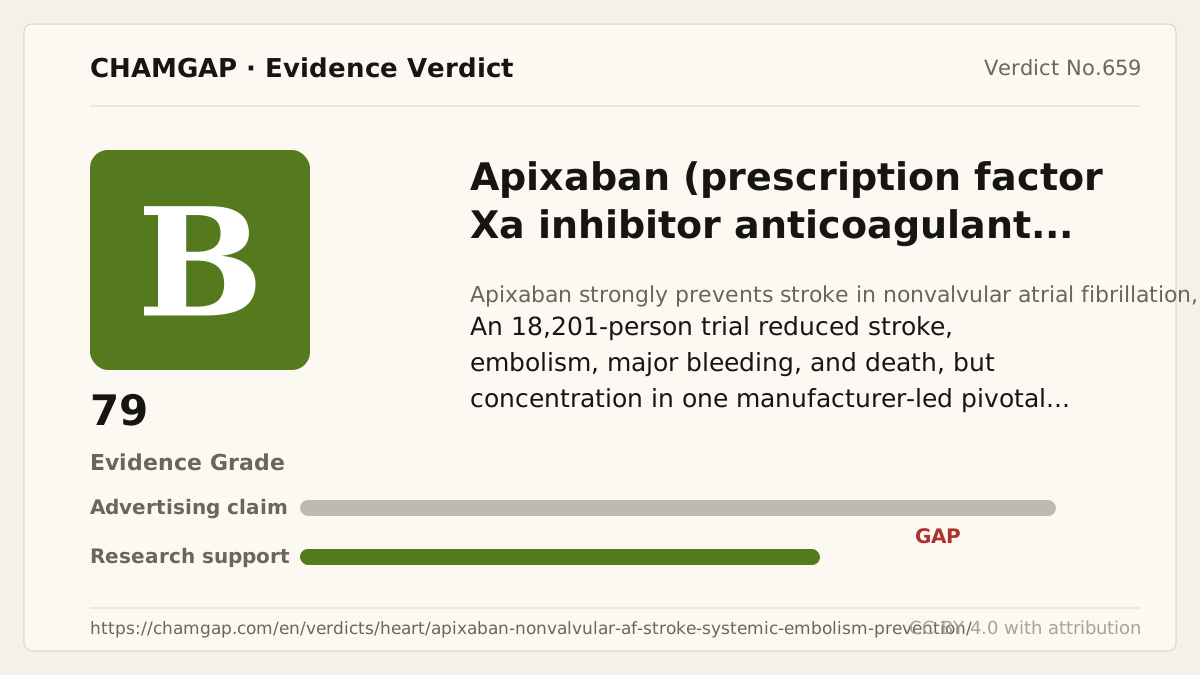
[Chamgap] Apixaban x prevention of stroke and systemic embolism in nonvalvular atrial fibrillation — Evidence Grade B·79. 3 cited sources checked. Source: https://chamgap.com/en/verdicts/heart/apixaban-nonvalvular-af-stroke-systemic-embolism-prevention/ · CC BY 4.0CC BY 4.0 — free to use with attribution; do not distort grades, numbers, or verdict meaning.
What this document does and does not do
Chamgap is an information source. It reports what research has and has not confirmed; it does not tell readers what to take or buy. That decision belongs to readers and, when needed, medical or legal professionals. This verdict reflects literature available up to the search date and may change as new research appears. Nothing here is medical advice.