
Slippery elm bark,
does it really help with Soothing acid reflux, heartburn, and a sensitive gut?
research showsThere is physical plausibility because the mucilage forms a gel with water and a history of traditional demulcent use, but no credible human efficacy trial was found testing slippery elm alone for GERD, heartburn, or IBS symptoms. Before-after changes from combination products cannot be attributed to slippery elm alone, so the rating is unknown.
ads claimMarketing says the mucilage coats the esophagus and stomach, blocks acid, and immediately soothes the gut. A physical explanation alone does not prove reduced reflux or clinical IBS benefit.
Useful facts when choosing a product
- Products accessible to Korean consumers are generally bark powder or capsules around 350 to 400 mg, with differences in extract, whole material, and inner-bark specifications.
- No standalone effective human dose has been established for GERD or IBS.
- General advice to separate it from oral medication is based on the possibility that mucilage may delay absorption, but clinical interaction data are limited.
- Safety data for pregnancy, lactation, and long-term use are insufficient; this is separate from the efficacy rating.
Chamgap Semantic Classification Code
Candidate index · review held
UNK.slippery-elm-bark.UNK.soothing-acid-reflux-heartburn-and-a-sensitive-gut.assess.placeboUnknown > Slippery elm bark > Unknown > Soothing acid reflux, heartburn, and a sensitive gut > Association or change assessment > Placebo
An automated migration candidate, not an issued permanent code; exact claim scope remains under review. This machine-generated migration candidate helps retrieval but is not a permanent assignment. The original verdict ID and URL remain authoritative.
What the research actually shows
Hawrelak 2010 was an open-label uncontrolled study of two combination formulas containing slippery elm in 31 people with IBS and reported selected bowel and symptom improvements. Ried 2020 was a single-arm before-after study of a multi-ingredient gut-health formula containing slippery elm in 43 people. Neither was a placebo-controlled trial of slippery elm alone, so ingredient-specific effects cannot be separated. No standalone GERD or heartburn trial was identified.
Why this is classified as ?
Open-label or single-arm combination studies exist but cannot identify an effect of slippery elm alone. With no standalone human GERD or IBS efficacy literature, the rating is unknown and the score is null.
Counterpoint. Combination studies can generate a research hypothesis, but cannot show which ingredient produced an effect.
Rejudgment record. Reassessment (cross-check reflected) — No standalone human GERD or IBS efficacy trial of slippery elm; uncontrolled combination findings cannot be attributed to one ingredient
Cross-check — AI research and Codex final gate
Evidence Table
| Study | Design | Sample | Funding | Endpoint | Result | Weight |
|---|---|---|---|---|---|---|
| Hawrelak JA, Myers SP. 2010 | Open-label uncontrolled combination study | 31 | Unknown | Bowel frequency, abdominal pain, bloating, and related symptoms | Reported selected improvements, but the multi-ingredient formulas prevent isolation of a slippery-elm effect. | Not attributable |
| Ried K et al. 2020 | Single-arm before-after combination study | 43 | Supported by the product company | Gastrointestinal symptoms, microbiome measures, and related outcomes | Changes followed use of a combination product, without a placebo group or ingredient isolation. | Not attributable |
Receipt — 2 References
All 2 cited sources were verified for existence at the original page (as of 2026-07-16).
Final verification and publication gate: Codex · Evidence date: 2026-07-16 · Corrections: none
Cite this verdict
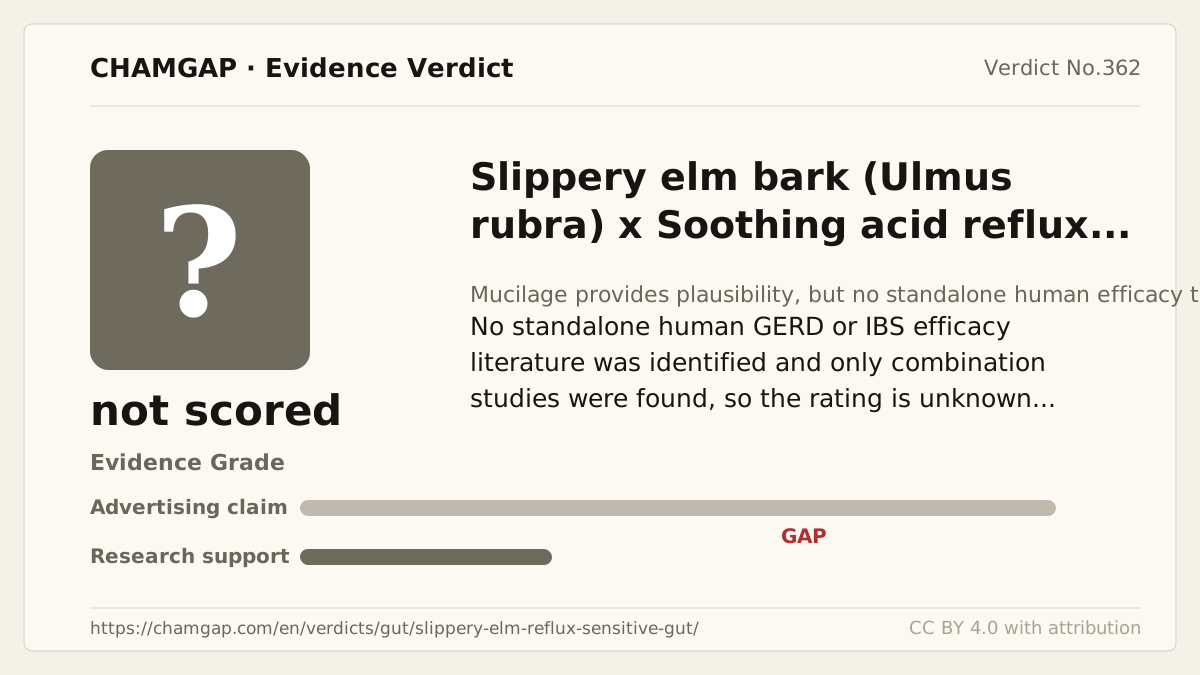
[Chamgap] Slippery elm bark (Ulmus rubra) x reflux, heartburn, and a sensitive gut — Evidence Grade ?. 2 cited sources checked. Source: https://chamgap.com/en/verdicts/gut/slippery-elm-reflux-sensitive-gut/ · CC BY 4.0CC BY 4.0 — free to use with attribution; do not distort grades, numbers, or verdict meaning.
What this document does and does not do
Chamgap is an information source. It reports what research has and has not confirmed; it does not tell readers what to take or buy. That decision belongs to readers and, when needed, medical or legal professionals. This verdict reflects literature available up to the search date and may change as new research appears. Nothing here is medical advice.