
Coral calcium,
does it really help with Body alkalization, chronic-disease prevention, and general health?
research showsArterial blood pH is held narrowly between 7.35 and 7.45 by the bicarbonate buffer system together with the lungs and kidneys, so an oral calcium supplement does not shift it. Zero human efficacy trials evaluate coral calcium for chronic disease prevention or general health, so the verdict is ?.
ads claimMarketing extends the calcium-to-magnesium ratio and an alkaline image into claims of correcting blood pH, preventing cancer, cardiovascular or autoimmune disease, and slowing aging. Urine-pH changes, the chemical pH of a raw material, and calcium content are not clinical evidence of altered blood pH or chronic-disease prevention.
Useful facts when choosing a product
- Normal arterial blood pH is 7.35-7.45 and is maintained by bicarbonate buffers, pulmonary PaCO2 control, and renal bicarbonate regulation (NCBI Clinical Methods, Arterial Blood Gases, NBK371; Hamm et al. 2015, PMID 26597304).
- The Coral Calcium Daily label listed 530 mg calcium per three capsules, while a 12-person absorption study used 525 mg calcium but measured neither blood pH nor chronic-disease outcomes (FTC 2004 final order; Ishitani et al. 1999, PMID 10683804).
Chamgap Semantic Classification Code
Candidate index · review held
UNK.coral-calcium-with-alkalization-claims.UNK.body-alkalization-chronic-disease-prevention-and-general-health.prevent.UNKUnknown > Coral calcium with alkalization claims > Unknown > Body alkalization, chronic-disease prevention, and general health > Occurrence-prevention claim > Unknown
An automated migration candidate, not an issued permanent code; exact claim scope remains under review. This machine-generated migration candidate helps retrieval but is not a permanent assignment. The original verdict ID and URL remain authoritative.
What the research actually shows
The acid-base homeostasis review by Hamm and colleagues describes how the kidneys reclaim filtered bicarbonate and generate new bicarbonate while the lungs and kidneys regulate systemic pH. The 2016 systematic review by Fenton and Huang screened 8,278 citations on dietary acid load, alkaline water, and cancer but found only one eligible observational study and no randomized or cancer-treatment trial. Ishitani 1999 gave 525 mg of calcium as coral powder or calcium carbonate to 12 healthy adults and found a difference in a urinary absorption surrogate, without evaluating bone, disease, or blood-pH outcomes. In the FTC case, a stipulated final order for permanent injunction barring Robert Barefoot and related defendants from disease-treatment, prevention, and unsupported superior-absorption claims was entered by the court on January 15, 2004.
Why this is classified as ?
Zero human efficacy trials evaluate coral calcium for chronic-disease prevention or general health, so the grade is ?. Blood-pH homeostasis is a product fact rather than a grading basis, and FTC action was excluded from the grade.
Counterpoint. FTC action against disease and superior-absorption advertising is noted as regulatory context but not used for grading. Calcium delivery is also separate from chronic-disease efficacy.
Rejudgment record. Reassessment (cross-check reflected) — Separated blood-pH homeostasis as a type-A product fact and applied ? because zero human efficacy trials test coral calcium for chronic-disease prevention or general health; FTC action was excluded
Sub-claim grades by effect
This ingredient is marketed for several effects. A single overall grade blends strong and weak claims together, so each effect is graded separately here. The overall grade reflects the strongest disconfirming or core claim.
| Effect (sub-claim) | Grade | Basis |
|---|---|---|
| Prevention and treatment of chronic disease | ? | Zero human efficacy trials test coral calcium for chronic-disease prevention or general health. |
Cross-check — AI research and Codex final gate
Evidence Table
| Study | Design | Sample | Funding | Endpoint | Result | Weight |
|---|---|---|---|---|---|---|
| Hamm LL et al. 2015 | Review of renal acid-base physiology | Academic institutions and the United States Veterans health system | Systemic bicarbonate, net acid excretion, and pH homeostasis | The kidneys are central to bicarbonate regulation and net acid excretion and maintain systemic pH together with the lungs. | Ungraded acid-base physiology fact | |
| Fenton TR, Huang T. 2016 | Systematic review | 0 | Academic and public-health institutions | Dietary acid load, alkaline water, and cancer incidence or treatment | The review concluded that promotion of alkaline diet or water for cancer prevention or treatment was not justified. | Indirect clinical context, not coral-calcium-specific |
| Ishitani K et al. 1999 | Crossover comparative absorption study | 12 | Unknown | Urinary calcium-excretion absorption surrogate | Coral powder providing 525 mg of calcium produced higher selected urinary measures than calcium carbonate, but clinical outcomes and blood pH were not measured. | Subclaim, surrogate |
| U.S. FTC coral-calcium actions. 2003-2010 | Regulatory advertising-substantiation review and court proceedings | United States federal agency | Substantiation for disease-treatment, prevention, and superior-absorption advertising | Claims involving cancer, heart disease, multiple sclerosis, and markedly superior absorption were acted against as false or unsubstantiated. | Regulatory note excluded from grading |
Receipt — 4 References
All 4 cited sources were verified for existence at the original page (as of 2026-07-17).
Final verification and publication gate: Codex · Evidence date: 2026-07-17 · Corrections: none
Cite this verdict
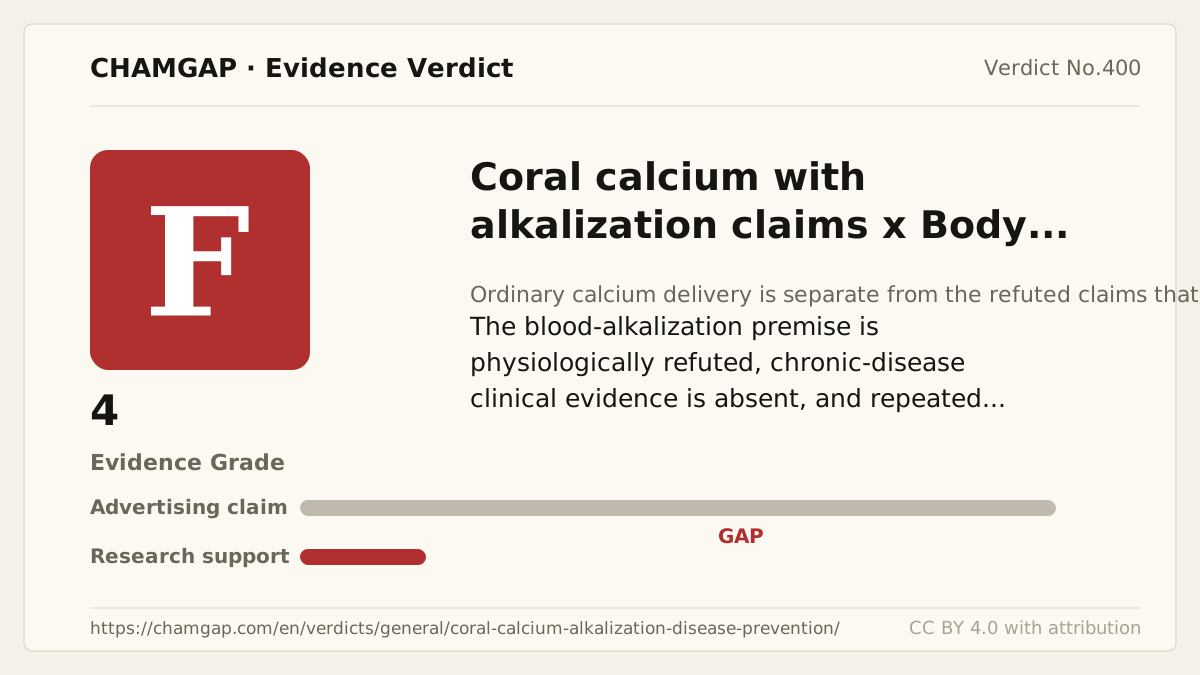
[Chamgap] Coral calcium x body alkalization, chronic-disease prevention, and general health — Evidence Grade ?. 4 cited sources checked. Source: https://chamgap.com/en/verdicts/general/coral-calcium-alkalization-disease-prevention/ · CC BY 4.0CC BY 4.0 — free to use with attribution; do not distort grades, numbers, or verdict meaning.
What this document does and does not do
Chamgap is an information source. It reports what research has and has not confirmed; it does not tell readers what to take or buy. That decision belongs to readers and, when needed, medical or legal professionals. This verdict reflects literature available up to the search date and may change as new research appears. Nothing here is medical advice.