
Rosemary extract,
does it really help with Improved memory and concentration?
research showsHuman cognition research on rosemary mixes aroma inhalation, essential oil, dried leaf powder, rosemary water, aqueous or hydroalcoholic extracts, and multi-herb products. Standalone oral evidence includes a 28-person powder trial, an 80-person rosemary-water trial, and a 77-person hydroalcoholic-extract trial in patients with COPD, with selected cognitive signals. Formulations, populations, doses, and outcomes differ, effects were small, and 6,000 mg powder impaired memory speed. Consistent efficacy of a standardized oral extract remains unclear, yielding low C.
ads claimCombining aroma experiments, culinary powder, water or hydrolat, standardized extracts, and multi-herb products under one oral rosemary-capsule claim hides product and administration differences.
Useful facts when choosing a product
- In Korea, rosemary is sold as a spice, tea, essential oil, imported capsules, and an ingredient in mixed cognition products, with diverse standardization and content.
- Human oral trials used single-dose dried leaf at 750-6,000 mg, 250 mL rosemary water once, or hydroalcoholic extract at 1,000 mg/day for two months.
- A signal at a culinary-scale dose does not imply a larger benefit from high-dose capsules; 6,000 mg produced acute cognitive impairment.
- Concentrated oil and extracts differ from culinary use; pregnancy, lactation, seizure disorders, and anticoagulant, glucose, or blood-pressure drugs warrant caution.
Chamgap Semantic Classification Code
Candidate index · review held
S.rosemary-extract.UNK.memory-and-concentration.improve.placeboSupplements and nutraceuticals > Rosemary extract > Unknown > memory and concentration > Improvement claim > Placebo
An automated migration candidate, not an issued permanent code; exact claim scope remains under review. This machine-generated migration candidate helps retrieval but is not a permanent assignment. The original verdict ID and URL remain authoritative.
What the research actually shows
Pengelly 2012 gave 28 adults aged 65-90 single doses of 750, 1,500, 3,000, or 6,000 mg dried rosemary leaf. The 750 mg dose improved speed of memory, while 6,000 mg impaired it. Moss 2018 randomized 80 healthy adults to 250 mL rosemary water or plain water and reported small cognitive and cerebrovascular-surrogate effects. Safarabadi 2024 gave 77 patients with COPD 500 mg twice daily for two months and improved the MoCA-B total score, while subscales and daily-function outcomes were mixed.
Why this is classified as C (42)
Selected positive standalone oral human trials support C rather than D. Small samples, acute surrogate outcomes, a patient-specific trial, opposite dose responses, and mixed routes and formulations limit the rating to 42 points.
Counterpoint. A large independent oral RCT using a defined extract and dose should prespecify long-term memory and attention primary outcomes.
Rejudgment record. Reassessment (cross-check reflected) — Did not transfer inhalation evidence to oral use and retained C for a single positive domain at 750 mg, impairment at 6000 mg, and limitations of water and patient-specific extract trials
Sub-claim grades by effect
This ingredient is marketed for several effects. A single overall grade blends strong and weak claims together, so each effect is graded separately here. The overall grade reflects the strongest disconfirming or core claim.
| Effect (sub-claim) | Grade | Basis |
|---|---|---|
| Memory and concentration after oral rosemary | C | Selected positive findings in small powder, water, and extract trials with mixed formulations |
| Applying aroma-inhalation effects to oral extract | ? | Different routes of administration prevent direct transfer of efficacy |
Cross-check — AI research and Codex final gate
Evidence Table
| Study | Design | Sample | Funding | Endpoint | Result | Weight |
|---|---|---|---|---|---|---|
| Pengelly et al. (2012) | Randomized double-blind placebo-controlled repeated-measures crossover trial | 28 | Supported by the McCormick Science Institute | Attention, working and episodic memory, and speed of memory | Improved speed of memory at 750 mg and impairment at 6,000 mg | Key |
| Moss et al. (2018) | Randomized controlled acute-ingestion trial | 80 | Commercial rosemary water; funding details unclear | Cognition, mood, and NIRS cerebrovascular measures | Small cognitive effects and a deoxygenated-hemoglobin change | Supportive |
| Safarabadi et al. (2024) | Triple-blind randomized clinical trial, two months | 77 | Iranian academic investigators; no commercial support reported | MoCA-B and activities of daily living | Improved total cognition with mixed daily-function and subscale results | Supportive |
Receipt — 3 References
All 3 cited sources were verified for existence at the original page (as of 2026-07-16).
Final verification and publication gate: Codex · Evidence date: 2026-07-16 · Corrections: none
Cite this verdict
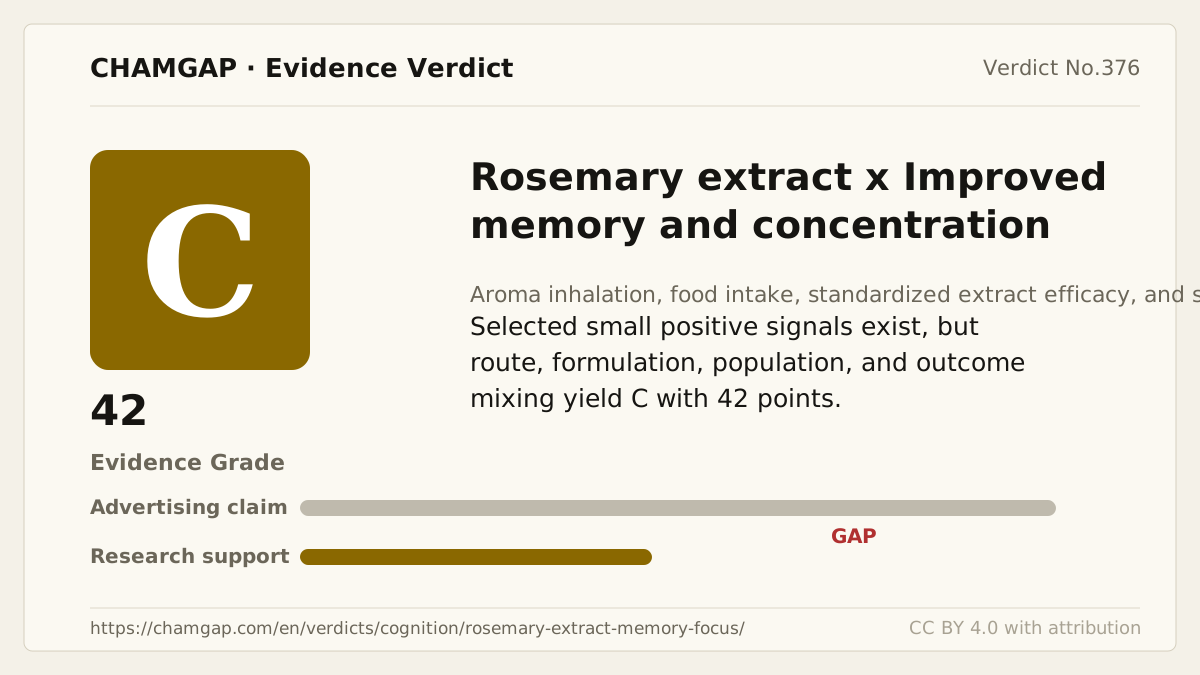
[Chamgap] Rosemary extract x improved memory and concentration — Evidence Grade C·42. 3 cited sources checked. Source: https://chamgap.com/en/verdicts/cognition/rosemary-extract-memory-focus/ · CC BY 4.0CC BY 4.0 — free to use with attribution; do not distort grades, numbers, or verdict meaning.
What this document does and does not do
Chamgap is an information source. It reports what research has and has not confirmed; it does not tell readers what to take or buy. That decision belongs to readers and, when needed, medical or legal professionals. This verdict reflects literature available up to the search date and may change as new research appears. Nothing here is medical advice.