
Wholegrain rye products replacing refined wheat,
does it really help with Weight loss?
research showsThe grade is D. A small six-week trial found 1.21 kg greater loss after replacing refined wheat with wholegrain rye, but a 2026 randomized trial of 255 participants found no difference at 12 weeks: −3.2 versus −2.9 kg, P=.32. The larger replication is the best current answer.
ads claimPresenting one short positive result as established rye-specific weight loss omits both the replacement design and the larger failed replication.
Useful facts when choosing a product
- Rye contains gluten and is unsuitable for people with celiac disease.
- The initial trial replaced habitual cereal foods with wholegrain rye or comparator products; it did not add rye to an unchanged diet.
- The initial study was funded by the Danish governmental GUT, GRAIN & GREENS program. Lantmännen Cerealia supplied some commercial products, but no evidence was identified that the milling company funded the study.
- Verdict 107 is A with 88 points for oat-derived beta-glucan and cholesterol. Both the intervention and outcome differ from wholegrain rye food and weight here.
- No specific classical chronology for wholegrain rye was verified.
Chamgap Semantic Classification Code
Candidate index · review held
F.wholegrain-rye-products-replacing-refined-wheat-foods.food.weight-loss.assess.UNKFoods and beverages > Wholegrain rye products replacing refined-wheat foods > Food consumption > Weight loss > Association or change assessment > Unknown
An automated migration candidate, not an issued permanent code; exact claim scope remains under review. This machine-generated migration candidate helps retrieval but is not a permanent assignment. The original verdict ID and URL remain authoritative.
What the research actually shows
The 2017 tables, NCT02358122 registration, and the 2026 RyeWeight2 paper were cross-checked. The registered core aims of the initial study were gut microbiota and gastrointestinal symptoms; weight and body composition were secondary outcomes. This was a positive secondary outcome, not an unreported or failed primary outcome. In 2026, 229 of 255 participants completed the trial and the 12-week weight contrast was null.
Why this is classified as D (30)
The larger independent follow-up found no difference, −3.2 versus −2.9 kg, P=.32. The exact 95% confidence interval for the follow-up weight contrast was not verified, and bias concerns in the initial secondary outcome yield D with 30 points.
Counterpoint. Longer primary weight trials across distinct dietary contexts could change the conclusion.
Rejudgment record. Cross-check applied — Calculated effect size from the initial means and standard deviations and cross-checked registry outcome status, bias concerns, and the larger replication
| Endpoint | P | Symptom or function itself is the target - including patient reports and performance tests |
| Replication | R1 | Single confirmatory trial |
| Independence | I2 | Decisive evidence is publicly or non-profit funded |
| Effect size | E0 | Null |
| Precision | CX | No pooled confidence interval could be confirmed |
Stored derived and displayed grades match; this is not a current recalculation or validity check (D).
Sub-claim grades by effect
This ingredient is marketed for several effects. A single overall grade blends strong and weak claims together, so each effect is graded separately here. The overall grade reflects the strongest disconfirming or core claim.
| Effect (sub-claim) | Grade | Basis |
|---|---|---|
| Replacing refined wheat with wholegrain rye causes greater weight loss | D | The initial positive result did not replicate in a larger follow-up. |
| Rye contains gluten | D | This is a composition and safety fact, not efficacy evidence. |
Cross-check — AI research and Codex final gate
Evidence Table
| Study | Design | Sample | Funding | Endpoint | Result | Weight |
|---|---|---|---|---|---|---|
| Suhr J et al., 2017 | Six-week randomized parallel cereal-replacement trial | 75 randomized; 70 analyzed | Danish governmental funding; some products supplied by Lantmännen Cerealia | Body-weight change, a registered secondary outcome | Wholegrain rye −1.06±1.60 kg versus refined wheat +0.15±1.28 kg; calculated d≈−0.83 | Initial positive but small, short, and secondary |
| RyeWeight2, 2026 | Twelve-week randomized cereal replacement within a hypocaloric diet | 255 randomized; 229 completed | University-led study in the public report | Weight loss | Wholegrain rye −3.2 kg versus refined wheat −2.9 kg, P=.32 | Larger explicit replication with a null result |
Receipt — 3 References
All 3 cited sources were verified for existence at the original page (as of 2026-08-03).
Final verification and publication gate: Codex · Evidence date: 2026-08-03 · Corrections: none
Cite this verdict
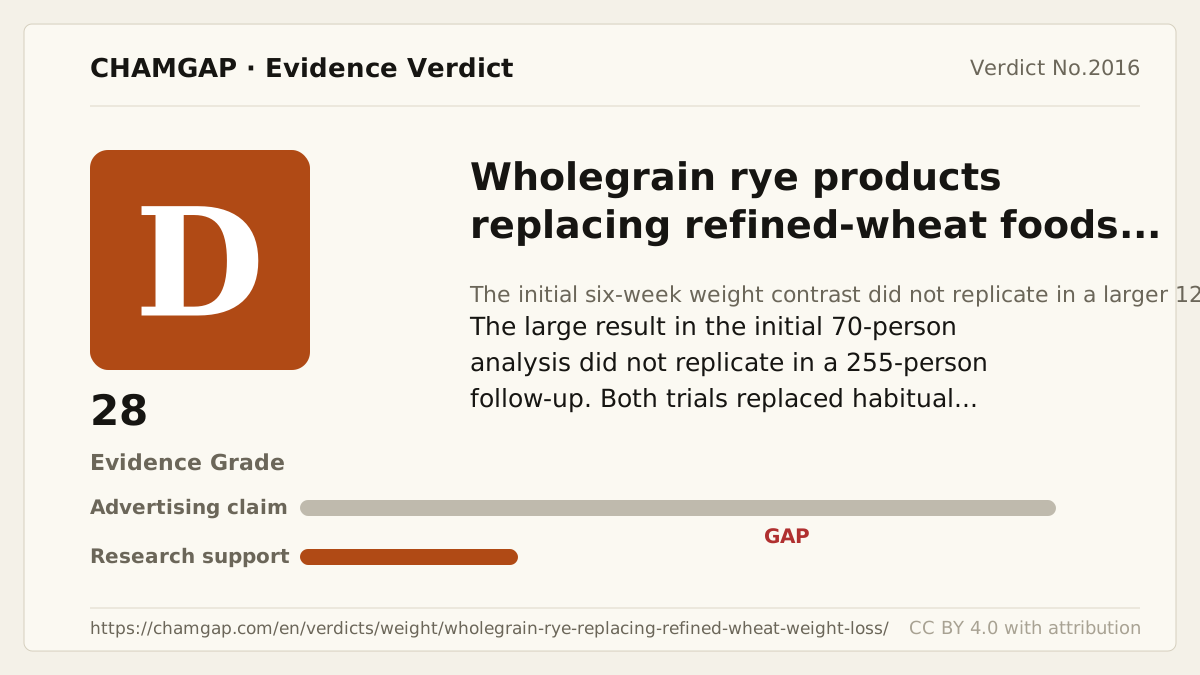
[Chamgap] Wholegrain rye products replacing refined wheat x weight loss — Evidence Grade D·30. 3 cited sources checked. Source: https://chamgap.com/en/verdicts/weight/wholegrain-rye-replacing-refined-wheat-weight-loss/ · CC BY 4.0CC BY 4.0 — free to use with attribution; do not distort grades, numbers, or verdict meaning.
What this document does and does not do
Chamgap is an information source. It reports what research has and has not confirmed; it does not tell readers what to take or buy. That decision belongs to readers and, when needed, medical or legal professionals. This verdict reflects literature available up to the search date and may change as new research appears. Nothing here is medical advice.