
One whole avocado daily,
does it really help with Reduction of visceral adipose tissue?
research showsThe grade is F with 12 points. HAT randomized 1,008 adults, 505 to avocado and 503 to habitual diet. The complete MRI analysis included 923 participants, 455 and 468 respectively, and found a null +0.017-L visceral-fat difference. A separate meta-analysis of eight trials and 657 participants found no benefit for general body-composition outcomes such as weight and body fat.
ads claimHigher fiber and monounsaturated-fat intake does not establish visceral-fat loss. Those dietary changes occurred in HAT while the prespecified primary endpoint remained null.
Useful facts when choosing a product
- Dietary assessment confirmed increased monounsaturated-fat and fiber intake in the avocado group, while MRI visceral fat did not decrease.
- Avocado originated in Central and South America and has no place in classical East Asian materia medica.
- Verdict 201 is B with 62 points for avocado-soybean unsaponifiables in knee osteoarthritis. That extracted mixture and indication differ from whole avocado and visceral fat.
Chamgap Semantic Classification Code
Candidate index · review held
F.one-whole-avocado.food.visceral-adipose-tissue.reduce.UNKFoods and beverages > One whole avocado > Food consumption > visceral adipose tissue > Reduction claim > Unknown
An automated migration candidate, not an issued permanent code; exact claim scope remains under review. This machine-generated migration candidate helps retrieval but is not a permanent assignment. The original verdict ID and URL remain authoritative.
What the research actually shows
HAT randomized 1,008 adults with abdominal obesity, 505 to avocado and 503 to habitual diet. The complete MRI analysis included 923 participants: 455 in the avocado group and 468 in the habitual-diet group. NCT03528031 prospectively specified MRI visceral-fat change as the primary endpoint, matching the paper; this trial's direct repeated visceral-fat measurement was null. Separately, a meta-analysis of eight whole-avocado trials with 657 participants found no significant benefit for general body-composition outcomes including weight, BMI, and percentage body fat. The Hass Avocado Board provided funding and fruit.
Why this is classified as F (12)
HAT's direct repeated visceral-fat measurement was null and its interval excluded even a conventional small standardized reduction. A separate meta-analysis was null for general body composition, giving F with 12 points.
Counterpoint. There is no validated between-group minimum important difference for visceral-fat volume, but the maximum compatible benefit was only about 0.08 standardized units.
Rejudgment record. Cross-check applied — Null prespecified endpoint in a large trial, repeated null trials, and exclusion of a conventional small effect
| Endpoint | S | Surrogate marker - laboratory or imaging measures |
| Replication | RX | Repeatedly refuted in the same indication |
| Independence | I0 | Evidence comes only from manufacturer studies |
| Effect size | E0 | Null |
| Precision | C1 | The confidence interval excludes meaningful benefit |
Stored derived and displayed grades match; this is not a current recalculation or validity check (F).
Sub-claim grades by effect
This ingredient is marketed for several effects. A single overall grade blends strong and weak claims together, so each effect is graded separately here. The overall grade reflects the strongest disconfirming or core claim.
| Effect (sub-claim) | Grade | Basis |
|---|---|---|
| Visceral-fat reduction from one whole avocado daily | F | Direct visceral-fat measurement in the large registered trial was null, while a separate meta-analysis was null for general body composition. |
Cross-check — AI research and Codex final gate
Evidence Table
| Study | Design | Sample | Funding | Endpoint | Result | Weight |
|---|---|---|---|---|---|---|
| Lichtenstein et al. 2022 HAT | Multicenter two-arm randomized six-month trial | 1,008 randomized (505 and 503); 923 in complete MRI analysis (455 and 468) | Funded by the Hass Avocado Board, which also supplied avocados | Prespecified MRI visceral-fat change | +0.017 L, 95% CI -0.024 to +0.058, P=0.405 | Null prespecified primary endpoint in a large trial |
| Khan et al. 2022 meta-analysis | Systematic review and meta-analysis of whole-avocado randomized trials | Eight trials; 657 participants | See review disclosures | General body-composition outcomes including weight, BMI, and body-fat percentage | No significant benefit | Null general body-composition evidence distinct from direct repeated visceral-fat measurement |
Receipt — 3 References
All 3 cited sources were verified for existence at the original page (as of 2026-08-02).
Final verification and publication gate: Codex · Evidence date: 2026-08-02 · Corrections: none
Cite this verdict
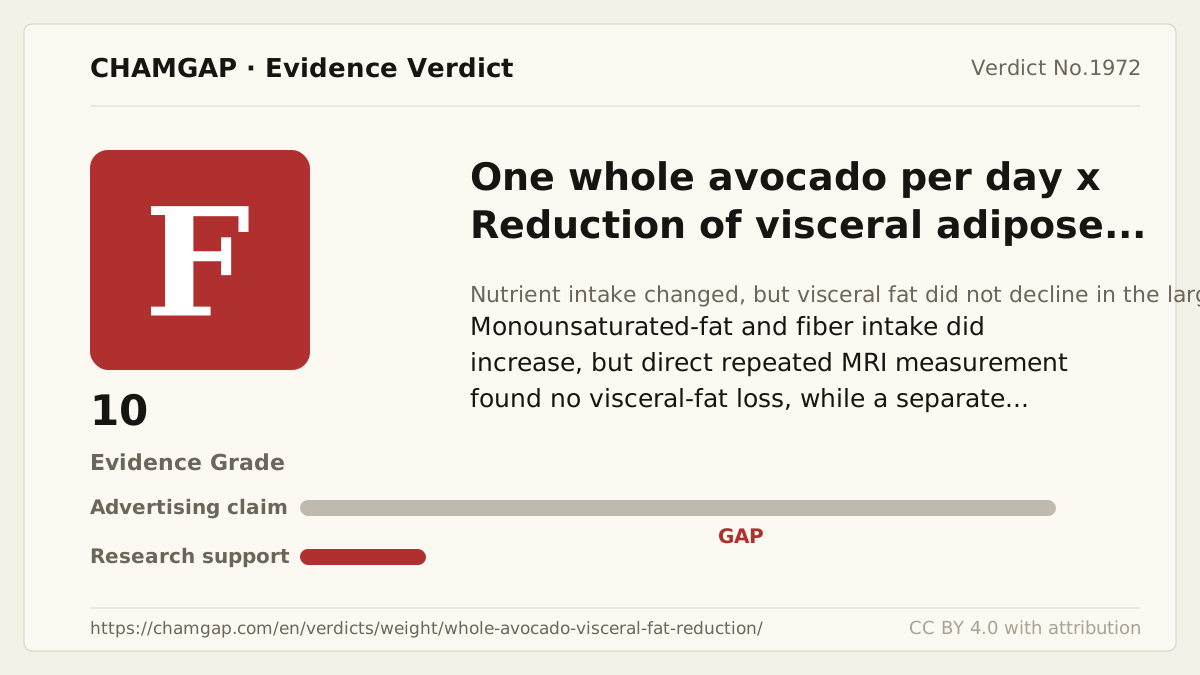
[Chamgap] One whole avocado daily x visceral-fat reduction — Evidence Grade F·12. 3 cited sources checked. Source: https://chamgap.com/en/verdicts/weight/whole-avocado-visceral-fat-reduction/ · CC BY 4.0CC BY 4.0 — free to use with attribution; do not distort grades, numbers, or verdict meaning.
What this document does and does not do
Chamgap is an information source. It reports what research has and has not confirmed; it does not tell readers what to take or buy. That decision belongs to readers and, when needed, medical or legal professionals. This verdict reflects literature available up to the search date and may change as new research appears. Nothing here is medical advice.