
Wearable activity tracker,
does it really help with Additional weight loss when added to a standard behavioral intervention?
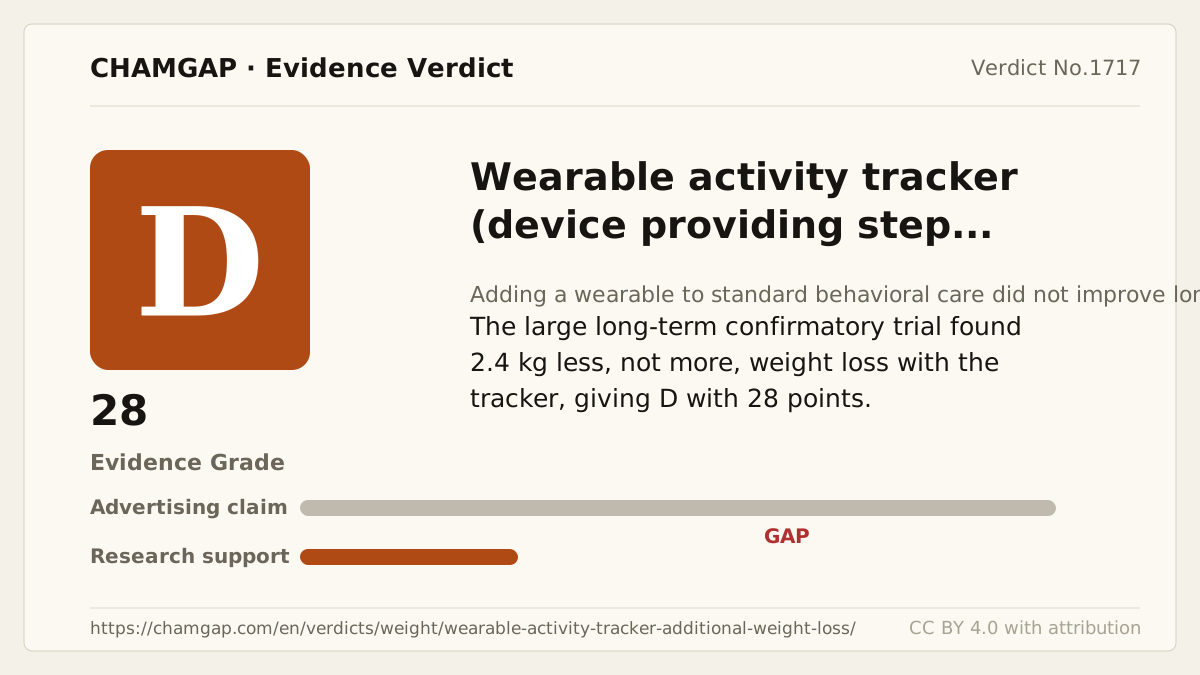
research showsThe claim that adding a wearable activity tracker to a standard behavioral weight-loss program produces more weight loss is rated D. IDEA randomized 471 participants, 470 started the intervention, and 350 had measured follow-up at 24 months. On the primary 24-month weight-change endpoint, the wearable group lost 2.4 kg less (95% CI 1.0 to 3.7), so the effect direction was opposite to the claim.
ads claimMarketing implies that real-time steps and calorie feedback automatically increase long-term weight loss, although feedback does not prevent compensatory eating or device abandonment.
Useful facts when choosing a product
- IDEA tested a tracker added to a program containing a low-calorie diet, exercise, and counseling, not a device used alone.
- Accuracy and app design vary by product, wearing position, and activity type.
- Sustained energy intake, activity, and support matter more than purchasing a device.
Chamgap Semantic Classification Code
Candidate index · review held
P.wearable-activity-tracker.device.additional-weight-loss-when-added-to-a-standard-behavioral-intervention.assess.addonProcedures, devices and tests > Wearable activity tracker > Device delivered > Additional weight loss when added to a standard behavioral intervention > Association or change assessment > Added intervention on common background care
An automated migration candidate, not an issued permanent code; exact claim scope remains under review. This machine-generated migration candidate helps retrieval but is not a permanent assignment. The original verdict ID and URL remain authoritative.
What the research actually shows
Jakicic and colleagues randomized 471 participants in the 2016 IDEA trial, 470 started the intervention, and 350 had measured follow-up at 24 months. The primary weight change was minus 3.5 kg versus minus 5.9 kg, so the wearable group lost 2.4 kg less (95% CI 1.0 to 3.7), opposite to the claimed direction. A 2022 meta-analysis by Ghahfarokhi and colleagues included 26 trials and 2,373 participants and found a minus 1.61 kg signal, but it pooled diverse devices, apps, and short multicomponent interventions.
Why this is classified as D (28)
In IDEA, 471 were randomized, 470 started the intervention, and the primary endpoint showed 2.4 kg (95% CI 1.0 to 3.7) less weight loss with the wearable. The positive synthesis is small and relies on short, multicomponent interventions, giving D with 28 points.
Counterpoint. A person who finds the feedback motivating may continue using it, but device use itself is not an established additional weight-loss treatment.
Rejudgment record. Cross-check applied — Human studies exist and the key primary weight endpoint failed in the claimed direction, so the claim is D rather than unknown
Sub-claim grades by effect
This ingredient is marketed for several effects. A single overall grade blends strong and weak claims together, so each effect is graded separately here. The overall grade reflects the strongest disconfirming or core claim.
| Effect (sub-claim) | Grade | Basis |
|---|---|---|
| Additional weight loss at twenty-four months | D | The device group lost 2.4 kg less in the key trial. |
| Additional reduction in body fat | D | Both groups improved, but there was no significant between-group difference. |
| Additional increase in physical activity | C | Short-term synthesis is positive, but long-term IDEA found no significant between-group difference. |
Cross-check — AI research and Codex final gate
Evidence Table
| Study | Design | Sample | Funding | Endpoint | Result | Weight |
|---|---|---|---|---|---|---|
| Jakicic JM et al. 2016 | Twenty-four-month randomized clinical trial | 471 randomized, 470 started intervention, and 350 measured at 24 months | United States NIH and NHLBI grant U01 HL096770; not device-manufacturer-led | Primary 24-month weight change | The device group lost 2.4 kg less (95% CI 1.0 to 3.7); effect direction opposite to the claim. | Key long-term direct evidence |
| Ghahfarokhi AD et al. 2022 | Systematic review and meta-analysis of randomized trials | 26 trials and 2,373 participants | No specific commercial funding reported in the article; academic research | Weight, body mass index, and physical activity | Weight signal MD minus 1.61 kg, with mixed wearable and app interventions. | Conflicting short-term synthesis |
Receipt — 2 References
All 2 cited sources were verified for existence at the original page (as of 2026-07-24).
Final verification and publication gate: Codex · Evidence date: 2026-07-24 · Corrections: none
Cite this verdict
[Chamgap] Wearable activity tracker x additional weight loss — Evidence Grade D·28. 2 cited sources checked. Source: https://chamgap.com/en/verdicts/weight/wearable-activity-tracker-additional-weight-loss/ · CC BY 4.0CC BY 4.0 — free to use with attribution; do not distort grades, numbers, or verdict meaning.
What this document does and does not do
Chamgap is an information source. It reports what research has and has not confirmed; it does not tell readers what to take or buy. That decision belongs to readers and, when needed, medical or legal professionals. This verdict reflects literature available up to the search date and may change as new research appears. Nothing here is medical advice.