
Vitamin D3,
does it really help with Reduction of body weight, body mass index, and body fat in adults with overweight or obesity?
research showsVitamin D3 may be appropriate for correcting deficiency, but it is rated D as a weight-loss treatment. A meta-analysis of 26 randomized trials and 42,430 adults found no significant effect versus placebo on weight, at -0.05 kg (95% CI -0.32 to 0.23), body mass index, at -0.06 kg/m2 (-0.14 to 0.03), or fat mass, at -0.43 kg (-1.69 to 0.84). A review of 18 high-quality trials also did not support reductions in weight, fat mass, percentage fat, or lean mass. A smaller meta-analysis in overweight and obese populations reported a body-mass-index signal, but weight remained nonsignificant and it did not overturn the larger clinical evidence. Efficacy is assessed separately from safety and treatment of vitamin D deficiency.
ads claimMarketing turns the association between low vitamin D status and obesity into a fat-burning switch or a weight-loss effect. Raising a blood vitamin level is not the clinical outcome of reduced weight, body mass index, or body fat.
Useful facts when choosing a product
- Cholecalciferol is fat-soluble vitamin D3 and appears alone or with calcium and multivitamin ingredients in nonprescription medicines and supplements. A product intended to correct deficiency is not thereby a weight-loss treatment.
- Serving size and daily dose vary widely, and concurrent calcium, multivitamin, prescription, and vitamin D products can create cumulative exposure. Ingredient amounts and dosing frequency should be added across labels.
- The mean weight difference in the large meta-analysis was only -0.05 kg and does not represent a clinically useful anti-obesity effect. Vitamin D should not replace diet, activity, or validated obesity care.
- Usual intake is generally well tolerated, but prolonged high doses can cause hypercalcemia, hypercalciuria, nausea, constipation, kidney stones, or kidney injury.
Chamgap Semantic Classification Code
Candidate index · review held
UNK.vitamin-d3.UNK.body-weight-body-mass-index-and-body-fat-with-overweight-or-obesity.reduce.placeboUnknown > Vitamin D3 (cholecalciferol) > Unknown > body weight, body mass index, and body fat with overweight or obesity > Reduction claim > Placebo
An automated migration candidate, not an issued permanent code; exact claim scope remains under review. This machine-generated migration candidate helps retrieval but is not a permanent assignment. The original verdict ID and URL remain authoritative.
What the research actually shows
Chandler and colleagues pooled 26 adult randomized trials lasting at least 12 weeks and enrolling at least 50 participants, totaling 42,430 people with a median duration of 12 months. Vitamin D alone did not change weight, body mass index, or fat mass, and vitamin D plus calcium was not better than a calcium control. Pathak and colleagues reviewed 18 trials without imposed caloric restriction and found no reduction in weight or body composition. Perna's 11-trial meta-analysis in overweight and obese populations reported small body-mass-index and waist signals but no significant weight loss. Deficiency correction, calcium coadministration, and fortified foods therefore should not be confused with independent weight-loss efficacy.
Why this is classified as D (24)
Direct evidence from 26 randomized trials and 42,430 participants found statistically null changes in weight, at -0.05 kg, body mass index, at -0.06 kg/m2, and fat mass, at -0.43 kg. The body-mass-index signal in a smaller obesity-focused meta-analysis did not outweigh its null weight result or the much larger synthesis. The independent-large-trial null rule yields D with 24 points; deficiency treatment and high-dose safety are separate questions.
Counterpoint. Adults with overweight or obesity who are vitamin D deficient may still need treatment for bone health or another indication. The treatment target is vitamin status and deficiency-related health, not weight loss itself.
Rejudgment record. New verdict — Applied D under boundary rule ② because the large meta-analysis of 26 randomized trials and 42,430 participants found no significant reduction in weight, body mass index, or fat mass and a separate high-quality trial review also did not support weight or body-composition efficacy; a small body-mass-index signal did not outweigh the core independent large-trial null result
Sub-claim grades by effect
This ingredient is marketed for several effects. A single overall grade blends strong and weak claims together, so each effect is graded separately here. The overall grade reflects the strongest disconfirming or core claim.
| Effect (sub-claim) | Grade | Basis |
|---|---|---|
| Reduced body weight in adults with overweight or obesity | D | The large meta-analysis found -0.05 kg versus placebo, a statistically and clinically null result. |
| Reduced body mass index in adults with overweight or obesity | D | The large meta-analysis was null at -0.06 kg/m2, and a -0.32 kg/m2 signal in a smaller synthesis did not overturn the core null result. |
| Reduced body fat in adults with overweight or obesity | D | The fat-mass difference was nonsignificant at -0.43 kg, and a separate high-quality review did not support effects on fat mass or percentage fat. |
Cross-check — AI research and Codex final gate
Evidence Table
| Study | Design | Sample | Funding | Endpoint | Result | Weight |
|---|---|---|---|---|---|---|
| Chandler PD et al. 2015 | Systematic review and meta-analysis of adult randomized trials | Twenty-six trials and 42,430 participants; median follow-up of 12 months | Public and academic support including the NIH; mixed funding among included trials | Weight, body mass index, and fat mass | Versus placebo, weight was -0.05 kg, body mass index -0.06 kg/m2, and fat mass -0.43 kg; none was significant. | Key large null synthesis |
| Pathak K et al. 2014 | Systematic review and meta-analysis of high-quality randomized trials | Eighteen trials reviewed and twelve meta-analyzed | Academic research support; trials without imposed caloric restriction | Weight, body mass index, fat mass, percentage fat, and lean mass | There was no effect on weight, fat mass, percentage fat, or lean mass, and the body-mass-index reduction was nonsignificant. | Independent replication of null efficacy |
| Perna S. 2019 | Systematic review and meta-analysis of randomized trials in overweight and obese populations | Eleven trials and 947 participants | Academic meta-analysis with mixed funding among included trials | Weight, body mass index, and waist circumference | A -0.32 kg/m2 body-mass-index signal was reported, but weight loss of -0.43 kg was nonsignificant. | Conflicting smaller supporting evidence |
Receipt — 3 References
All 3 cited sources were verified for existence at the original page (as of 2026-07-22).
Final verification and publication gate: Codex · Evidence date: 2026-07-22 · Corrections: none
Cite this verdict
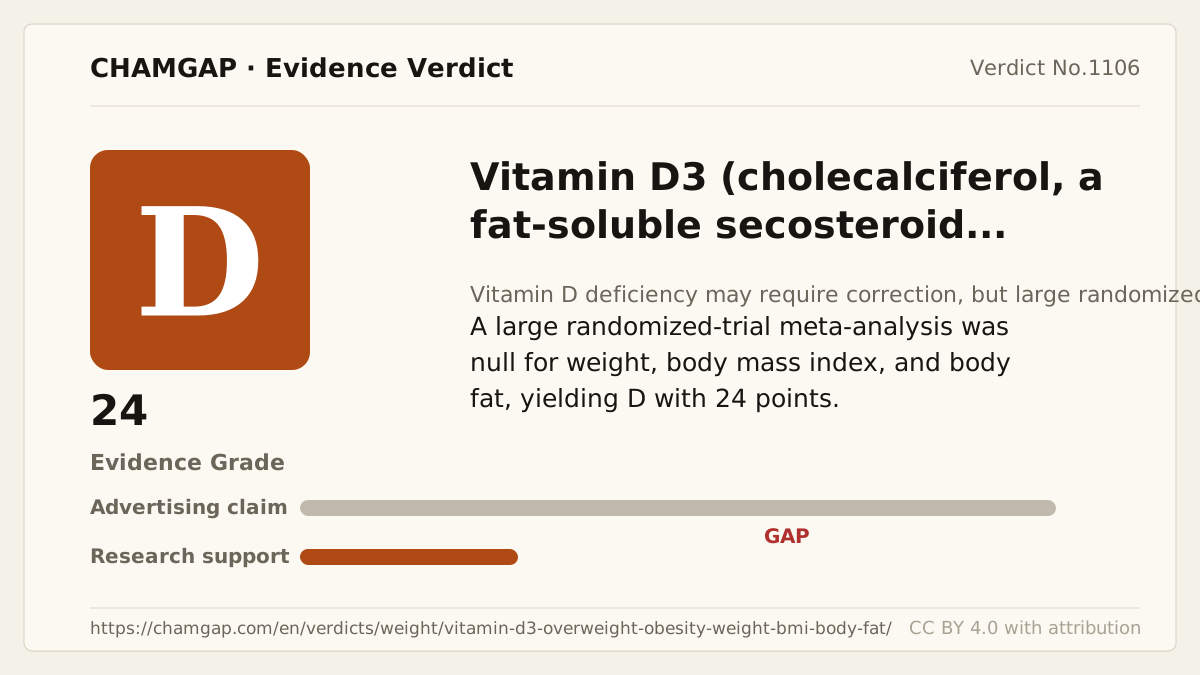
[Chamgap] Vitamin D3 x reduction of body weight, body mass index, and body fat in adults with overweight or obesity — Evidence Grade D·24. 3 cited sources checked. Source: https://chamgap.com/en/verdicts/weight/vitamin-d3-overweight-obesity-weight-bmi-body-fat/ · CC BY 4.0CC BY 4.0 — free to use with attribution; do not distort grades, numbers, or verdict meaning.
What this document does and does not do
Chamgap is an information source. It reports what research has and has not confirmed; it does not tell readers what to take or buy. That decision belongs to readers and, when needed, medical or legal professionals. This verdict reflects literature available up to the search date and may change as new research appears. Nothing here is medical advice.