
Virgin coconut oil,
does it really help with Weight and body-fat reduction and metabolic enhancement?
research showsThe weight-loss claim for virgin coconut oil is rated F. The newest meta-analysis of 15 clinical trials and 620 participants found no clinically meaningful difference in weight or BMI and no reduction in waist circumference, while another randomized-trial meta-analysis found no significant reduction in weight, waist circumference, or body-fat percentage. Thermogenic findings from purified MCTs cannot be transferred directly to lauric-acid-rich coconut oil.
ads claimMarketing equates MCT content, ketosis, thermogenesis, and fat burning with purified C8/C10 MCT oil. Coconut oil is dominated by lauric acid and contains several longer-chain fatty acids, so purified-MCT trials do not establish coconut-oil efficacy.
Useful facts when choosing a product
- Virgin coconut oil is an edible fat obtained from coconut flesh with relatively limited processing, and capsules still deliver caloric oil.
- Ordinary coconut oil has a different fatty-acid profile from purified C8/C10 MCT oil and is rich in lauric acid, so the two ingredients are not interchangeable in weight or thermogenesis claims.
- Coconut oil is high in saturated fat and can raise LDL cholesterol compared with nontropical unsaturated vegetable oils, making the displaced fat more important than simply adding it.
- Adding capsules or spoonfuls can increase energy intake; weight management instead depends on energy balance, dietary pattern, activity, and evidence-based treatment when indicated.
Chamgap Semantic Classification Code
Candidate index · review held
S.virgin-coconut-oil.UNK.weight-and-body-fat-reduction-and-metabolic-enhancement.reduce.UNKSupplements and nutraceuticals > Virgin coconut oil > Unknown > Weight and body-fat reduction and metabolic enhancement > Reduction claim > Unknown
An automated migration candidate, not an issued permanent code; exact claim scope remains under review. This machine-generated migration candidate helps retrieval but is not a permanent assignment. The original verdict ID and URL remain authoritative.
What the research actually shows
Gaeini et al. pooled 15 adult clinical trials with 620 participants and found a minute increase in weight and BMI and no waist-circumference difference. The randomized-trial synthesis by Duarte et al. found no clinically relevant improvement in weight, waist, body-fat percentage, glycemia, or inflammation and rated certainty very low. A 16-trial analysis by Neelakantan et al. found LDL cholesterol 10.47 mg/dL higher than with nontropical vegetable oils; that is safety context rather than an efficacy endpoint.
Why this is classified as F (10)
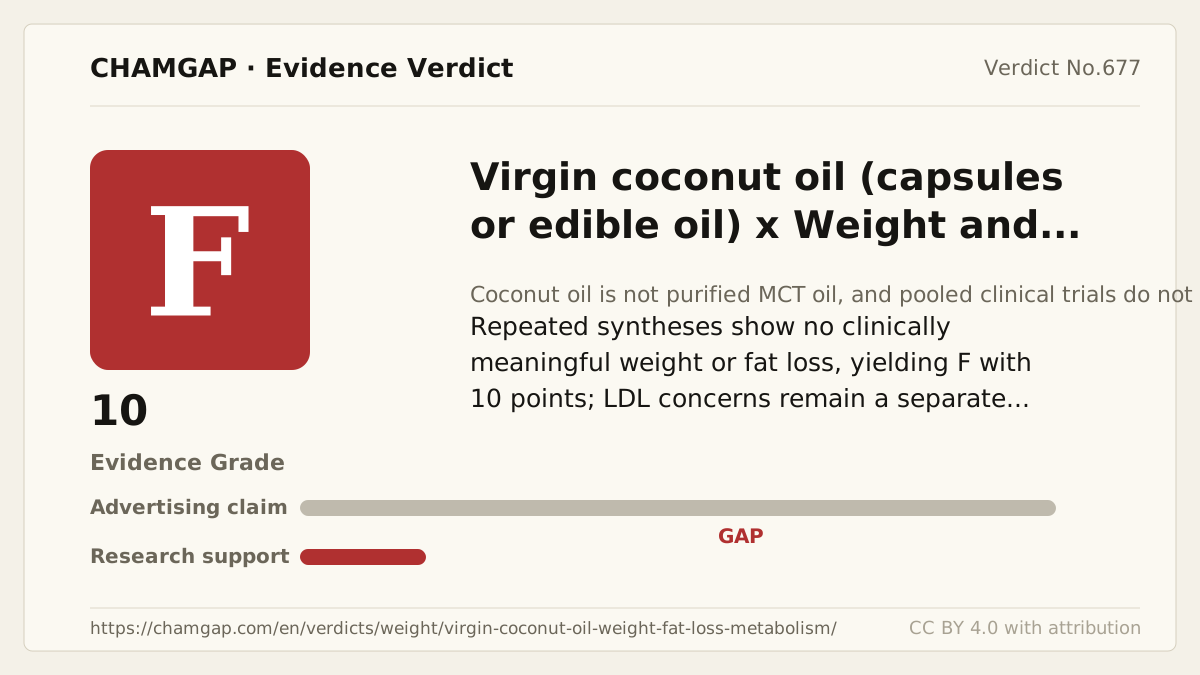
A 15-trial, 620-participant synthesis and a separate randomized-trial meta-analysis repeatedly failed to show clinically meaningful reductions in weight, waist circumference, or body fat, yielding F with 10 points. Saturated-fat and LDL concerns are kept separate under safety.
Counterpoint. Coconut oil can be chosen as a cooking fat, but there is no reason to add it as a weight-loss supplement. Being preferable to butter for selected lipid measures does not establish a benefit over unsaturated vegetable oils.
Rejudgment record. New verdict — Applied the repeated-refutation standard because the newest meta-analysis of 15 trials and 620 participants and a separate randomized-trial synthesis did not reproduce clinically meaningful reductions in weight, waist circumference, or body fat, and purified-MCT evidence cannot be extrapolated to coconut oil
Sub-claim grades by effect
This ingredient is marketed for several effects. A single overall grade blends strong and weak claims together, so each effect is graded separately here. The overall grade reflects the strongest disconfirming or core claim.
| Effect (sub-claim) | Grade | Basis |
|---|---|---|
| Reduction of body weight and body fat | F | Multiple meta-analyses failed to reproduce clinically meaningful reductions in weight, waist circumference, or body fat. |
| Enhanced metabolism or thermogenesis | ? | This extrapolates mechanisms and trials of purified MCTs; direct clinical efficacy literature for coconut oil itself is absent. |
| Effects on HDL and other blood lipids | ? | Lipids are a separate benefit-risk axis, and higher HDL does not establish weight loss or cardiovascular benefit. |
Cross-check — AI research and Codex final gate
Evidence Table
| Study | Design | Sample | Funding | Endpoint | Result | Weight |
|---|---|---|---|---|---|---|
| Gaeini Z et al. 2025 | Systematic review and dose-response meta-analysis of clinical trials | 15 trials and 620 participants | Academic research; no specific external funding reported | Body weight, BMI, and waist circumference | Weight was +0.04 kg and BMI +0.01 kg/m², both clinically meaningless, while waist circumference was not significant. | Newest key refuting synthesis |
| Duarte AC et al. 2022 | Systematic review and meta-analysis of randomized trials | 17 randomized-trial reports | Brazilian public and academic support | Weight, waist circumference, body-fat percentage, lipids, glycemia, and inflammation | Weight changed by -0.24 kg, waist by -0.64 cm, and body-fat percentage by -0.10%; none was significant and certainty was very low. | Independent repeated refutation |
| Neelakantan N et al. 2020 | Systematic review and meta-analysis of clinical trials | 16 trials | National University of Singapore and public academic support | LDL, HDL, and cardiometabolic risk factors | LDL was 10.47 mg/dL higher than with nontropical vegetable oils, with no improvement in adiposity, glycemia, or inflammation. | Safety and separate cardiometabolic axis |
Receipt — 3 References
All 3 cited sources were verified for existence at the original page (as of 2026-07-19).
Final verification and publication gate: Codex · Evidence date: 2026-07-19 · Corrections: none
Cite this verdict
[Chamgap] Virgin coconut oil x weight and body-fat reduction and metabolic enhancement — Evidence Grade F·10. 3 cited sources checked. Source: https://chamgap.com/en/verdicts/weight/virgin-coconut-oil-weight-fat-loss-metabolism/ · CC BY 4.0CC BY 4.0 — free to use with attribution; do not distort grades, numbers, or verdict meaning.
What this document does and does not do
Chamgap is an information source. It reports what research has and has not confirmed; it does not tell readers what to take or buy. That decision belongs to readers and, when needed, medical or legal professionals. This verdict reflects literature available up to the search date and may change as new research appears. Nothing here is medical advice.