
Ultra-processed diet,
does it really help with Increased ad libitum energy intake and short-term weight gain?
research showsThe grade is C. The NIH inpatient crossover trial randomized and analyzed all 20 participants. During 28 inpatient days, each diet was provided for 14 days at about twice weight-maintenance needs for ad libitum intake. The registered primary energy-intake outcome was 508 plus or minus 106 kcal per day higher on the ultra-processed diet. In the separate weight outcome, weight rose 0.9 plus or minus 0.3 kg and fell 0.9 plus or minus 0.3 kg, respectively. A nine-man Japanese trial also found 813.5 kcal per day greater intake (95% CI 342.4 to 1284.7) and 1.1 kg greater weight gain (0.2 to 2.0), but its funding source could not be confirmed, so it was not counted as independent replication.
ads claimNOVA group 4 is not synonymous with junk food. Depending on formulation, it can include packaged whole-grain bread or cereal, flavored yogurt, soy beverages, and canned beans as well as snacks and instant meals.
Useful facts when choosing a product
- NOVA group 4 supplied 81.3% of offered energy in Hall's ultra-processed diet and 0% in the unprocessed diet.
- Per 1,000 offered kcal, ultra-processed versus unprocessed menus contained sodium 1,843 versus 1,428 mg, sugars 31.9 versus 51.0 g, saturated fat 11.5 versus 6.7 g, and fiber 18.7 versus 21.4 g. These are trial-menu values, not market-wide values.
- Menus included packaged cereal, muffins, processed meats, potato products, canned ravioli, and diet beverages.
- Verdict 1504 is B with 75 points for a total diet-replacement program and diabetes remission; this verdict asks about processing level under ad libitum conditions.
Chamgap Semantic Classification Code
Candidate index · review held
D.ultra-processed-diet-deriving-most-offered-energy-from-nova-group-4-foods.oral.ad-libitum-energy-intake-and-short-term-weight-gain.increase.UNKDietary patterns and eating practices > ultra-processed diet deriving most offered energy from NOVA group 4 foods > Oral > ad libitum energy intake and short-term weight gain > Increase claim > Unknown
An automated migration candidate, not an issued permanent code; exact claim scope remains under review. This machine-generated migration candidate helps retrieval but is not a permanent assignment. The original verdict ID and URL remain authoritative.
What the research actually shows
Hall randomized and analyzed all 20 weight-stable adults living in an NIH metabolic ward for 28 days. Each diet lasted 14 days and food was offered at about twice weight-maintenance needs for ad libitum intake. The registered primary outcome was energy intake; weight was separate. Hamano studied nine Japanese men with overweight or obesity for one week per diet with a two-week washout and found the same direction for intake and weight. The second trial's funding source could not be confirmed, so it was not counted as independent replication. Neither trial supplies long-term follow-up.
Why this is classified as C (50)
A pivotal inpatient crossover trial found a large short-term intake difference, but the second trial's funding could not be confirmed and all trials were small and very short, giving C with 50 points.
Counterpoint. C describes intermediate evidentiary strength for the claim, not intermediate danger from every ultra-processed food.
Rejudgment record. Cross-check applied — Assessed the registered primary intake outcome separately from weight, the effect reconstructed from its interval, the unconfirmed funding of the second trial, and shared small short designs
| Endpoint | P | Symptom or function itself is the target - including patient reports and performance tests |
| Replication | R1 | Single confirmatory trial |
| Independence | I1 | Mixed funding sources |
| Effect size | E+ | Meets the clinically important threshold |
Stored derived and displayed grades match; this is not a current recalculation or validity check (C).
Sub-claim grades by effect
This ingredient is marketed for several effects. A single overall grade blends strong and weak claims together, so each effect is graded separately here. The overall grade reflects the strongest disconfirming or core claim.
| Effect (sub-claim) | Grade | Basis |
|---|---|---|
| Increased ad libitum energy intake | C | Two inpatient crossover trials agreed, but both were very small and short. |
| Long-term obesity or disease incidence | ? | The decisive trials lasted one or two weeks and cannot answer long-term incidence. |
Cross-check — AI research and Codex final gate
Evidence Table
| Study | Design | Sample | Funding | Endpoint | Result | Weight |
|---|---|---|---|---|---|---|
| Hall KD et al., 2019 | Inpatient randomized ad libitum crossover trial | 20 randomized and all 20 analyzed | US NIH/NIDDK intramural funding | Registered primary ad libitum energy intake; weight change | Intake increased 508 plus or minus 106 kcal/day, P=0.0001; weight changed +0.9 plus or minus 0.3 versus -0.9 plus or minus 0.3 kg | Pivotal tightly controlled public trial |
| Hamano S et al., 2024 | Inpatient randomized ad libitum crossover trial | Nine Japanese men in crossover analysis | Funding statement not directly confirmed | One-week weight change as primary; energy intake | Weight difference 1.1 kg, 95% CI 0.2 to 2.0; intake difference 813.5 kcal/day, 342.4 to 1284.7 | Same direction in a nine-person one-week trial with unconfirmed funding |
Receipt — 3 References
All 3 cited sources were verified for existence at the original page (as of 2026-08-03).
Final verification and publication gate: Codex · Evidence date: 2026-08-03 · Corrections: none
Cite this verdict
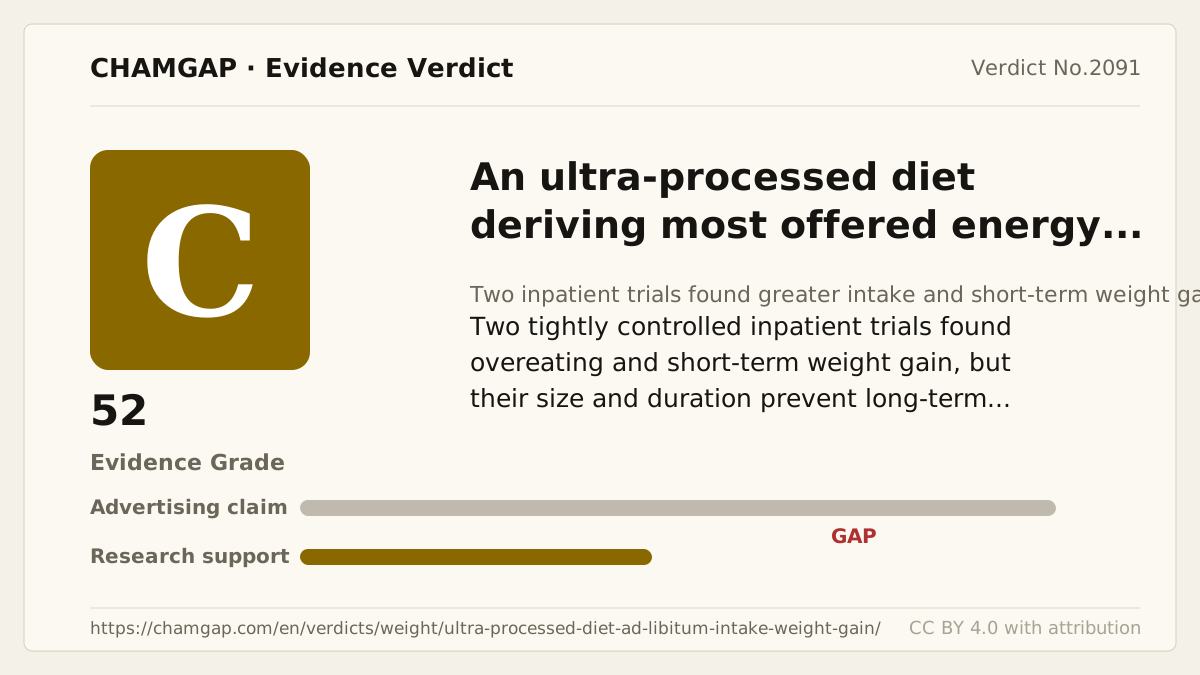
[Chamgap] Ultra-processed diet x increased ad libitum intake and weight gain — Evidence Grade C·50. 3 cited sources checked. Source: https://chamgap.com/en/verdicts/weight/ultra-processed-diet-ad-libitum-intake-weight-gain/ · CC BY 4.0CC BY 4.0 — free to use with attribution; do not distort grades, numbers, or verdict meaning.
What this document does and does not do
Chamgap is an information source. It reports what research has and has not confirmed; it does not tell readers what to take or buy. That decision belongs to readers and, when needed, medical or legal professionals. This verdict reflects literature available up to the search date and may change as new research appears. Nothing here is medical advice.