
Sodium alginate,
does it really help with Increased premeal satiety leading to reduced weight and body fat in adults with obesity?
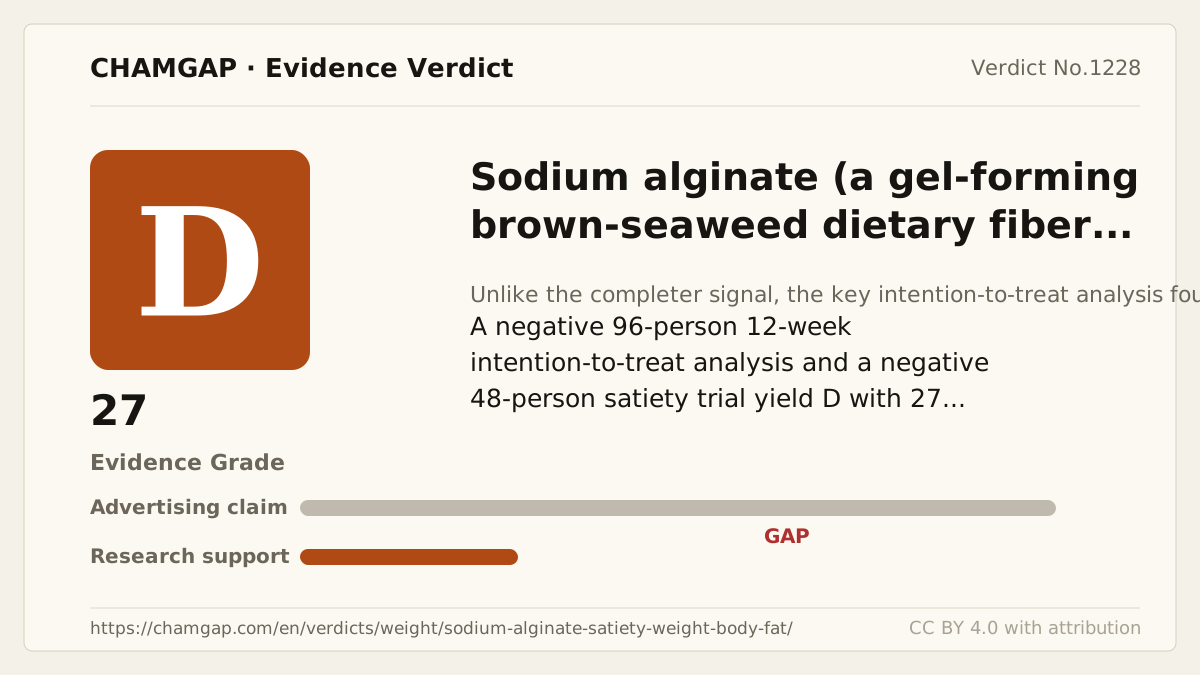
research showsSodium alginate is rated D because the key 12-week randomized trial found no advantage for weight or body-fat loss in its intention-to-treat analysis, and a separate 48-person trial found no effect on satiation, appetite, or gastric function after 10 days. Only the completer analysis in the 12-week trial was positive, which cannot establish efficacy after excluding dropouts.
ads claimMarketing converts gel formation in the stomach into automatic appetite suppression and fat loss. Gel formation and satiety vary by formulation, while the key long-term intention-to-treat result was negative.
Useful facts when choosing a product
- Sodium alginate is a soluble gel-forming polysaccharide from brown seaweed used in foods and supplements.
- The weight trial used a beverage providing 15 g of fiber three times daily before meals, which may differ from commercial capsules.
- Gas, bloating, and nausea may occur; large amounts of gel-forming fiber without enough fluid require caution because of swallowing difficulty or obstruction.
Chamgap Semantic Classification Code
Candidate index · review held
S.sodium-alginate.UNK.premeal-satiety-leading-to-reduced-weight-and-body-fat-with-obesity.reduce.placeboSupplements and nutraceuticals > Sodium alginate > Unknown > premeal satiety leading to reduced weight and body fat with obesity > Reduction claim > Placebo
An automated migration candidate, not an issued permanent code; exact claim scope remains under review. This machine-generated migration candidate helps retrieval but is not a permanent assignment. The original verdict ID and URL remain authoritative.
What the research actually shows
Georg Jensen 2012 randomized 96 adults with obesity to an energy-restricted diet plus alginate or placebo. Weight and fat loss did not differ by intention to treat, although completers favored alginate. Odunsi 2010 randomized 48 adults with overweight or obesity to alginate capsules or placebo for 10 days and found no effect on gastric emptying, satiation, appetite, intake, or gut hormones.
Why this is classified as D (27)
The key long-term intention-to-treat result and a separate satiety trial were negative, so a completer-only signal does not raise the verdict above D, 29 points.
Counterpoint. Weight management should center on sustainable diet, activity, sleep, and evidence-based obesity treatment when needed.
Rejudgment record. Cross-check applied — Applied D for a negative intention-to-treat analysis of weight and body fat in the 96-person 12-week randomized trial, a completer-only positive analysis, and a separate negative 48-person 10-day trial of satiation, appetite, and gastric function
Sub-claim grades by effect
This ingredient is marketed for several effects. A single overall grade blends strong and weak claims together, so each effect is graded separately here. The overall grade reflects the strongest disconfirming or core claim.
| Effect (sub-claim) | Grade | Basis |
|---|---|---|
| Increased satiety | D | Satiation and appetite outcomes were negative in the 48-person 10-day trial. |
| Reduced body weight | D | The 12-week intention-to-treat analysis was negative; only completers favored alginate. |
| Reduced body fat | D | Body fat also showed no benefit over placebo by intention to treat. |
Cross-check — AI research and Codex final gate
Evidence Table
| Study | Design | Sample | Funding | Endpoint | Result | Weight |
|---|---|---|---|---|---|---|
| Georg Jensen M et al. 2012 | Twelve-week double-blind randomized placebo-controlled trial | 96 adults with obesity; 80 completers | Supported by S-Biotek Holdings and academic sources | Weight, body fat, and metabolic risk markers | Weight and body fat did not differ by intention to treat; only the completer analysis favored alginate. | Key long-term negative intention-to-treat result |
| Odunsi ST et al. 2010 | Allocation-concealed randomized placebo-controlled trial | 48 adults with overweight or obesity | Public support from the United States NIH and Mayo CTSA | Satiation, appetite, gastric emptying, intake, and gut hormones | Ten days of alginate did not differ from placebo on the principal satiety or gastric outcomes. | Independent negative satiety trial |
Receipt — 2 References
All 2 cited sources were verified for existence at the original page (as of 2026-07-23).
Final verification and publication gate: Codex · Evidence date: 2026-07-23 · Corrections: none
Cite this verdict
[Chamgap] Sodium alginate x increased satiety and reduced weight and body fat — Evidence Grade D·27. 2 cited sources checked. Source: https://chamgap.com/en/verdicts/weight/sodium-alginate-satiety-weight-body-fat/ · CC BY 4.0CC BY 4.0 — free to use with attribution; do not distort grades, numbers, or verdict meaning.
What this document does and does not do
Chamgap is an information source. It reports what research has and has not confirmed; it does not tell readers what to take or buy. That decision belongs to readers and, when needed, medical or legal professionals. This verdict reflects literature available up to the search date and may change as new research appears. Nothing here is medical advice.