
Saffron extract,
does it really help with Reduced snacking and appetite with modest weight loss in overweight women?
research showsSaffron extract is rated C because a small randomized trial reported less snacking and weight loss in overweight women. In the Inoreal-funded eight-week Satiereal trial, 60 healthy mildly overweight women had significantly lower self-recorded snacking frequency and body weight with extract than with placebo. A 2022 meta-analysis of 25 randomized trials, however, found no significant effect on weight, with a mean difference of -0.32 kg (95% CI -3.15 to 2.51), or on body mass index, with a mean difference of -0.06 kg/m². The positive human trial is accepted, but branded-ingredient manufacturer funding, a small sample, short follow-up, subjective snack diaries, and a null pooled weight effect limit the verdict to C with 43 points. Results cannot be assumed for ordinary saffron or differently standardized products, and usual-dose tolerability versus high-dose, long-term, or pregnancy risk is kept separate from efficacy.
ads claimMarketing turns one branded extract's eight-week trial into claims that saffron blocks snack cravings, suppresses appetite, or causes weight loss by itself. The evidence is concentrated in a short study of mildly overweight women, while the pooled randomized weight effect is nonsignificant.
Useful facts when choosing a product
- The Satiereal trial used a standardized branded extract at 176.5 mg/day, not culinary saffron itself, and other products may not match its crocin and safranal profile or extraction method.
- Botanical identity, marker-compound standardization, contamination control, and serving size vary across supplements, so one product's clinical result cannot be transferred automatically to another.
- Saffron is generally tolerated at conventional short-term doses, but gastrointestinal symptoms, headache, and dizziness have been reported, while high-dose and long-term data are more limited.
- Because high supplemental doses may stimulate the uterus, use beyond culinary amounts during pregnancy should be discussed with a clinician. This safety issue is separate from weight-loss efficacy.
Chamgap Semantic Classification Code
Candidate index · review held
S.saffron-extract.oral.snacking-and-appetite-with-modest-weight-loss.reduce.placeboSupplements and nutraceuticals > Saffron extract > Oral > snacking and appetite with modest weight loss > Reduction claim > Placebo
An automated migration candidate, not an issued permanent code; exact claim scope remains under review. This machine-generated migration candidate helps retrieval but is not a permanent assignment. The original verdict ID and URL remain authoritative.
What the research actually shows
Gout and colleagues randomized 60 healthy women with a body mass index of 25 to 28 kg/m² to Satiereal 176.5 mg/day or placebo. Snacking frequency and weight favored Satiereal after eight weeks, but behavioral data relied on daily participant food diaries and the branded-ingredient supplier Inoreal funded the research. Tahmasbi and colleagues synthesized 25 randomized trials in overweight or obese patients; weight, body mass index, and waist and hip circumference were nonsignificant. An isolated waist-to-hip-ratio signal does not prove direct weight loss. This verdict is separate from saffron research on depression, sleep, macular disease, or attention-deficit/hyperactivity disorder.
Why this is classified as C (43)
The manufacturer-funded 60-person Satiereal trial provides a positive C-level signal for snacking and weight. The 25-trial meta-analysis nevertheless found nonsignificant effects on weight and body mass index, and the direct positive evidence depends on a branded ingredient, short follow-up, and a subjective behavioral endpoint. The manufacturer and surrogate ceiling gives C with 43 points; tolerability, pregnancy caution, and product variability remain separate from efficacy.
Counterpoint. Reassessment requires an adequately powered independent trial of a transparently standardized product with prespecified objective intake, body weight, attrition, and weight-maintenance outcomes. Current evidence does not support replacing lifestyle treatment with a long-term saffron weight-loss regimen.
Rejudgment record. Cross-verification incorporated — Retained the overall C because the 60-person manufacturer-funded Satiereal trial was positive for snacking and appetite-related signals, but changed the weight-loss subclaim to D because pooled weight and body-mass-index effects across 25 randomized trials were nonsignificant, while also accounting for a branded product, subjective snack diaries, short follow-up, and product variability
Sub-claim grades by effect
This ingredient is marketed for several effects. A single overall grade blends strong and weak claims together, so each effect is graded separately here. The overall grade reflects the strongest disconfirming or core claim.
| Effect (sub-claim) | Grade | Basis |
|---|---|---|
| Reduced snacking frequency in overweight women | C | The 60-person Satiereal trial was positive for self-recorded snacking, but it was manufacturer-funded, subjective, and only eight weeks long. |
| Reduced appetite and increased satiety in overweight women | C | The positive signal is concentrated in a small behavioral-endpoint trial of one branded extract and cannot be generalized to all products. |
| Modest weight loss in overweight women | D | The small trial was positive, but the 25-trial pooled weight difference of -0.32 kg was nonsignificant and does not establish durable weight loss. |
Cross-check — AI research and Codex final gate
Evidence Table
| Study | Design | Sample | Funding | Endpoint | Result | Weight |
|---|---|---|---|---|---|---|
| Gout B et al. 2010 | Randomized double-blind placebo-controlled trial | 60 healthy mildly overweight women; 31 assigned to Satiereal and 29 to placebo | Funded by Inoreal Ltd, the supplier of Satiereal | Eight-week weight change and self-recorded snacking frequency and satiety | Satiereal 176.5 mg/day significantly reduced snacking frequency and weight versus placebo, while other anthropometric measures changed little. | Positive small direct trial of a manufacturer-funded branded ingredient |
| Tahmasbi F et al. 2022 | Systematic review and meta-analysis of randomized trials | 25 randomized trials in overweight or obese patients | Funding source not reported in the PubMed abstract | Weight, body mass index, waist and hip circumference, and cardiometabolic markers | Weight, body mass index, and waist circumference were nonsignificant; only waist-to-hip ratio was significant. | Key synthesis with a null pooled weight effect |
| Hasheminasab FS et al. 2026 | Systematic review of human safety data for saffron monopreparations | Human safety reports across heterogeneous doses and formulations | Funding source not reported in the PubMed abstract | Adverse-event types and frequency and tolerability by dose and duration | Most events were mild gastrointestinal symptoms, but monitoring was advised for potentially important events with higher doses or prolonged use. | Safety-only evidence, separate from efficacy grading |
Receipt — 3 References
All 3 cited sources were verified for existence at the original page (as of 2026-07-21).
Final verification and publication gate: Codex · Evidence date: 2026-07-21 · Corrections: none
Cite this verdict
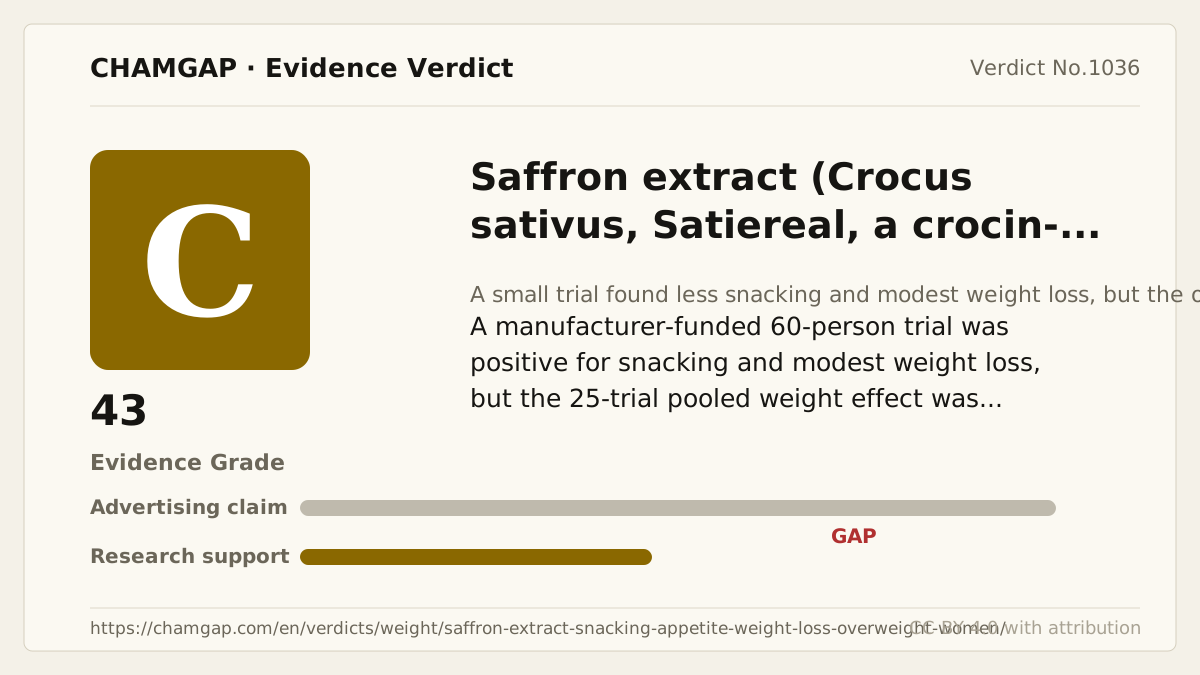
[Chamgap] Saffron extract x reduced snacking and appetite with modest weight loss in overweight women — Evidence Grade C·43. 3 cited sources checked. Source: https://chamgap.com/en/verdicts/weight/saffron-extract-snacking-appetite-weight-loss-overweight-women/ · CC BY 4.0CC BY 4.0 — free to use with attribution; do not distort grades, numbers, or verdict meaning.
What this document does and does not do
Chamgap is an information source. It reports what research has and has not confirmed; it does not tell readers what to take or buy. That decision belongs to readers and, when needed, medical or legal professionals. This verdict reflects literature available up to the search date and may change as new research appears. Nothing here is medical advice.