
Roux-en-Y gastric bypass,
does it really help with Long-term, five-year medication-free remission of type 2 diabetes in obesity or overweight?
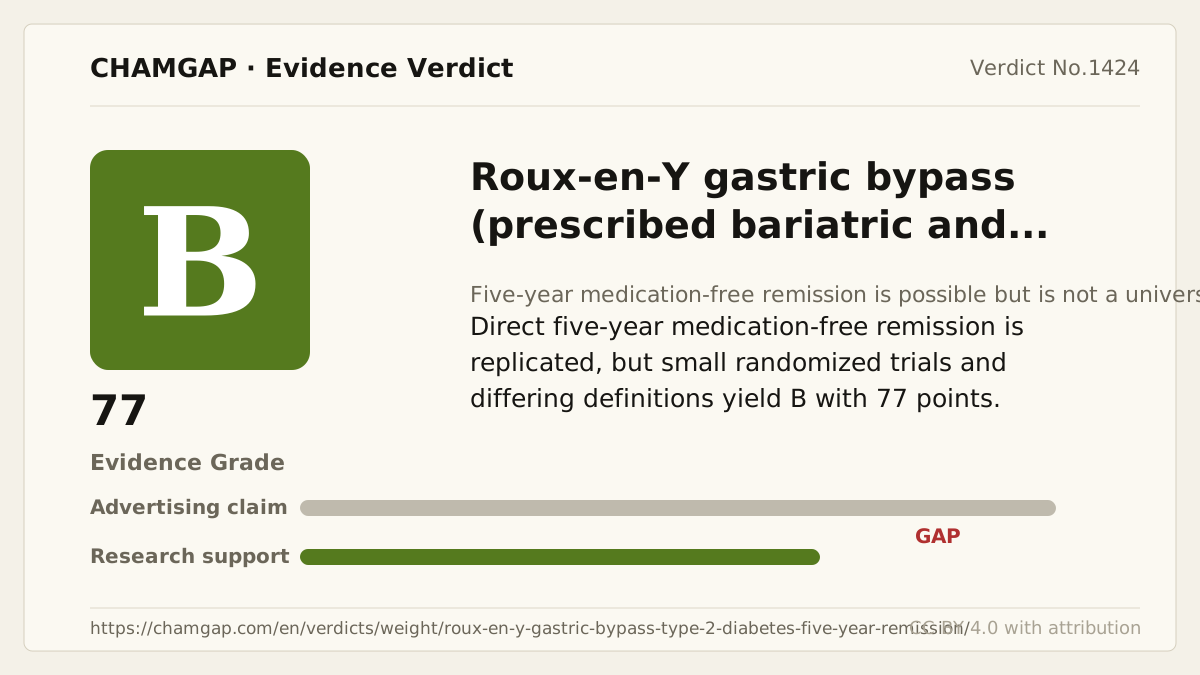
research showsRoux-en-Y gastric bypass is rated B because it reproducibly produces medication-free five-year remission in some people with overweight or obesity and type 2 diabetes. In the Mingrone five-year randomized trial, strict medication-free remission occurred in 7 of 19 RYGB participants (37%) versus 0 of 15 medical participants. In STAMPEDE, five-year HbA1c of 6.0% or less occurred in 29% after RYGB versus 5% with medical therapy, but that primary endpoint allowed medication and is not medication-free remission. Effects and weight loss persisted, but small trials, operative risk, and relapse limit the grade to B.
ads claimCombining unlike definitions into a claim such as 29% to 42% diabetes cure is misleading. Medication-free remission is possible but not universal, and relapse and lifelong nutritional monitoring remain relevant.
Useful facts when choosing a product
- Roux-en-Y gastric bypass creates a small gastric pouch and connects it to the small intestine beyond a bypassed segment as prescribed bariatric and metabolic surgery.
- Remission is more likely with shorter diabetes duration and preserved insulin secretion; glucose and complication surveillance continue after surgery.
- Risks include bleeding, leak, thrombosis, bowel obstruction, marginal ulcer, dumping, hypoglycemia, and reoperation, with lifelong iron, vitamin B12, folate, calcium, vitamin D, and other monitoring and supplementation.
- This anatomical operation is distinct from weight-loss medicines such as GLP-1 therapies, and medication withdrawal is guided by clinical glucose assessment.
Chamgap Semantic Classification Code
Candidate index · review held
P.roux-en-y-gastric-bypass.procedural.long-term-medication-free-remission-of-type-2-diabetes-in-obesity-or-overweight.treat.UNKProcedures, devices and tests > Roux-en-Y gastric bypass > Procedural > Long-term, medication-free remission of type 2 diabetes in obesity or overweight > Treatment or remission claim > Unknown
An automated migration candidate, not an issued permanent code; exact claim scope remains under review. This machine-generated migration candidate helps retrieval but is not a permanent assignment. The original verdict ID and URL remain authoritative.
What the research actually shows
Mingrone and colleagues assigned 60 participants with BMI at least 35 and diabetes for at least five years to medical therapy, RYGB, or biliopancreatic diversion; five-year medication-free remission after RYGB was 37%. STAMPEDE assigned 150 participants with BMI 27 to 43 to medical therapy, RYGB, or sleeve gastrectomy; after five years, 29% of the RYGB group had HbA1c at most 6.0% and body weight was 23% below baseline. The remission definitions differ.
Why this is classified as B (77)
The Mingrone trial found strict five-year medication-free remission in 37% versus 0%, while STAMPEDE replicated durable glycemic and weight benefit. Surgical groups were small, definitions differed, and results apply to selected candidates, supporting B with 77 points. Complications are a separate safety assessment.
Counterpoint. A decision should compare expected remission with nonsurgical treatment, operative morbidity and mortality, ability to maintain nutrition, and access to lifelong follow-up.
Rejudgment record. New verdict — Distinguished strict five-year medication-free remission in Mingrone from medication-permitted glycemic control in STAMPEDE, then applied the ceiling for small samples, differing definitions, and selected surgical candidates
Sub-claim grades by effect
This ingredient is marketed for several effects. A single overall grade blends strong and weak claims together, so each effect is graded separately here. The overall grade reflects the strongest disconfirming or core claim.
| Effect (sub-claim) | Grade | Basis |
|---|---|---|
| Five-year medication-free diabetes remission | B | The Mingrone trial found 37% with RYGB versus 0% with medical therapy. |
| Maintenance of glycemic control for five years | B | In STAMPEDE, the medication-permitted HbA1c endpoint was 29% with RYGB versus 5% with medical therapy. |
| Maintenance of long-term weight loss | B | Five-year weight change in STAMPEDE was -23% with RYGB versus -5% with medical therapy. |
Cross-check — AI research and Codex final gate
Evidence Table
| Study | Design | Sample | Funding | Endpoint | Result | Weight |
|---|---|---|---|---|---|---|
| Mingrone G et al. 2015 | Open-label single-center randomized trial with five-year follow-up | 60 assigned; 20 RYGB, 20 biliopancreatic diversion, and 20 medical; 19 RYGB analyzed at five years | Academic and public support with some industry support reported | Medication-free diabetes remission with HbA1c below 6.5% | RYGB 7/19 (37%) versus medical therapy 0/15. | Direct strict medication-free remission evidence |
| Schauer PR et al. 2017 STAMPEDE | Single-center randomized controlled trial with five-year follow-up | 150 randomized; 134 completed five years, including 49 RYGB and 38 medical | Ethicon Endo-Surgery and others | HbA1c at most 6.0% and weight change | HbA1c endpoint 29% versus 5%; weight change -23% with RYGB versus -5% medical. | Replication of durable glycemic and weight benefit |
Receipt — 2 References
All 2 cited sources were verified for existence at the original page (as of 2026-07-23).
Final verification and publication gate: Codex · Evidence date: 2026-07-23 · Corrections: none
Cite this verdict
[Chamgap] Roux-en-Y gastric bypass x five-year medication-free type 2 diabetes remission — Evidence Grade B·77. 2 cited sources checked. Source: https://chamgap.com/en/verdicts/weight/roux-en-y-gastric-bypass-type-2-diabetes-five-year-remission/ · CC BY 4.0CC BY 4.0 — free to use with attribution; do not distort grades, numbers, or verdict meaning.
What this document does and does not do
Chamgap is an information source. It reports what research has and has not confirmed; it does not tell readers what to take or buy. That decision belongs to readers and, when needed, medical or legal professionals. This verdict reflects literature available up to the search date and may change as new research appears. Nothing here is medical advice.