
Oyster mushroom powder meal,
does it really help with Reduced ad libitum energy intake at the next meal four hours later?
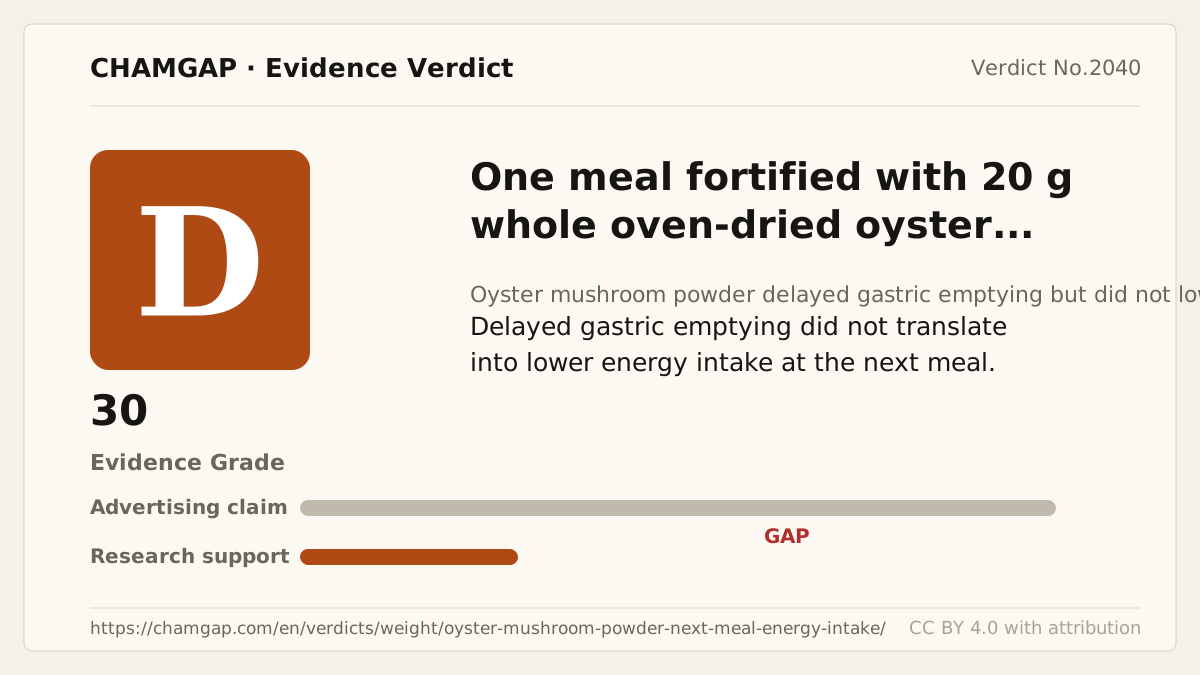
research showsThe grade is D with 30 points. In a double-blind randomized crossover trial of 36 adults with overweight or obesity, the registered primary endpoint, energy intake at an ad libitum meal four hours later, did not differ significantly between a meal containing 20 g oyster mushroom powder and control. Gastric emptying slowed, but actual intake and appetite sensations did not fall.
ads claimAdding 20 g dry mushroom solids and fiber and delaying gastric emptying are real findings, but claiming lower next-meal calories would contradict the primary result. Verdict 173 is C with 56 points for a yeast or mushroom beta-glucan preparation and an immune claim, differing from this whole oyster mushroom powder and food-intake question.
Useful facts when choosing a product
- The intervention was 20 g whole oven-dried oyster mushroom powder mixed into a meal, not an extract or capsule.
- The actual dose was 20 g whole oven-dried oyster mushroom powder. The approximately 200 g fresh-mushroom figure came from a different study by Dicks and is not a conversion for this trial.
- Gastric emptying was delayed, but no significant treatment effect was detected for next-meal energy intake, appetite sensations, PYY, CCK, or short-chain fatty acids.
- Publicly accessible reporting did not describe the test product as UV-treated or vitamin-D enhanced. Ordinary oyster mushrooms cannot be assumed to match UV-enhanced vitamin D2 content.
- The public abstract reported P at least 0.05 without condition means, variance, test statistics, or a confidence interval, and the registry had no results table, preventing a precision calculation.
Chamgap Semantic Classification Code
Candidate index · review held
S.one-meal-fortified-with-whole-oven-dried-oyster-mushroom-powder.oral.ad-libitum-energy-intake-at-the-next-meal-later.reduce.noneSupplements and nutraceuticals > One meal fortified with whole oven-dried oyster mushroom powder > Oral > ad libitum energy intake at the next meal later > Reduction claim > No intervention
An automated migration candidate, not an issued permanent code; exact claim scope remains under review. This machine-generated migration candidate helps retrieval but is not a permanent assignment. The original verdict ID and URL remain authoritative.
What the research actually shows
DRKS00031958 was registered on 2023-05-25 before the study began, and 36 participants completed the single-center Bonn study from August through December 2023. Each participant consumed the 20 g powder meal and mushroom-free control in randomized order under double blinding. The registry lists participant, investigator, assessor, and analyst blinding and institutional budget with no external funding. Public abstract and registry results did not clarify whether every completer entered analysis or provide exact condition means and variances.
Why this is classified as D (30)
The prospectively registered primary energy-intake endpoint was null, while the acute 36-person design has both small-sample and short-duration limitations and no available confidence interval, giving D with 30 points.
Counterpoint. D does not deny delayed gastric emptying. It means that measured change did not produce the claimed reduction in actual next-meal intake.
Rejudgment record. Cross-check applied — The prospectively registered primary endpoint was matched to the article, gastric emptying was separated from appetite and actual intake, and small acute design plus missing CI were reflected
| Endpoint | P | Symptom or function itself is the target - including patient reports and performance tests |
| Replication | R1 | Single confirmatory trial |
| Independence | I2 | Decisive evidence is publicly or non-profit funded |
| Effect size | E0 | Null |
| Precision | CX | No pooled confidence interval could be confirmed |
Stored derived and displayed grades match; this is not a current recalculation or validity check (D).
Sub-claim grades by effect
This ingredient is marketed for several effects. A single overall grade blends strong and weak claims together, so each effect is graded separately here. The overall grade reflects the strongest disconfirming or core claim.
| Effect (sub-claim) | Grade | Basis |
|---|---|---|
| Lower next-meal energy intake after a meal fortified with 20 g oyster mushroom powder | D | No treatment effect was detected for the prospectively registered primary endpoint. |
| Delayed gastric emptying | C | Lag time and half-emptying time changed significantly, but this is distinct from lower actual intake. |
Cross-check — AI research and Codex final gate
Evidence Table
| Study | Design | Sample | Funding | Endpoint | Result | Weight |
|---|---|---|---|---|---|---|
| Johnen J et al. 2025 FORM study | Double-blind randomized controlled acute crossover trial | 36 targeted and completed; primary analysis denominator not stated in publicly accessible reporting | University of Bonn institutional budget with no external funding according to the registry | Ad libitum energy intake at a second meal four hours later | No treatment effect on energy intake, P at least 0.05; appetite, PYY, CCK, and SCFA also null; gastric-emptying lag time P=0.028 and half-emptying P<0.001 | Direct null primary evidence for this form and endpoint |
Receipt — 3 References
All 3 cited sources were verified for existence at the original page (as of 2026-08-03).
Final verification and publication gate: Codex · Evidence date: 2026-08-03 · Corrections: none
Cite this verdict
[Chamgap] Oyster mushroom powder meal x lower energy intake at the next meal — Evidence Grade D·30. 3 cited sources checked. Source: https://chamgap.com/en/verdicts/weight/oyster-mushroom-powder-next-meal-energy-intake/ · CC BY 4.0CC BY 4.0 — free to use with attribution; do not distort grades, numbers, or verdict meaning.
What this document does and does not do
Chamgap is an information source. It reports what research has and has not confirmed; it does not tell readers what to take or buy. That decision belongs to readers and, when needed, medical or legal professionals. This verdict reflects literature available up to the search date and may change as new research appears. Nothing here is medical advice.